
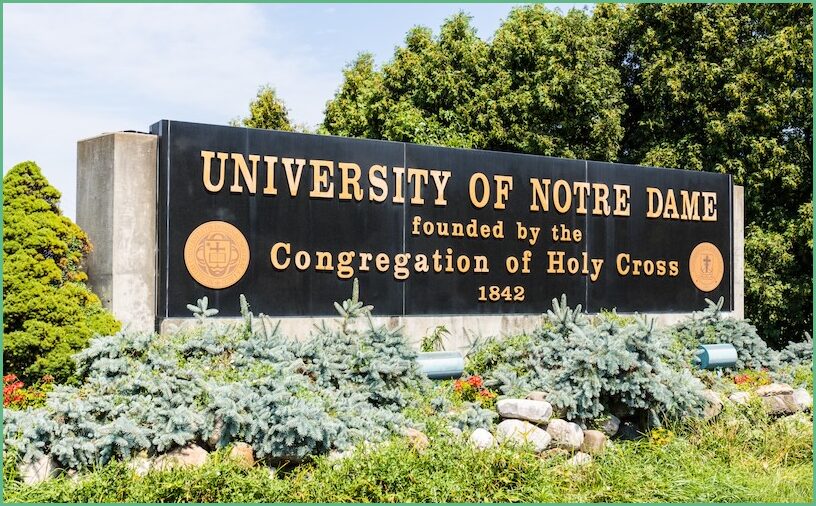
Notre Dame quietly restored ‘Catholic Mission’ as the lead item in its revised ‘ND Values’ after a wave of criticism that followed the removal of references to the Catholic faith. The change highlights a clash over identity, and the university’s quick backtrack says as much about public pressure as it does about institutional priorities.
This reversal matters because words on a values list signal what a university stands for. Removing mention of the Catholic faith suggested a drift away from the institution’s roots, and that alarmed alumni, donors, faculty, and observers who expect Notre Dame to maintain a clear religious identity. Restoring ‘Catholic Mission’ as the first value is a rebuke to the idea that tradition can be trimmed away without consequence.
Critics called the initial omission tone deaf, and they were right to push back. Universities that claim a founding faith should not treat that faith like an optional brand line. When an institution strips explicit references to its heritage, it feeds suspicion that administrators are willing to prioritize fashion over fidelity.
Reinserting ‘Catholic Mission’ does more than soothe feelings. It reasserts a framework for governance, hiring, and campus culture that flows from a religious identity. That said, a restored line item is only a start; the real test is whether policies and daily choices reflect the value in practice rather than in poster-sized declarations.
Stakeholders outside the administration watched closely, and they had every right to weigh in. Alumni and donors invest not only money but trust in an identity that drew them to Notre Dame. Their reaction forced a course correction that administrators might have avoided if they had not felt accountable for what the university represents to those who sustain it.
The episode also exposes a wider tension in higher education between cultural currents and foundational missions. Schools that bend too quickly to transient cultural pressures risk losing the coherence that once made them distinct. A healthy university can engage with new ideas while still acknowledging the core convictions that shaped it.
Now that ‘Catholic Mission’ sits at the top of the list again, the university should be clear about what that means in practice. Commitments should be written into hiring guidelines, campus programming, and student formation so the phrase is more than symbolic. Transparency around decision-making will rebuild trust faster than another round of careful edits to a values statement.
Administrators have an opportunity to show leadership by translating this restored wording into consistent action. That means protecting religious liberty on campus and ensuring that faith-informed perspectives have a respected place in academic life. If Notre Dame follows through, the restored phrase will become a standard for conduct rather than a concession to controversy.
