
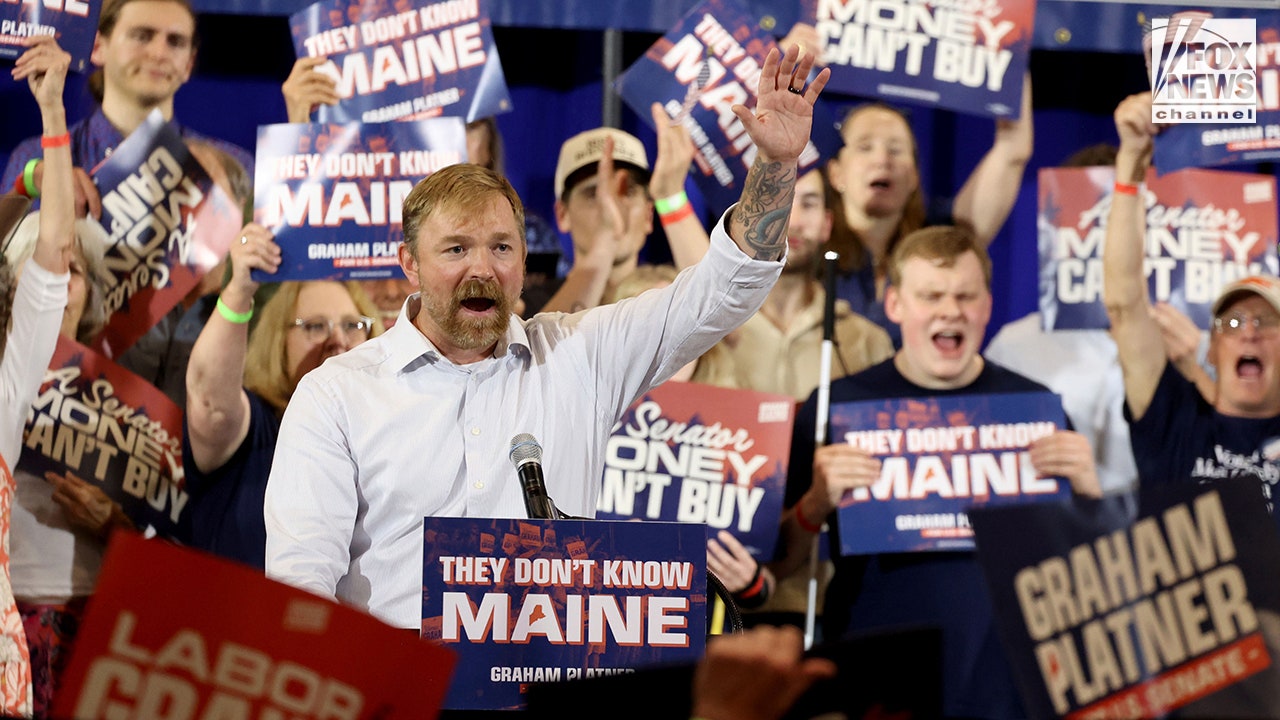
The New York Times reporter Jodi Kantor told CNN viewers that allegations against Maine Democratic Senate nominee Graham Platner aren’t the type of #MeToo cases that normally trigger outrage, and Democrats are apparently willing to set character concerns aside to win back power. This piece walks through her reasoning, the accusations from several women, and how party leaders and media figures have reacted while prioritizing electoral strategy over consistent standards.
Kantor, who helped break major stories about Harvey Weinstein, used that credibility to draw a line between the most infamous abuse scandals and the accusations surrounding Platner. Her argument was simple: these allegations came out of relationships rather than boss-to-employee dynamics, so they belong in a different category. That distinction, she suggested, lets some voters and party leaders keep supporting Platner despite serious charges.
The accusations are not small. A former girlfriend has described physical abuse, claiming he yanked and grabbed, leaving marks. One dramatic claim says “he twisted her arm behind her back, shoved her into a bedroom and held the door closed from the other side so she couldn’t get out, telling her to remain there until she was ‘calm.’” Other complaints include sexting, mocking rape survivors, and dismissive behavior toward victims.
Kantor qualified those reports on air with a line she repeated more than once: “they’re not about a boss and a young female employee being subjected to sexual advances. They were mostly made in the context of consensual relationships. … There are these, like, very sensational texts about sex,” she stressed. She added, “There are allegations from former girlfriends that are not — the way my colleagues reported them were not like classic abuse allegations.”
Those words do the heavy lifting. By framing the matter as different in kind, Kantor gives Democrats the breathing room to argue that winning control of Congress is more important than immediately expelling or rejecting a nominee. It’s a pragmatic calculation dressed up as nuance, and to Republicans it looks like moral compromise for the sake of power.
Kantor went further, pointing to a cycle where #MeToo at times felt bipartisan and other moments became deeply political. She said, “[I]t felt like there was this period where discussion of #MeToo was actually pretty bipartisan. Democrats like [Sen.] Al Franken were accused, but so were Republicans, like [Alabama Judge] Roy Moore. And also, a lot of these stories played out in the corporate arena, which is not particularly political. But the Kavanaugh hearings almost felt in a way like a return to an older pattern, like a return to a pattern that we saw with the allegations against Bill Clinton, Clarence Thomas, and Donald Trump. Those are scenarios in which the allegations take on all of the heat and the poison of American political life. And in those stories, it turns into a holy war very, very quickly and can almost feel like it’s not even about the women anymore.”
She closed that thought with: “The #MeToo movement has proven so durable and so self-correcting. I think there was a moment after the Kavanaugh hearings where it all just felt like it had become impossibly politicized, to the point where it was almost preventing constructive conversation.” That line is meant to justify putting these particular allegations in a different bucket.
But critics point out the inconsistency. Questions about a candidate’s character are not minor when they include alleged physical harm, public praise for extremist causes, mockery of veterans, and a tattoo described as Nazi imagery. Those details matter to voters who expect elected officials to meet basic standards of decency, regardless of party calculations.
Democratic figures who celebrated Platner’s nomination made their priorities clear: winning matters. Party leaders praised the pick even as the accusations multiplied, and some media voices followed Kantor’s lead by downplaying the reports. That political logic is blunt: if the candidate helps retake the Senate, other concerns can be set aside.
On daytime television, the same calculation surfaced plainly. Sunny Hostin put it this way: “Let’s be strategic. Let’s get some power. Let’s take over the Senate. Let’s take over the House, and let’s right the ship. Let’s get our country back. … I am sorry. I am someone that believes in character. I am someone that believes that morals matter,” she concluded. “But because of the state of this country, I would — if I lived in Maine I would hold my nose and I would vote for Platner. I would.”
That “hold my nose” approach forces a choice: accept compromised candidates for short-term gains or demand consistent standards and risk losing key races. Republicans see the decision to forgive or minimize these allegations as symptomatic of a party willing to bend principles when the stakes are high. For many voters, especially those concerned about character and safety, that trade-off is unacceptable, not clever.
