
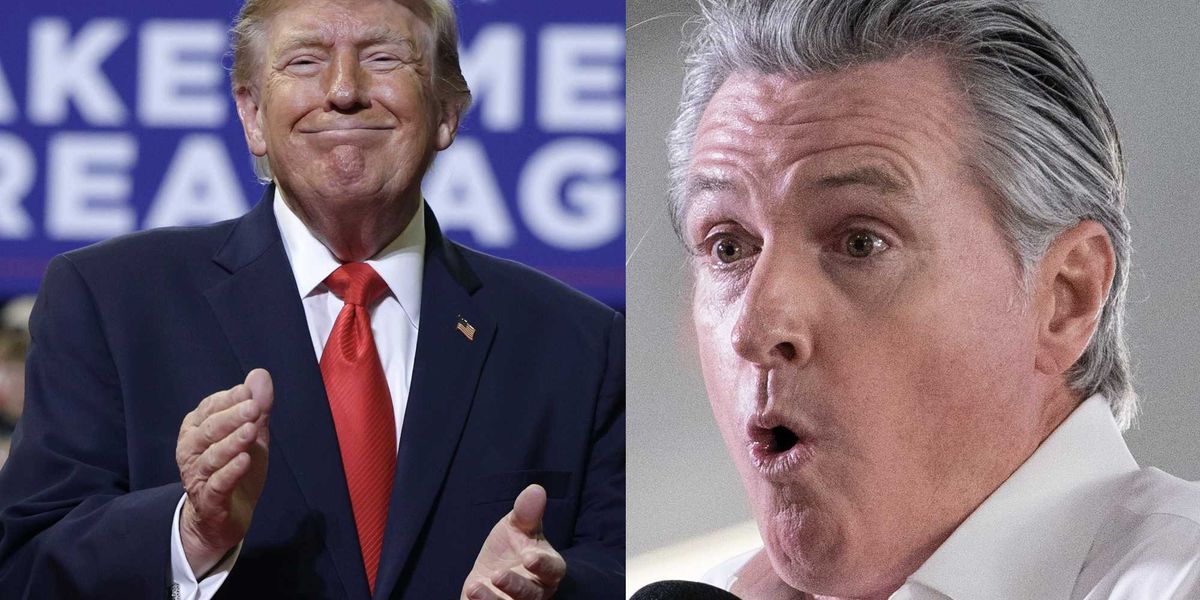
A federal appeals court has put the brakes on a California law that tried to limit how federal immigration officers operate inside the state. The ruling lands as another sharp setback for Gov. Gavin Newsom, whose approach to immigration keeps running into legal and political resistance. At the center of it all is the same fight that has defined the border debate for years: how much room states should have when federal agents are doing federal work.
The 9th U.S. Circuit Court of Appeals sided with the Trump administration’s position that California went too far when it moved to restrict Immigration and Customs Enforcement activity. The law was pitched as a guardrail, but the court saw a problem with a state stepping in front of federal enforcement in that way. That matters because the ruling keeps alive a basic principle the Left keeps trying to blur, which is that federal immigration authority does not vanish just because a state leadership team dislikes it.
Newsom has built a reputation for throwing up barriers to ICE, and this case fits that pattern perfectly. California has long tried to present itself as a shield for illegal immigrants, but that posture keeps colliding with the plain fact that immigration enforcement is a national issue, not a state branding exercise. When a governor tries to box in federal officers, it almost always ends up in court, and this one was no different.
The decision also highlights something bigger than one state law. Across the country, voters have watched blue-state leaders talk tough about compassion while making it harder for ICE to do its job. The result is predictable: more confusion, more legal fights, and less respect for the law. For Republicans, this is exactly why border enforcement and immigration rules have to stay firm and straightforward, without a patchwork of states freelancing their own versions.
That tension has only grown worse as Democrats keep turning immigration into a political weapon. They want the benefits of sounding humane without taking responsibility for the consequences when enforcement gets watered down. Meanwhile, communities are left dealing with the fallout, and federal officers are expected to operate under rules that change depending on which statehouse is trying to make a statement that week.
The court’s move sends a clear signal that California cannot simply wall off ICE because state officials do not like how immigration law is being enforced. That does not mean the debate is ending, though. It means the legal pressure is still there, and Newsom’s team now has to live with another reminder that symbolic resistance is not the same thing as actual authority.
The fight over immigration has a way of exposing the gap between political theater and real-world consequences. Conservatives have argued for years that law enforcement should be allowed to enforce the law without being second-guessed by officials who want to score points with activists. This ruling keeps that argument front and center, and it does so in a way Newsom probably did not want heading into yet another round of national attention.
It also adds to the larger picture around California’s role in the immigration fight. The state has become a test case for how far a progressive government can go in resisting federal enforcement before the courts step in. Each ruling like this chips away at the idea that state leaders can simply redraw the boundaries whenever Washington does something they dislike.
Even with this setback, the broader clash is not going away. Immigration remains one of the clearest dividing lines in American politics, and California keeps standing right in the middle of it. That leaves ICE, the courts, and state leaders locked in a fight that still has plenty of sparks left, especially as enforcement, sanctuary policies, and the next round of political messaging keep grinding against one another.
