
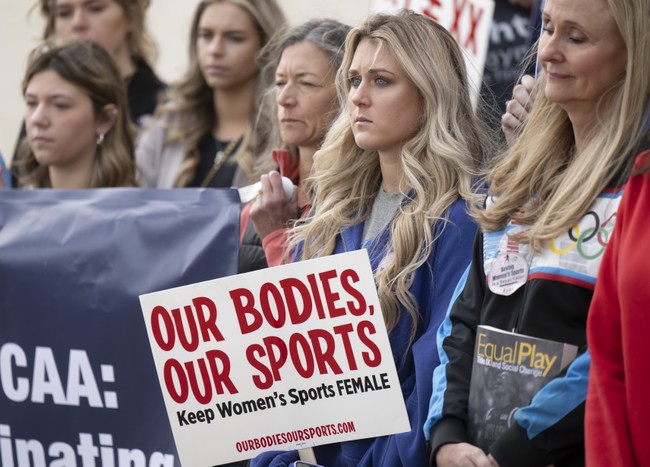
On National Girls & Women in Sports Day, President Trump made headlines by signing the “Keeping Men Out of Women’s Sports” executive order. This directive is aimed at safeguarding the competitive integrity of women’s sports by ensuring that biological men are kept out of female athletic competitions. The order emphasizes the need to protect women and girls from being deprived of fair opportunities in sports.
The executive order clearly states the nation’s policy to cut funding from educational programs that compromise women’s sports. It aims to prevent the endangerment, humiliation, and silencing of female athletes and stands against male participation in women’s sports. It’s a move rooted in principles of safety, fairness, dignity, and truth.
In response, NCAA President Charlie Baker issued a statement recognizing the executive order as a “clear, national standard.” The NCAA has been under scrutiny for its existing policies, particularly highlighted by the case of Will “Lia” Thomas. Thomas, who transitioned from competing in men’s to women’s swimming, ignited controversy by outperforming female athletes and breaking records.
The NCAA’s handling of such issues has drawn significant criticism. Many argue that allowing biological males to compete in women’s sports undermines the efforts and achievements of female athletes. Thomas’s actions, including exposing himself in the women’s locker room, have only fueled the debate.
Baker’s statement highlights the NCAA’s composition of over 1,100 colleges and universities with 530,000 student-athletes. He stressed the importance of having uniform eligibility standards rather than a mix of state laws. President Trump’s order is seen as a move towards achieving these consistent standards.
The NCAA Board of Governors is currently reviewing the executive order. They plan to take steps to align their policies with the new directive. The Association is committed to fostering inclusive environments for all student-athletes while supporting schools with affected athletes.
For years, the NCAA has been criticized for enabling men to compete in women’s sports, depriving females of accolades and opportunities. At the 2022 NCAA Women’s Championships, Riley Gaines tied with Thomas in an event but saw the trophy handed to Thomas. This incident highlighted the broader issue of fairness in women’s sports.
Across high school and college athletics, male athletes have switched to female divisions, dominating events. This shift has resulted in the loss of scholarships, titles, and dreams for many dedicated young women. The executive order aims to rectify these injustices.
The directive has sparked discussions about the future of women’s sports. Many believe every record and trophy claimed by male athletes in women’s competitions should be revoked. This stance underscores the growing demand for fairness and equality in sports.
The issue has broader implications beyond just athletics. It touches on the fundamental rights of women to compete safely and fairly. The executive order marks a significant step in addressing these concerns.
Supporters of the order argue that it will enhance the integrity of women’s sports. They believe it will restore opportunities for female athletes to excel without unfair competition. Critics, however, continue to debate the policy’s impact on inclusivity.
The conversation around this executive order is far from over. As the NCAA reviews its policies, the sports community waits to see the changes it will bring. The debate highlights the ongoing struggle for fairness in athletics.
While the order has its supporters, it also faces opposition from those advocating for transgender rights. The balance between fairness in sports and inclusivity remains a contentious issue. Nonetheless, the executive order has set a precedent in the sports world.
As discussions unfold, the focus remains on protecting the rights of female athletes. The executive order seeks to ensure women can compete on a level playing field. This pursuit of fairness is central to the ongoing debate.
In the coming days, colleges and universities will be navigating the implications of the order. They must consider how best to support all student-athletes while adhering to national standards. The outcome will shape the future of women’s sports in America.
The broader conversation around the executive order continues to evolve. Its impact on sports policy and culture remains a key topic of interest. As the nation watches, the sports community must grapple with these complex issues.
