
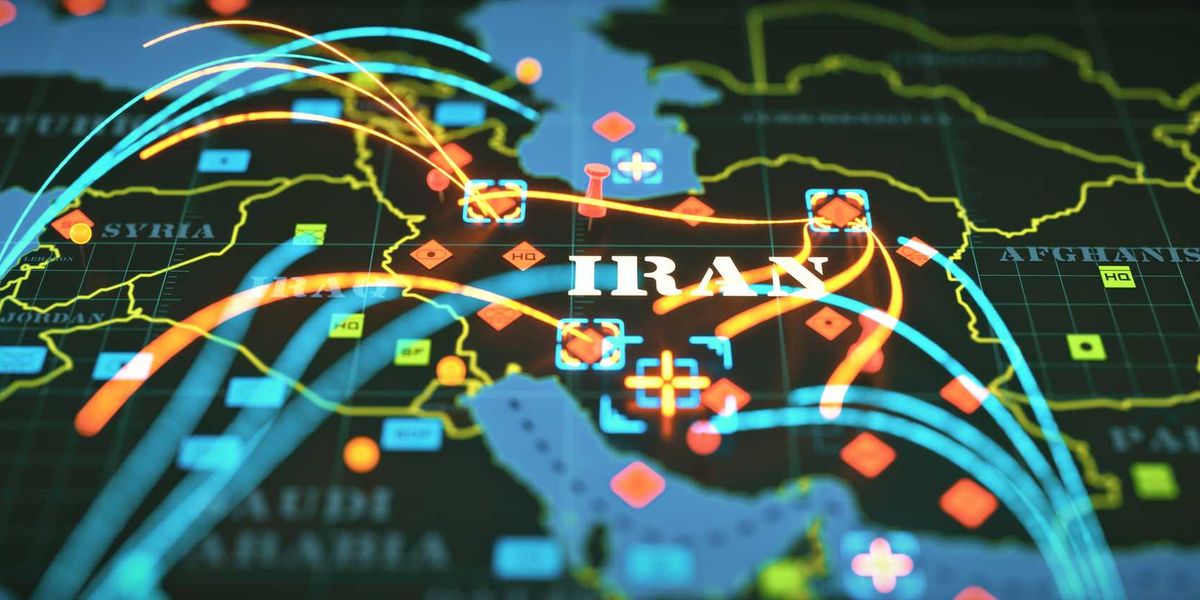
The article examines the rise of the Maven Smart System, a Palantir-built “AI-enabled platform” now embedded in U.S. military operations, tracks how Project Maven evolved into a Program of Record, and raises plainspoken concerns about speed, judgment, and control as the system scales into real combat use.
The Pentagon’s marketing calls are familiar: a “one-pager” describing a tool that promises a “live, synchronized view of the battlespace” and a supposed “decision advantage.” That language masks something more concrete—software that reorganizes the fog of war into structured data so commanders can act fast. For Republicans, faster can mean stronger deterrence, but speed without firm human checks is a gamble.
MSS is not a neat experiment anymore; it became a lasting layer in defense tech after a transition to the National Geospatial-Intelligence Agency in 2023. The money backing it is serious: a $480 million Army contract in 2024, a $795 million modification in 2025 stretching toward 2029, and a $99.8 million vehicle to broaden access across services. That level of investment tells you this is meant to stick.
The program grew out of a blunt problem: too much sensor data and too few human hours to parse it. In 2017 the Department of Defense set up Project Maven to automate labeling and detection in drone video, then kept building. The core idea shifted from helping analysts to replacing the raw feed with pre-structured objects and links so decisions look like database queries.
At the center is the so-called “Maven Ontology,” described as an operational “digital twin” of the battlespace. The messy inputs of war—images, movement, reports—get translated into a queryable set of objects and properties. In practice that means an analyst asks a system and receives an answer instead of having to interpret messy source material firsthand.
Interfaces like mapping, identification, and workflow tools are built to scale and to make complicated tasks feel simple. The platform even supports users building assistants through Agent Studio to query in natural language and to ask for “detections of X” across massive data stores. The result is speed and clarity for operators, and a video game-like ease that can disguise the consequences of what is being managed.
By early 2026 the user base had doubled to about 20,000 active participants and the system found operational mileage in Operation Epic Fury. “In the first 24 hours alone, the system processed a thousand targets.” That compression of the kill chain—hours into minutes—changes the nature of engagement and shifts moral and legal responsibility into new technical layers.
The stated logic for this approach is familiar to combat units: “fight-tonight” readiness and “rapid sensor-to-shooter engagements.” The Marine Corps pushes a “fully digital workflow” for target management, urging a tempo where speed is the organizing value. For those who believe in robust defense, tempo deters; but tempo without discrimination risks tragic mistakes.
Automation bias is a real human problem when systems pre-structure what people see and prioritize. As alerts and models tune the battlefield, responsibility can spread thin across analysts, software engineers, and commanders. The Pentagon has “Responsible AI Guidelines” that promise the ability to disengage systems, but the pull of more data and faster workflows works against those brakes.
The platform is being licensed and adopted broadly, even across alliances, and fielding is accelerating faster than doctrine or training can adapt. Software now changes faster than institutional habits, and that gap matters for the kind of measured judgment that commanders are expected to exercise. The core worry is not the tool itself but how it shifts where and how decisions are made.
Control in this architecture depends on how targets are modeled, how alerts are tuned, and how the ontology is built. The system is designed to make war more legible and therefore more actionable, but legibility is not the same as moral comprehension. The conservative priority should be clear: preserve human judgment, codify accountability, and keep commanders squarely responsible for lethal choices while we leverage technology to maintain advantage.
