
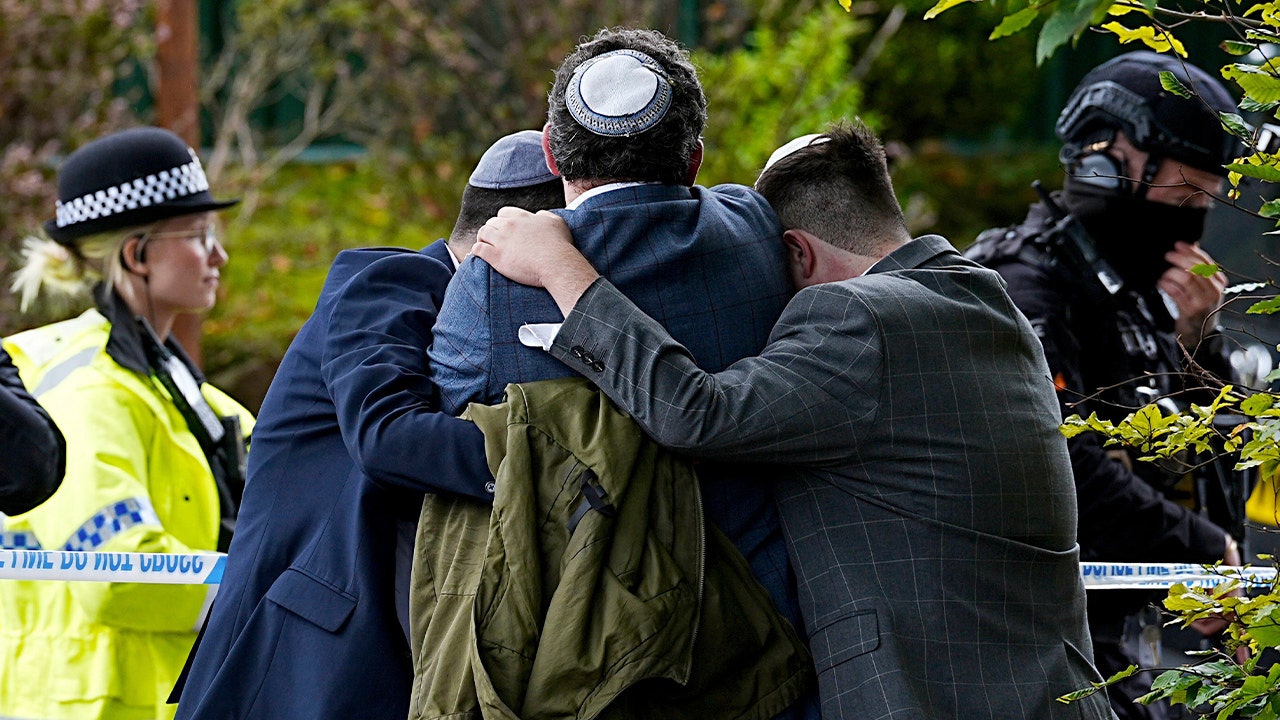
This piece looks at the hostile environment facing Jewish students and communities in Britain, the personal history behind that fear, the recent wave of attacks and threats, and the urgent policy responses needed to confront the ideology driving this violence.
Being a Jewish student on campus should mean focusing on studies, friends and future plans, but instead many are managing fear and caution as a daily routine. They calculate whether a visible kippah or Star of David will make them a target, and wonder if speaking up will draw abuse. University life has been hollowed out by a sense that safety is conditional.
My family history gives this fear sharper edges. My great-grandmother was Lily Ebert, who arrived at Auschwitz aged 20 and lost more than a hundred relatives in a single day. She rebuilt her life in Britain and believed this country would be a refuge where her family could live openly and proudly as Jews.
THIS PASSOVER, NO MORE WAITING: A CALL FOR STRENGTH, UNITY AND THE UNAPOLOGETIC DEFENSE OF JEWISH LIFE
She spent decades warning that persecution begins with words, then small actions, then a shift in atmosphere that makes worse things possible. In her final months she watched the country she trusted fail at a basic duty to protect its Jewish citizens and she was horrified. That horror is understandable given recent events.
WESTERN LEADERS MUST CONFRONT ISLAMIST-INSPIRED ANTISEMITIC VIOLENCE BEFORE IT TARGETS EVERYONE
London has seen a worrying string of arson attacks on synagogues and Jewish charities, and authorities are probing possible Iran-linked involvement. Threats to fly hazardous drones at the Israeli embassy have been reported and ambulances for Jewish charities were set on fire in a heavily Jewish neighborhood. Chief Rabbi Ephraim Mirvis warned that “a sustained campaign of violence and intimidation against the Jewish community of the U.K. is gathering momentum.”
Political leaders express outrage after the headlines, but rhetoric does not replace hard, timely action. When public chants call to “Globalize the Intifada,” that language matters and it has real-world consequences. Tolerating such slogans and treating them as routine protest reduces the line between dissent and incitement.
Security guards and concrete barriers are necessary but cannot be the permanent answer to a society that tolerates hate. We cannot wall ourselves away from a problem rooted in radical ideology and organized networks. Money for security buys defenses; it does not cure the disease that makes those defenses necessary.
That means confronting organizations that promote and fund violence abroad and radicalize people at home. Banning Iran’s IRGC and cutting off their proxies, and taking firm steps against the Muslim Brotherhood where it operates to radicalize and recruit, are measures that should be on the table. If you ignore the sources of radicalization, you give them room to grow.
Campuses are a frontline in this fight. Masked demonstrators have stormed lectures, shouting down speakers and leveling accusations like “war criminal” at Jewish academics who show up to teach. Students face targeted abuse and many hide Jewish symbols to avoid harassment, which signals a failure by institutions to defend minority students.
Worryingly, antisemitic ideas seep from fringe to mainstream when institutions hedge and pretend “balance” can paper over targeted hatred. When an NHS doctor posts “gas the Jews” online without meaningful ramifications, or Jewish artists and events are quietly sidelined, normalization is happening. Each incident might look isolated; together they form a pattern that must be broken.
We need clearer laws and firmer enforcement against incitement, better monitoring of foreign influence and radical networks, and universities that protect students rather than enabling mob tactics. Political leaders who value free speech must also recognize when speech crosses into coordinated hate and threat. Britain can either act decisively now or watch small assaults on dignity become an entrenched emergency.
SIGN UP FOR ANTISEMITISM EXPOSED NEWSLETTER
My great-grandmother began her warnings about the slippery slope from words to violence long before I was born, and her message is still urgent. She survived Auschwitz and expected Britain to stand up for Jewish life; the choice now is to match words with policy and protection. Allowing silence, excuses and soft responses will only invite worse outcomes for everyone who values freedom and safety.
