
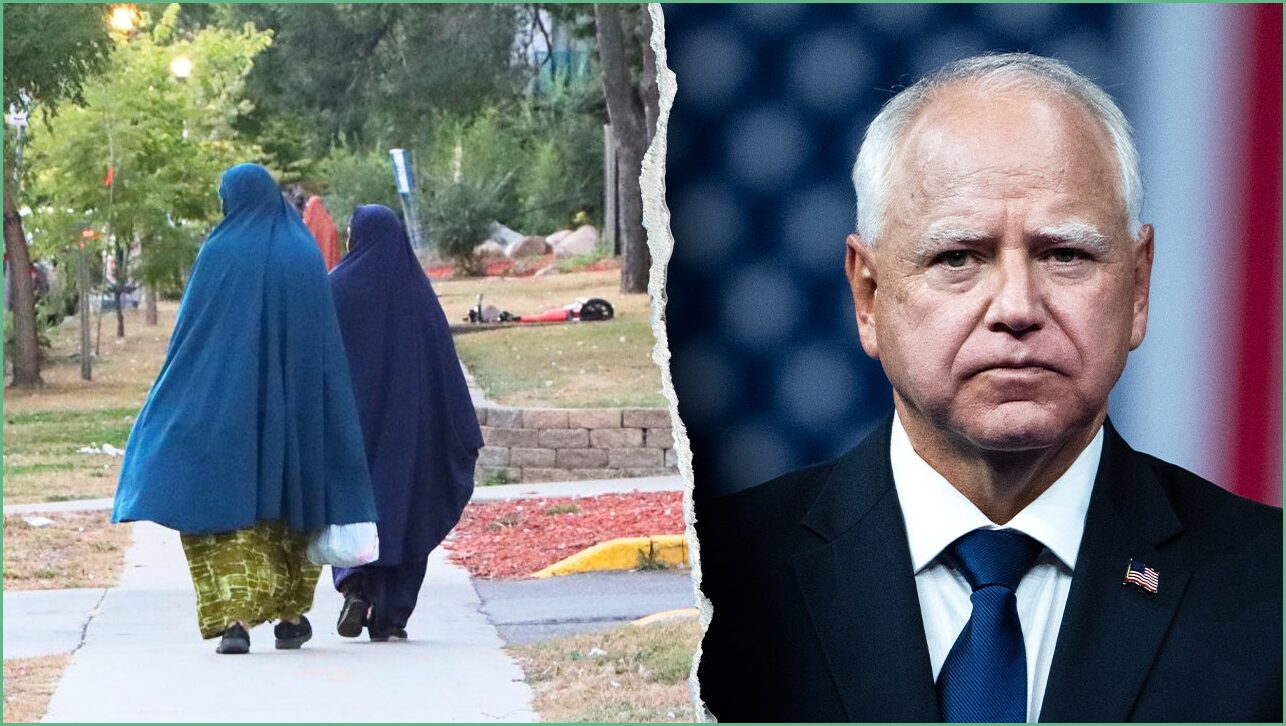
Minnesota’s scandal over fraud tied to the Somali community has exposed a political and cultural fault line: a mix of protective politics, selective outrage, and a city that shrugs while taxpayers pick up the tab. Walking through Cedar-Riverside and downtown Minneapolis, you see clear evidence that many local elites prioritize image and identity over accountability. This piece looks at how white guilt, local politics, and the media have shaped the public reaction and what that means for voters across the state.
On a bitter day I ran into Anne, a tech worker in her 30s, who summed up the city’s mood in a sentence that lands hard. “It’s hard to care much about it when ICE is disappearing Somalis on the streets,” she said. That comment cuts straight to a common theme here: compassion for the community often trumps concern about corruption.
Most people responded to the topic the same way: shut down. Conversations end the moment you mention the scandal, faces go blank, and you can almost see a civic decision to avoid the issue. That silence isn’t neutrality; it’s a political calculation that keeps uncomfortable questions buried.
There are exceptions. A few residents voiced anger over the Feeding our Future scheme and similar frauds, but those opinions were rare. Oddly, the most direct critics I met were from Hispanic backgrounds, not the city’s white majority, which tends toward defensiveness rather than critique.
Jack, another software engineer, offered a common reaction that deflects blame away from the Somali community. “Lots of people commit fraud, so why are [Somalis] being singled out?” he asked, and later admitted, “I don’t even really know what assimilation means.” That mix of skepticism and moral fog explains why accountability gets so little traction in polite conversation.
Cedar-Riverside paints the picture visually. Marquees and shop windows display solidarity slogans and pro-immigrant signs, creating an aura that discourages criticism. Businesses act as if visible support is a shield—less about community ties and more about reputational safety in a town that prizes progressive signaling.
The scandal doesn’t stand alone. Minnesota’s legal marijuana rollout shows similar patterns: policy prioritized for identity groups has, in some instances, produced chaos and opened doors to corruption. When systems reward identity over competence, bad actors find ample opportunity to exploit the resulting gaps.
Local media coverage adds another layer: a focus that tends to favor narratives sympathetic to migrants and critical of enforcement, with relatively little sustained pressure on those who benefited from the schemes. That imbalance helps political operators avoid accountability while feeding a public perception that any criticism equals bigotry.
The Democratic-Farm-Labor Party in Minnesota has proved adept at insulating favored constituencies by casting themselves as protectors of the downtrodden. That political strategy can be effective for maintaining power, but it leaves taxpayers on the hook when corruption flourishes under that protective umbrella. The political calculus is obvious: defend the base, deflect scrutiny.
There’s also a social geography to the problem. Downtown residents, professionals in neat suits, rarely feel the consequences of graft the way ordinary taxpayers do. The corruption’s real cost—money stolen from services for children and families—gets abstracted into statistics while daily life for influential urbanites remains largely uninterrupted.
And then there’s the double standard of visibility and labor. Somali immigrants are everywhere you don’t look closely: hotel workers, drivers, service staff—the modern equivalent of the unseen household help. When the theft affects the larger public, many choose to look away because confronting it would force them to question their own choices and alliances.
Political leaders like Ilhan Omar and Gov. Tim Walz navigate this terrain with a mix of outrage and deflection that keeps the issue alive without changing the structures that allowed the fraud. For now, the combination of identity politics and urban indifference keeps meaningful reform stalled and the money lost mostly unrecovered.
The hard truth is that if Minnesota is going to pull itself back from the brink of normalizing corruption, voters outside the progressive urban core will have to push for accountability. The suburbs and rural districts still hold sway in statewide politics, and their refusal to accept identity as an excuse for corruption could be the lever for actual change.
