
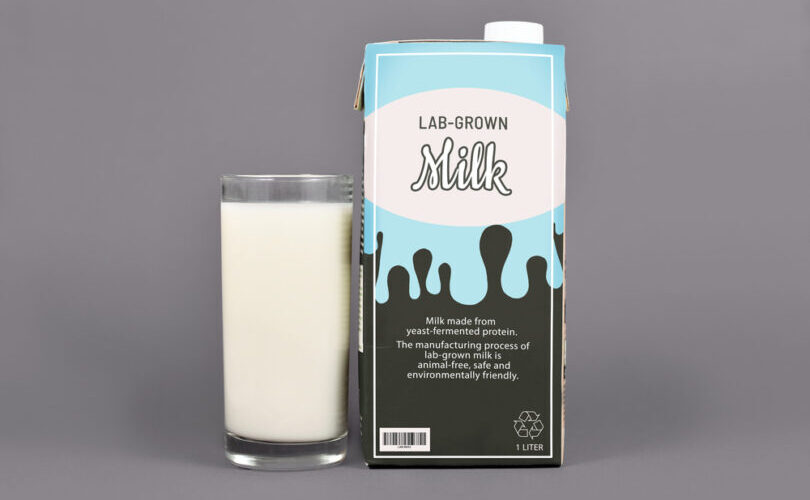
This piece looks at the growing market for lab-made dairy substitutes and explains what those products actually are, how they are produced, what they contain, and why the labeling and marketing can be misleading for shoppers who expect a straightforward alternative to cow’s milk.
Lab-grown milk is often sold as a modern, cleaner version of dairy, but the production methods differ fundamentally from traditional milking. Instead of cows, manufacturers use microbes or cells to create proteins commonly associated with milk, and that process changes the product’s makeup. Buyers should understand that “milk” made this way is a manufactured ingredient mix rather than milk straight from an animal.
One common approach uses fermentation platforms where yeast, fungi, or bacteria are engineered to produce casein and whey proteins. Those proteins can then be combined with fats, sugars, minerals, and water to create a liquid with some sensory features of milk. The end result is technically engineered protein plus added components rather than a naturally balanced dairy fluid.
Marketing leans hard into messages about sustainability and innovation, promising a cleaner, modern alternative without the messiness of farming. Those claims can be true in specific contexts, but they often omit nuances about resource use, processing energy, and supply-chain impacts. Consumers should be cautious about broad environmental claims until independent life-cycle analyses are available and transparent.
Health and nutrition comparisons between animal milk and lab-made versions are still evolving because formulas vary widely. Some products aim to match protein content or micronutrients, while others target texture or culinary performance. That variation means nutritional profiles can differ significantly from one brand to the next, so comparing labels matters more than trusting a generic claim of equivalence.
Safety and regulatory oversight are important questions and not always obvious to shoppers. Novel food pathways require testing and review, but timelines and standards vary by jurisdiction. Expect authorities to focus on allergenicity, purity, and manufacturing controls, but the long-term dietary effects of replacing traditional milk with engineered alternatives remain under study.
Labeling choices shape consumer perception, and current terms can be confusing. Words like milk, dairy, or milk alternative carry legal and cultural weight, and some regions are tightening rules about product names. Transparent labeling that details how a product is made and what’s inside is the clearest path for informed buying, yet such transparency is not yet the industry norm.
There are also questions about taste, texture, and culinary behavior that go beyond chemistry and regulation. Some lab-made liquids mimic the mouthfeel and heat stability of cow’s milk quite well, while others fall short in cooking or coffee applications. For people who value flavor and performance in specific recipes, trying products firsthand is the only reliable test.
Cost and scalability remain practical hurdles for widespread adoption. Producing proteins through fermentation or cell culture can be expensive and technically demanding at scale, though costs have dropped in some sectors. Whether those production systems can compete with established dairy economics without unexpected subsidies or trade-offs is still uncertain.
For consumers, the sensible action is to demand clarity. Read ingredient lists, ask brands how their product is made, and look for independent safety and environmental assessments rather than marketing blurbs. Retailers and regulators should push for consistent naming rules and full disclosure so shoppers can choose based on facts instead of slogans.
