
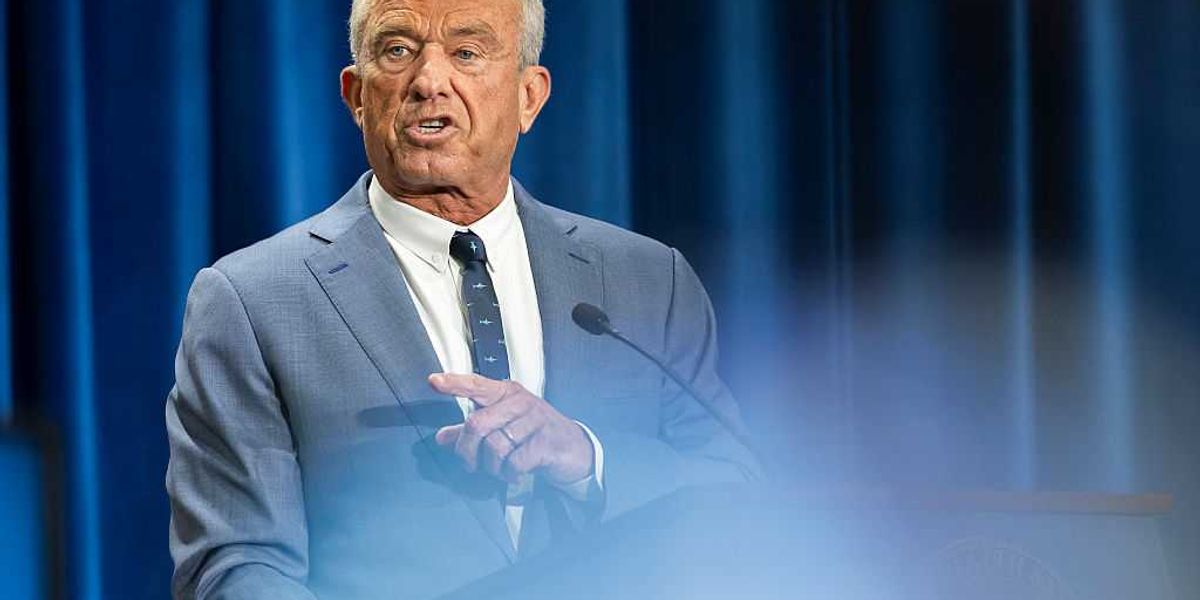
Robert F. Kennedy Jr. took a hard swing at the Muslim Brotherhood during a Michigan speech, and the message landed with the kind of force that gets people talking fast. The comments dropped into a politically charged moment where health, national security, and campaign politics keep colliding in public view.
The speech fit neatly into a broader mood that has been building around the state’s political scene. Michigan has become a place where national figures can test sharp arguments and expect immediate reaction, especially when the audience already knows the local names and the stakes involved.
Kennedy’s remarks put a spotlight on an issue that often flares up when candidates start talking about threats, identity, and influence. Once a line like that is delivered from a campaign stage, it does not stay contained for long, and the ripple effect tends to run straight into the state’s ongoing political fights.
That matters in Michigan because the state’s political conversation is already crowded with familiar players and heavy expectations. John James, Mike Rogers, and Abdul El-Sayed are all part of the larger picture, and any national blast of rhetoric can quickly be read through the lens of who stands to gain, who gets boxed in, and who gets dragged into the noise.
Michigan politics has a way of turning every sharp message into a test of strength. Supporters hear conviction, critics hear overreach, and everyone else tries to figure out whether the speech was meant to persuade, provoke, or simply draw a line in the sand.
Kennedy’s presence also kept attention focused on the kind of public language that can reshape a race in a hurry. When a figure with a national profile speaks this bluntly, the remarks are not treated like background chatter, especially when they touch on a subject as loaded as the Muslim Brotherhood.
That is part of why the speech drew notice beyond the room itself. In a state like Michigan, where political identity can shift quickly and turnout battles are fierce, a single charged statement can become a talking point that follows candidates and activists for days.
The setting added even more weight to the moment. Michigan has long been a place where outside voices try to connect with local voters by sounding direct and unsparing, and Kennedy’s message fit that style with very little softness around the edges.
The response around a speech like this usually depends on which part of the audience is listening. Some hear a candidate willing to say what others dodge, while others hear a line of attack designed to stir fear and sharpen division.
That split is exactly what keeps Michigan politics so tense and so watchable. It is not just about one speech, one issue, or one crowd, but about how quickly those ingredients can mix into a bigger fight over trust, power, and who gets to define the political conversation.
For Kennedy, the speech also reinforced the image of a figure who prefers confrontation over careful hedging. That approach can energize a crowd in the moment, but it also forces everyone nearby to decide whether the message is a warning, a gamble, or a declaration that the campaign season is already getting rough.
