
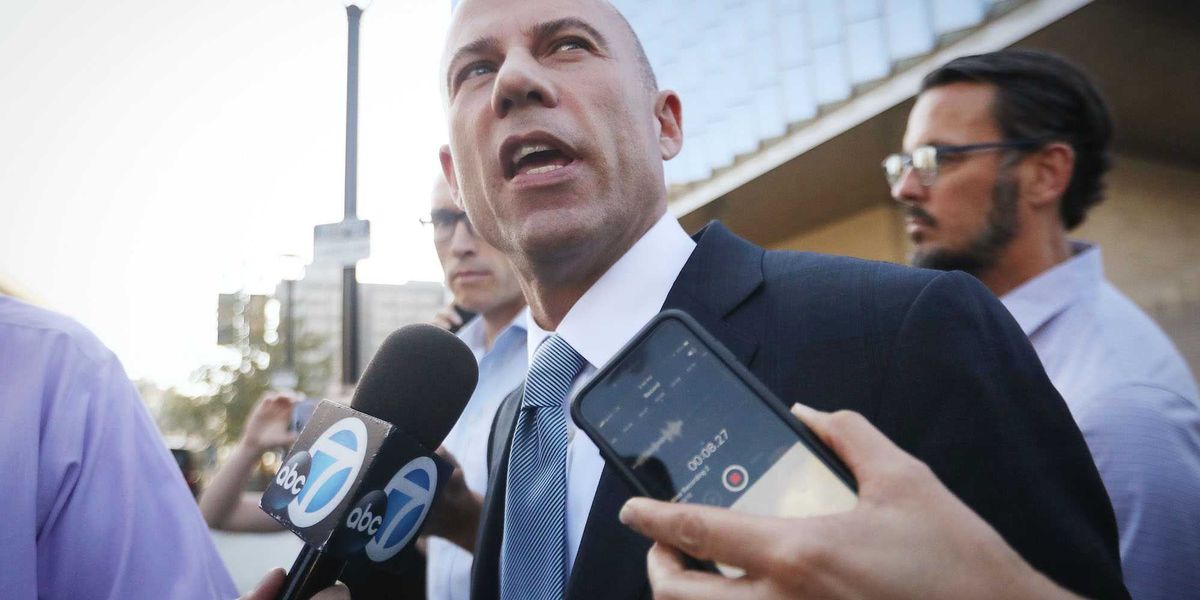
Michael Avenatti, once a high-profile antagonist of President Trump, has been released from federal prison to a halfway house after serving time for stealing from clients and attempting to extortion scheme. His fall from media darling to convicted felon included convictions tied to Stormy Daniels, an attempted extortion of a major company, and a host of financial crimes that led to years behind bars and heavy restitution. He is now scheduled to live in a federally supervised facility and attend court-ordered treatment programs while completing the remainder of his sentence outside prison walls.
Avenatti rose quickly in the public eye and then collapsed just as fast, becoming a cautionary tale about celebrity lawyering and media-driven reputations. Once billed by some as a relentless voice against powerful figures, he later stood convicted of taking clients’ money and using deceptive schemes to line his own pockets. The charges against him ranged from stealing client funds to obstructing tax authorities, and judges ultimately imposed substantial prison time and financial penalties.
Among the most high-profile episodes were his dealings with adult film actress Stormy Daniels, who had alleged a hush payment related to the 2016 election. Avenatti represented Daniels during the period when that story gained national attention, but the relationship later broke down amid accusations that he diverted client funds and started fundraising efforts without permission. Those actions led to criminal counts, and he was convicted of stealing roughly $300,000 from Daniels, a charge that carried a multi-year sentence.
He also faced separate prosecution for an attempted extortion scheme involving a major athletic apparel company, which led to additional prison time. That case produced a conviction tied to efforts to extract millions in payments, and a related sentence followed. Over time the combined legal outcomes resulted in lengthy federal prison terms, some of which were later adjusted or allowed to run concurrently.
The courts later imposed an even larger sentence tied to stealing millions from clients and obstructing the Internal Revenue Service, resulting in a long federal term that was reduced on resentencing. He was ordered to pay nearly $6 million in restitution to victims as part of the financial penalties. The cascade of convictions erased much of the public platform he once enjoyed and confirmed serious criminal liability in multiple jurisdictions.
During the final phases of his legal battles, observers noted raw courtroom emotion. He reportedly cried in court before sentencing. Those scenes were used by critics to underscore the contrast between his public bravado and private legal peril, and they fed into a narrative of accountability after a period of media prominence.
At the height of his visibility, Avenatti was treated as a cable news regular and a political antagonist worth attention, with liberal commentators and hosts elevating his profile. He was even given praise and hyperbolic comparisons by some television personalities, and that attention helped propel him into national conversations beyond legal circles. But the media spotlight did not shield him from criminal investigation or punishment when evidence of wrongdoing emerged.
Some of the most vivid examples of the praise he received are hard to forget. “Lately to me, you’re like the Holy Spirit,” she said in Aug. 2018. “You are all places at all times. Right? I mean, I see you all over cable news. … There’s a seat available if you want to be a co-host at ‘The View.’ There’s people here you can pitch!” “He’s out here saving the country!” Joy Behar responded at the time.
Those glowing endorsements later read very differently alongside the criminal convictions and restitution orders, and critics argued the contrast exposed a larger willingness to elevate personality over substance. The arc from celebrity advocate to convicted felon became a focal point for commentators questioning how the press and public reward boldness without sufficient scrutiny. For many, the shift was a blunt lesson about vetting and accountability.
After serving approximately four years in federal custody, he was transferred to a halfway house to complete the supervised portion of his sentence, with a scheduled stay through a specified date in 2028. Conditions include mandatory mental health treatment and restrictions on controlled substances, as well as the requirement to comply with federal supervision and restitution arrangements. Those steps are part of the court-ordered efforts to monitor his reentry into the community while ensuring compliance with the law.
His legal record also includes allegations from a former partner that were publicly denied and never produced criminal charges, a detail that remains part of the larger public dossier on his conduct. The blend of civil disputes, criminal convictions, and unanswered questions has left a mixed legacy that critics and supporters will continue to debate. Ultimately the courts determined significant criminal culpability in the financial crimes that carried the heaviest penalties.
As he moves into supervised release and treatment, the case will remain a reference point for discussions about ethics in legal practice and the consequences of mixing fame with representation. The financial repayments and supervision requirements stand as ongoing obligations tied to his convictions. For now, he will complete the remainder of his sentence in a federally supervised setting while facing the civil and criminal aftershocks of his legal downfall.
