
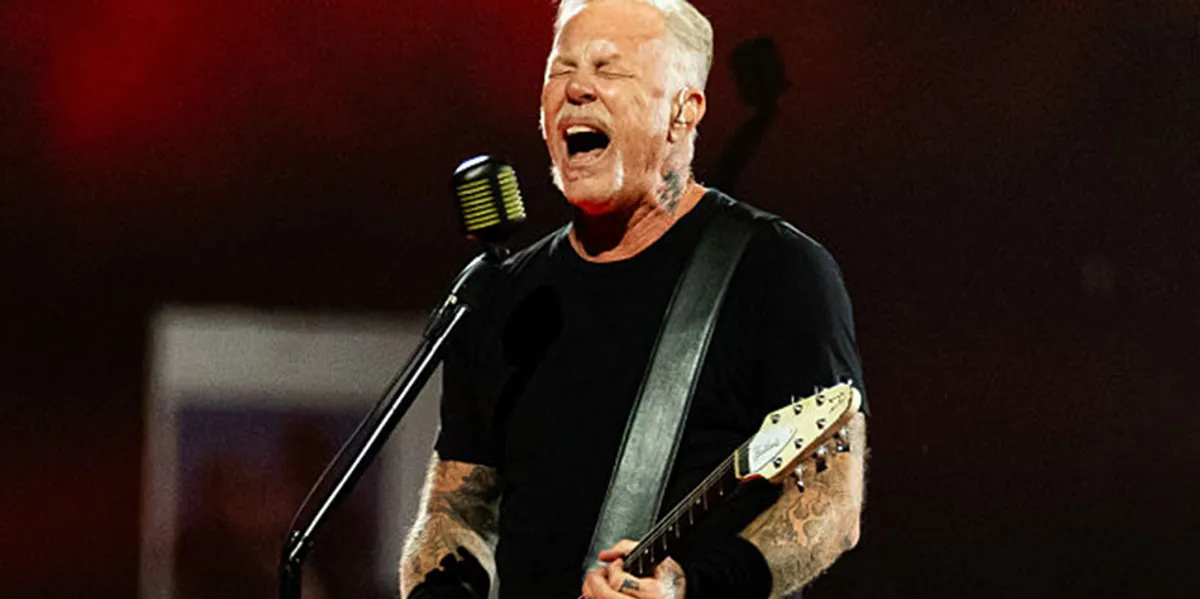
Metallica’s front man is once again in the middle of a conversation that has nothing to do with riffs, drums, or stadium singalongs and everything to do with where artists draw the line. In a climate where musicians are constantly pushed to turn every stage into a political soapbox, his stance lands with a sharp, unmistakable edge. The message is simple: the music should come first, and the rest can wait.
That attitude cuts against a growing habit in the entertainment world, where many performers seem eager to fold activism, speeches, and online outrage into every appearance. For plenty of fans, that can feel less like conviction and more like a lecture with a soundtrack. When an artist refuses to play along, it stands out, especially when the industry often rewards the loudest political theater over the strongest songs.
The divide is not subtle. Some musicians are happy to spend more time talking politics than performing, while others keep the spotlight on the work that made them famous in the first place. That contrast has only sharpened as big-name artists have used concerts, award shows, and interviews to chase headlines instead of letting the art speak for itself.
Metallica has long carried a reputation for being about volume, precision, and raw energy rather than trend-chasing commentary. That matters because fans of legacy bands usually show up for the catalog, the live experience, and the shared memory of hearing songs that still hit hard decades later. They are not always looking for a lecture between verses, and they are definitely not asking for a full political sermon before the encore.
The friction around politics in music is not new, but it has gotten noisier. Every few months, another celebrity weighs in with a hot take and then acts surprised when audiences push back, while others cheer the gesture as brave simply because it matches their own politics. The result is a culture where being loud often gets mistaken for being meaningful.
That is why a blunt rejection of political posturing can feel refreshing. It suggests there is still room for artists who think their job is to perform, connect, and leave the crowd with something lasting that has nothing to do with a campaign cycle. In a business built on attention, that kind of restraint can sound almost radical.
The larger debate also says a lot about fans themselves. Many people are perfectly happy to hear an artist speak up when it feels genuine, but they can spot cheap branding from a mile away. When politics starts to feel like a costume, audiences notice, and they do not always clap along.
That tension has shown up across the music world for years, from arena rock to pop to hip-hop, with celebrities like Macklemore, Hayley Williams, and Bruce Springsteen all taking very different approaches to mixing music and message. Some fans embrace that blend, while others see it as proof that the industry can no longer resist turning every microphone into a megaphone. Either way, the reaction is rarely quiet.
What makes the current mood so noticeable is how tired a lot of people seem to be of the performance around the performance. They want songs that hit hard, shows that feel alive, and artists who trust the work to carry its own weight. When the noise from the stage starts drowning out the music, the crowd tends to remember that silence can be a statement too.
