
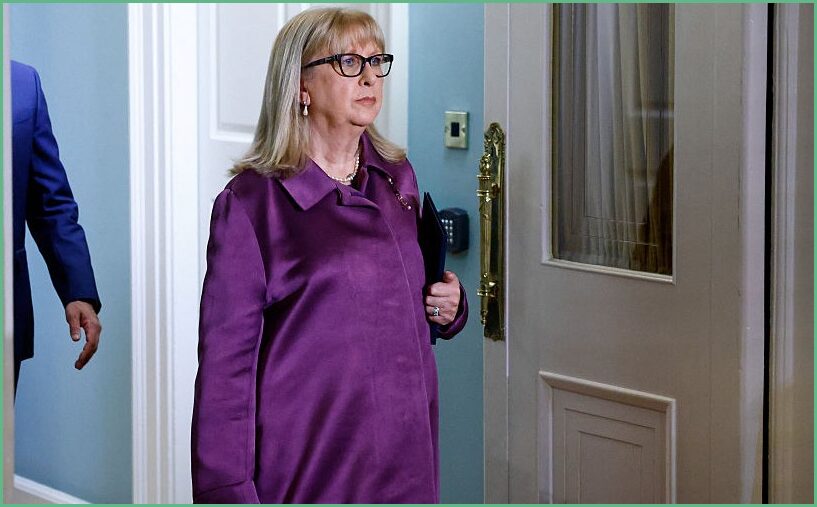
Former Irish president Mary McAleese criticized the practice of infant baptisms, including her own, calling them harmful to what she labeled ‘intellectual human rights’, and sparked a lively public response from Irish Catholics who pushed back against her claims. The debate highlights tensions between individual conscience, parental authority, and religious tradition, and has revived questions about how society balances respect for faith with evolving views on rights and autonomy. Responses ranged from theological rebuttal to calls for civil discourse, keeping the controversy squarely in public view.
Mary McAleese, a well-known public figure, publicly questioned the practice of baptizing infants and suggested such ceremonies can impinge on a child’s future ability to form beliefs independently. She framed her critique in terms of rights, saying infant baptism can violate ‘intellectual human rights’, and she noted this included her own baptism. That kind of language moved the discussion from purely theological territory into the realm of human rights and personal development.
For many Catholics, infant baptism is a longstanding sacrament tied to family life and community identity, not a coercive political act. Critics of McAleese argued that infant baptism expresses a family’s religious hope and commitment and that rituals welcome children into a faith community rather than strip them of agency. Those defenders emphasized pastoral intentions, suggesting baptism marks the start of a faith journey rather than the end of personal choice.
Theological scholars also weighed in, pointing out that baptism in Catholic teaching is understood as a sacrament of grace and belonging, administered by parents and godparents who promise to raise the child in the faith. From that perspective, baptism is not a statement about a child’s future private beliefs but a communal pledge of care and formation. This theological framing underpins why many believers reacted strongly when the ritual was described in rights-based terms.
There are legitimate questions to consider about consent and autonomy when religious rites involve minors, and those questions have become more prominent in modern rights discourse. Some ethicists say the solution lies in robust education and ongoing dialogue within families, so children later can make informed choices about their beliefs. Others push for legal clarity on what constitutes parental religious freedom versus a child’s evolving autonomy, though those conversations remain complex and culturally sensitive.
Public reaction mixed sharp rebuke with calls for calm conversation, and Catholic leaders in Ireland made clear they disagreed with framing infant baptism as a rights violation. They argued that labeling familial rites as harmful risks misreading the intentions of parents and communities who see rituals as sources of spiritual support and moral formation. That pushback reflected a broader desire to protect religious practices while engaging constructively with critics.
Media coverage amplified the controversy, bringing the debate into living rooms and online forums where personal stories and opinions multiplied quickly. Supporters of baptism shared memories of family gatherings and communal celebration, while opponents highlighted the importance of individual freedom to choose beliefs when mature. The public exchange underlined how deeply personal and culturally embedded religious practices can be, and how easily they become proxies for larger debates about rights and identity.
Whatever one’s view, the episode shows how statements from prominent figures can spark wider conversations about faith, rights, and the role of tradition in modern life. It also illustrates the need for respectful engagement when discussing sensitive practices tied to identity and belonging. In the weeks that followed, the discussion did not end, as people from different perspectives continued to weigh in and press for thoughtful dialogue rather than quick conclusions.
