
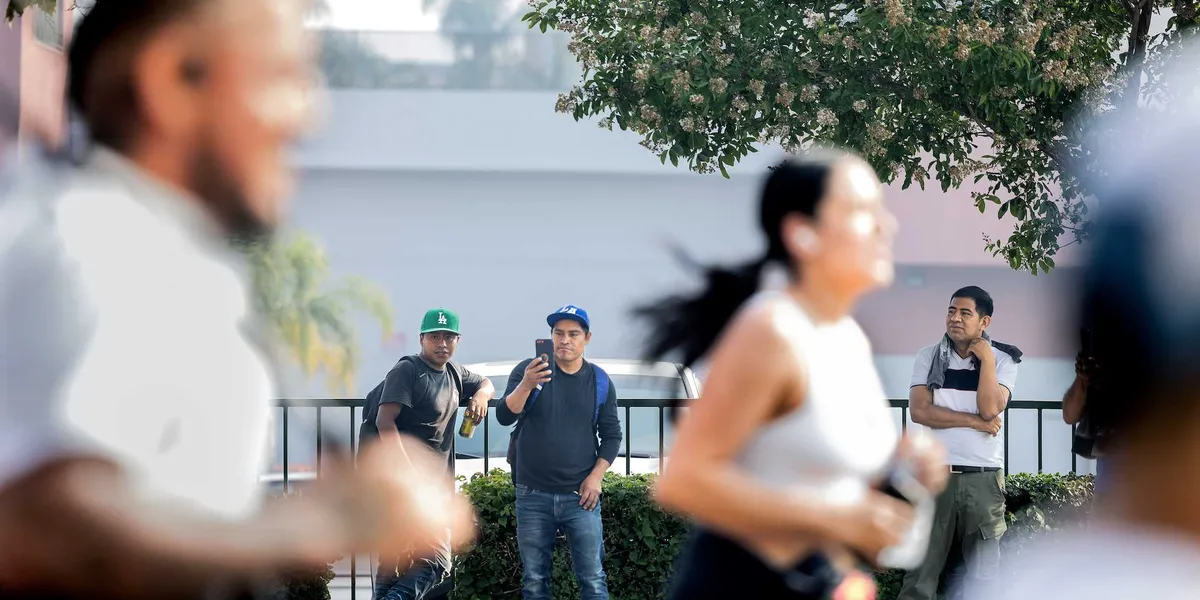
A tense dispute in Los Angeles has pulled a neighborhood dispute into the open, with a Black running group warning a Latino club that its presence amounts to an unwanted takeover of a historically Black area. The clash has stirred anger, fear, and plenty of online backlash, turning a local argument into a bigger fight over respect, identity, and who gets to claim public space.
The controversy centers on a neighborhood long associated with Black culture and community memory. For many residents, the issue is not just about exercise groups sharing streets and sidewalks, but about whether newcomers understand the history of the place they are entering.
That tension boiled over in comments accusing the Latino club of pushing too hard into territory some locals see as culturally sensitive. The phrase “hostile takeover” captured the mood of people who believe community lines are being crossed without enough care or conversation.
At the heart of the dispute is a simple but loaded question: what does respect look like in a neighborhood shaped by decades of racial change? In places like this, even ordinary gatherings can take on a heavier meaning when people feel their history is being ignored.
Social media poured gasoline on the fire. Posts and reactions spread fast, with people taking sides and sharpening the language until a local disagreement sounded like a full-blown cultural showdown.
Some voices framed the running club’s activity as harmless and even healthy, arguing that public streets belong to everyone. Others pushed back hard, saying that access alone does not erase the need for awareness, especially in communities that have already been through displacement and loss.
That push and pull is part of why the fight landed so hard. Neighborhood identity can be fragile, and when residents feel pushed aside, even a fitness group can become a symbol of something much larger.
Race also sits right at the center of the argument, which makes every word feel sharper. Black residents who see the area as their own cultural ground are reacting to what they see as a lack of consideration, while Latino residents and supporters may feel they are being unfairly singled out for simply showing up.
Those conflicting feelings rarely resolve themselves in a quick burst of outrage. They tend to linger, especially when people use loaded phrases that leave little room for nuance or compromise.
Los Angeles has seen this kind of friction before, where changing demographics meet long memories and neither side wants to be told to simply get over it. The city’s size and diversity can make it feel like many neighborhoods are living under the same sky but by different rules.
What makes this dispute so explosive is that it is about more than running routes or social groups. It touches on belonging, ownership, and the emotional weight that neighborhoods carry when they have been marked by struggle for generations.
In that kind of setting, every public gathering becomes part of a larger conversation whether people want it or not. A few words online can turn a local clash into a symbol, and once that happens, the argument takes on a life of its own.

1 Comment
Rerun 1992 LA riots??