
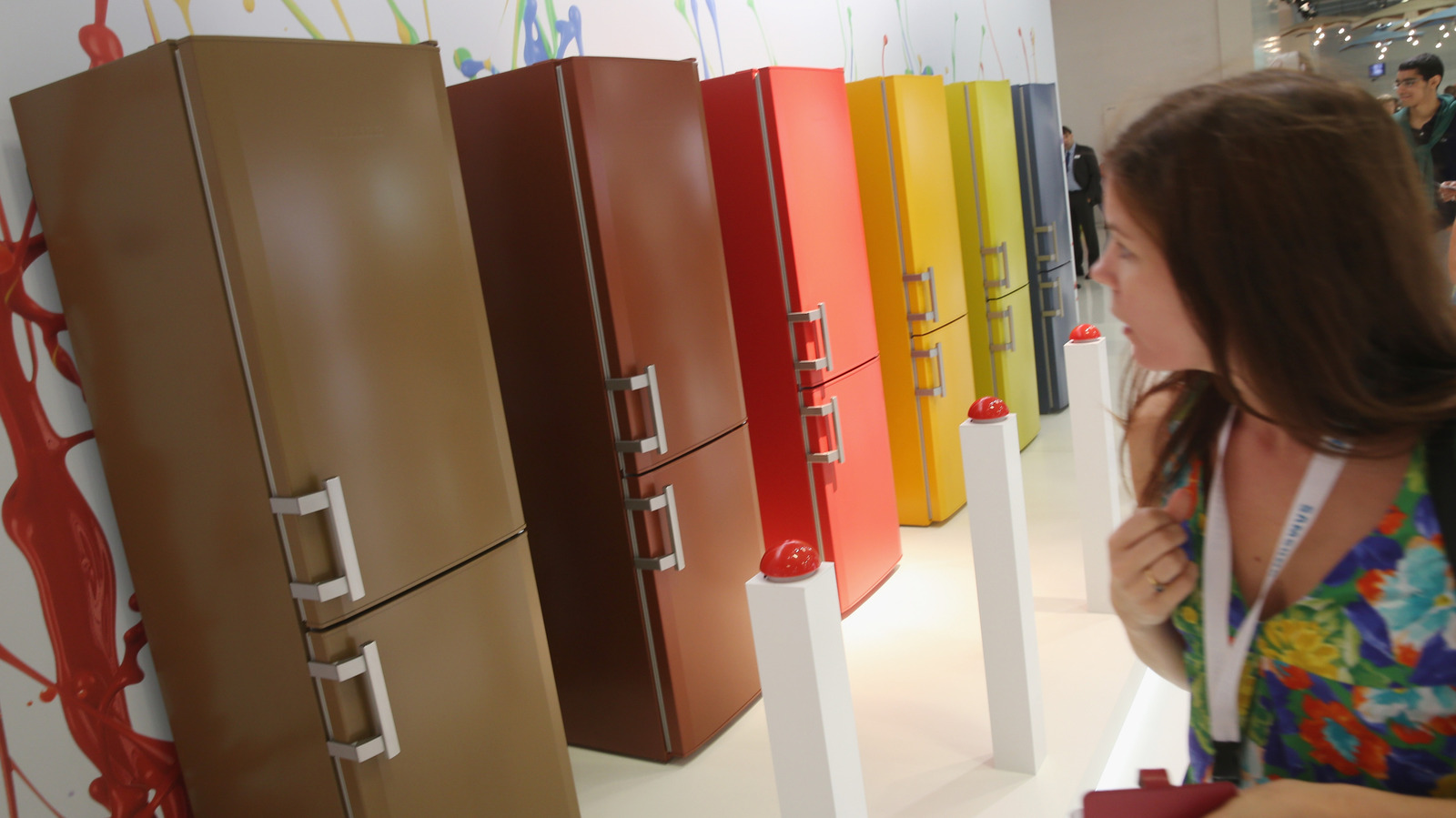
Liebherr sits in an unusual lane, pairing giant construction machines with polished refrigeration gear, and that contrast makes the brand more memorable than most appliance names. The company is still family-run, still tied to its German roots, and still spread across several countries, which gives its products a global footprint without losing the original identity that built the business.
It all started in 1949, when Hans Liebherr, a German engineer and entrepreneur, founded the company after developing a mobile crane that helped rebuild a war-torn Germany. That construction focus came first, and it defined the early years of the business before refrigeration entered the picture. By 1954, the company had expanded into fridges and freezers, turning a heavy-industry outfit into something far broader.
Today, Liebherr remains privately owned and controlled by descendants of the founder. The business sits under Liebherr-International AG in Bulle, Switzerland, while the appliance side operates as Liebherr-Hausgeräte, also known as Liebherr Domestic Appliances. It is not a standalone brand in the loose, casual sense many people assume, but a division inside a larger family-run industrial group.
The appliance business still has a strong German center of gravity, especially in Ochsenhausen, the town where Hans Liebherr first launched that side of the company. That connection matters because it links the modern product line to the company’s original appliance expansion. Even with production spread out, the brand keeps one foot planted in the place where the refrigeration story began.
Liebherr appliances are made across a network that spans India, Germany, Malaysia, Austria, and Bulgaria. The company manages that operation through Liebherr-Hausgeräte GmbH in Germany, which helps coordinate manufacturing across the different sites. That setup is common for major appliance makers, especially ones trying to balance quality, regional demand, and production efficiency.
Each location plays a role in the larger picture. Austria is home to a plant in Lienz, a small Alpine town with a strong industrial presence. Bulgaria’s factory sits in Radinovo, near Plovdiv, while Malaysia’s production is based in Kluang in Johor and India’s facility operates in Chhatrapati Sambhajinagar, a city with deep industrial roots.
That kind of spread also explains why appliance origin can vary depending on the exact model and market. A refrigerator sold in one country may come from a different plant than a similar unit sold elsewhere, even if both wear the same Liebherr badge. For buyers, that means the brand name tells only part of the story, while the manufacturing details fill in the rest.
The company’s mix of industrial muscle and premium home products gives it a rare kind of identity. Few manufacturers can build massive excavators and high-end refrigerators under the same family umbrella without the brand feeling scattered, yet Liebherr has managed that balance for decades. The result is a company that looks unusual on the surface but becomes much easier to understand once the ownership and factory map come into focus.
