
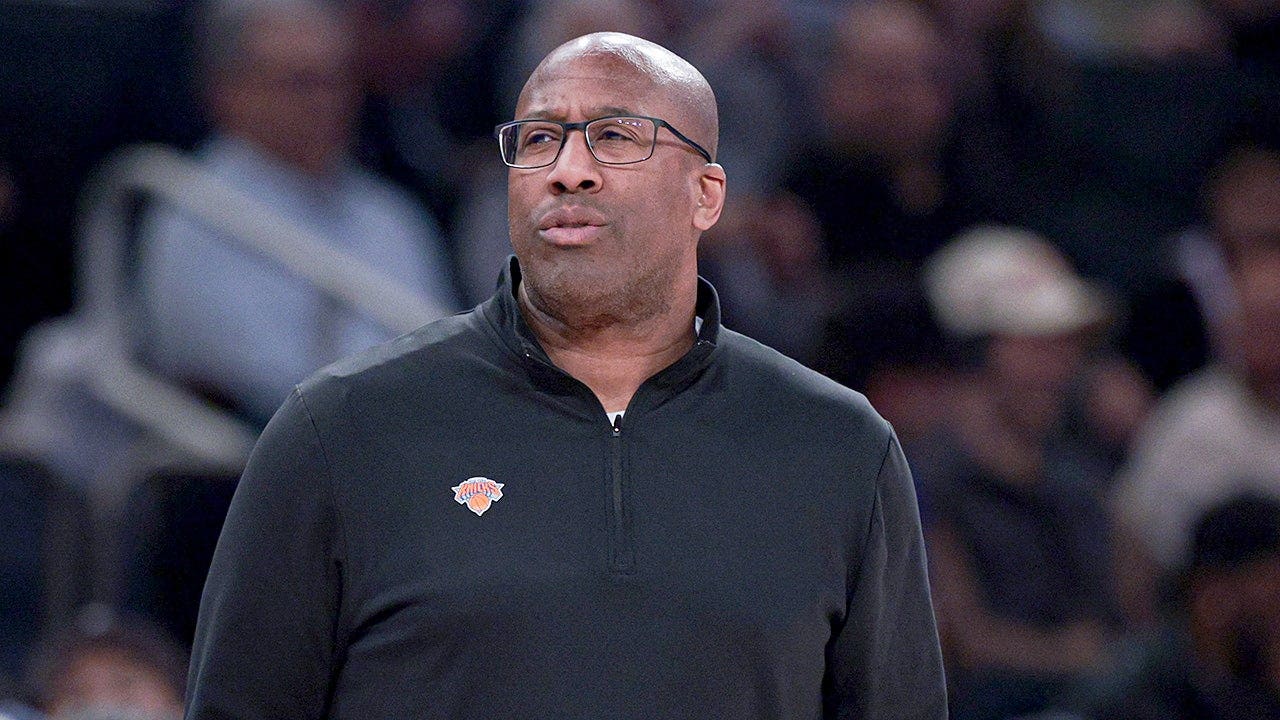
Mike Brown, the New York Knicks head coach, turned a routine postgame press conference into a playful moment when he picked up a reporter’s unmuted phone and gently scolded the room. The brief incident broke the usual stiffness of media sessions and quickly became a talking point for fans and reporters alike. It showed Brown’s stern-but-sly personality and reminded everyone that locker-room culture can be light, even under bright lights.
The scene was simple and human: microphones, questions, and a stray phone that wasn’t on mute. Brown noticed the device and, instead of ignoring it, reached over and picked it up, calling attention to the lapse in etiquette. His tone was more teasing than angry, the kind of correction seasoned coaches give without making a scene.
Reporters in the room laughed and adjusted, and the mood shifted from formal to friendly for a few moments. That shift mattered because it revealed how a moment of levity can ease tension after a close game or a tough loss. Brown’s move was a little reminder that coaches manage personalities as much as playbooks.
For viewers who follow press conference rituals, the episode read like a short lesson in professionalism mixed with personality. Players and staff often study how a coach handles the spotlight, and Brown’s reaction sent a clear message about expectations. He demonstrated leadership without lecturing, which is a useful approach when dealing with media pressure.
Social media picked up the clip quickly, with highlights shared across platforms and reactions ranging from amused to approving. The viral nature of the moment showed how even small gestures by high-profile figures can ripple outward. It also underlined how tightly wound modern sports coverage is, where a single second can become a headline.
The interaction also sparked commentary about the dynamic between coaches and the press; mutual respect is necessary for meaningful exchanges, and moments like this reinforce boundaries. Brown’s choice to handle it lightly helped preserve that balance and kept the focus on the team rather than creating a controversy. That pragmatic tone is something reporters and coaches both benefit from when the season grinds on.
On the Knicks side, the incident was a footnote in a larger narrative about team performance and coaching style. Brown’s actions off the court, even in small moments, contribute to the culture he builds behind the scenes. Fans watching the team want to see discipline, but they also appreciate personality—this was a tidy mix of both.
Ultimately, the phone episode was a brief, humanizing snapshot of life inside an intense professional sport environment. It wasn’t about drama or scandal; it was about a coach asserting control with a wink and a nudge. Those little moments often stick longer in public memory than any single play.
