
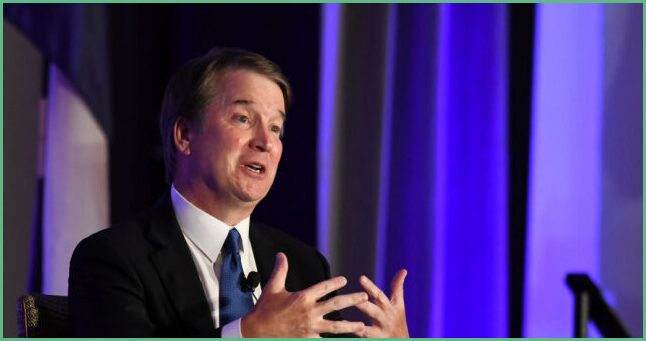
Nicholas Roske, who planned an assassination attempt on Supreme Court Justice Brett Kavanaugh in 2022, was sentenced to prison for roughly eight years on Friday. The sentence reflects the seriousness of targeting a sitting justice and sends a clear message that attacks on the judiciary will be met with real consequences. From a Republican perspective, this case underscores the need to protect our institutions and hold violent actors fully accountable.
The facts are straightforward and disturbing: Roske drove to Maryland with a plan to kill Justice Kavanaugh and had weapons and materials in his car. He did not succeed, but the intent and preparation were plainly dangerous and required decisive legal action. The sentence aims to balance punishment with public safety, and Republicans should view it as an affirmation of law and order.
Politically, the attack hit at the heart of an independent judiciary that interprets the Constitution without fear or favor. Attacking a justice is not a debate tactic and is far removed from the rough-and-tumble of political disagreement. Republicans insist that political fights belong in the voting booth and legislatures, not in acts of violence or intimidation.
The judicial process moved from arrest to plea and then to sentencing, showing the system working under pressure. Prosecutors presented the evidence of intent and planning, and the judge weighed those facts against applicable sentencing guidelines. That the sentence landed around eight years is not a political stunt; it’s a legal outcome grounded in the details of the crime.
Why This Matters
First, a violent plot against a justice threatens the separation of powers because it aims to terrorize one branch into submission. If attackers could influence or frighten justices, the entire constitutional framework would be at risk. Republicans need to be loud and clear that those who threaten officials will face the full force of the law.
Second, the case exposes gaps in security and raises questions about how close an assailant can get to a public figure before detection. Investigations showed Roske was able to travel and prepare, which prompts an honest conversation about protective measures for the bench. Republicans should demand a pragmatic review of protocols that protects judges without turning them into isolated figures.
Third, there is a broader cultural element to consider: political rhetoric can inflame and inspire unstable people. This is not a free speech issue; it is a responsibility issue. Leaders, especially those on the right who value civic stability, must reject language that dehumanizes or incites violence and instead model firm, principled debate.
The sentencing also intersects with mental health and criminal accountability. Reports suggested Roske struggled with personal instability and fixation, which sometimes features in plots like this. Republicans favor accountability first, but also sensible investments in mental health resources to prevent similar crises from escalating into violence.
On the legal front, the punishment serves several functions: retribution, deterrence, and incapacitation. Retribution answers the moral outrage; deterrence warns copycats; incapacitation ensures he cannot act again. That mix aligns with conservative principles that respect victims, prioritize safety, and uphold strict consequences for violent intent.
Public reaction split along predictable lines, with many on the right calling for stern punishment and stronger protections for officials. Some voices urged introspection about the tone of public discourse, while others focused on the procedural fairness of the sentence. Republicans must hold both positions—support firm sentencing while also policing rhetoric within the political arena.
There will be debates about whether eight years is enough or too much, but the important point is consistency. The justice system must apply rules uniformly, regardless of the target’s political leanings. A penalty that fits the crime strengthens trust in the system among conservatives who often argue for equal treatment under the law.
Practical next steps should include a transparent review of courthouse security and threat assessment protocols. Republican lawmakers should press for clear reports and remedies to ensure justices are protected without eroding public access to justice. Upgrading coordination between federal and local authorities is a commonsense move that transcends partisan drama.
At a cultural level, conservative leaders must speak out against violence and double down on civic duty and lawful behavior. The GOP has long stood for respect for institutions and the rule of law, and this moment is a test of those values. Strong condemnation of violence combined with a commitment to due process is the right and responsible approach.
Finally, the sentence should not be the end of the conversation but the start of a sustained focus on prevention. Better mental health care, improved security measures, and cleaner public discourse can reduce the chances of future threats. Republicans who care about order and liberty should lead on these issues, keeping the public safe while defending constitutional principles.
In short, the Roske case was a stark reminder that political violence is a real danger and must be met with decisive consequences. The eight-year sentence balances punishment and safety, and it should spur reforms to protect the judiciary. For Republicans, this is a moment to reaffirm faith in institutions, demand accountability, and insist on a healthier civic culture.

1 Comment
It’s not enough but it’s a good start.
It’s Chuck Shitmer who should be arrested for standing in front of the Supreme Court pushing for violence against the conservative Justices, “remember; You have released the whirlwind and you will not rest”
That’s grounds for arrest for purposely inciting violence against the Supreme Court.!