
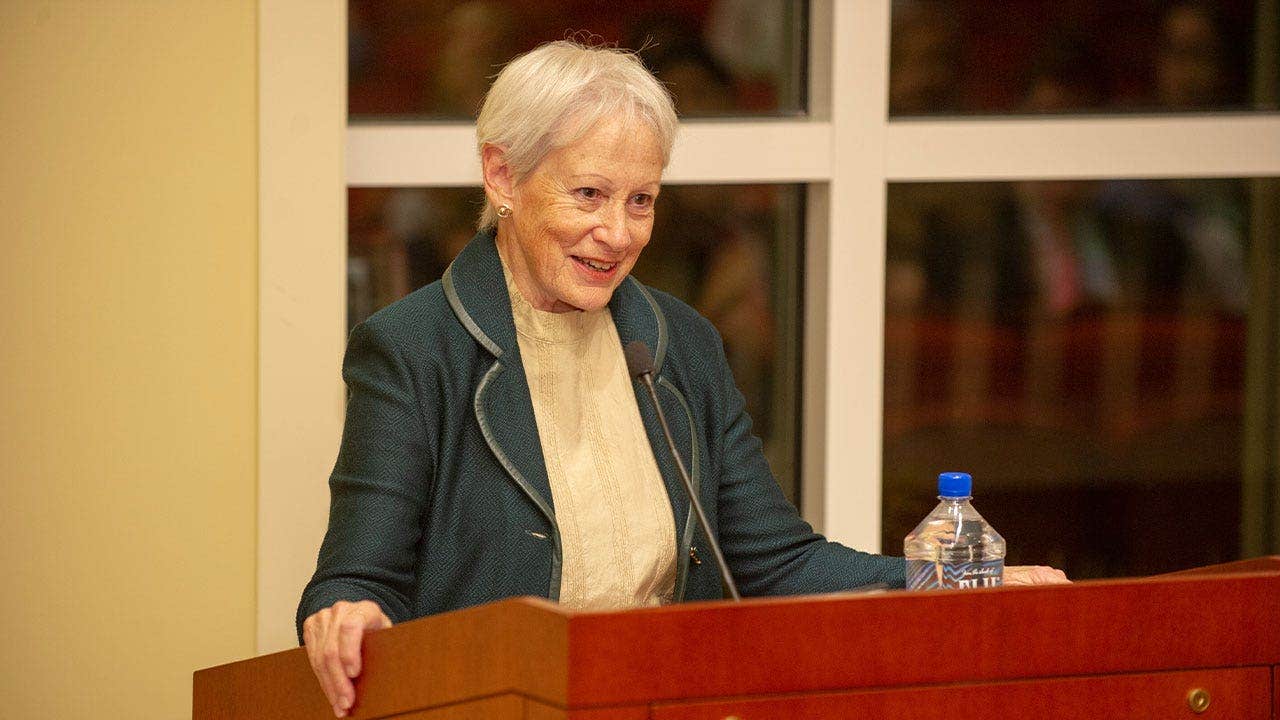
Nancy Kassebaum Baker’s death marks the passing of a rare kind of Republican, one who could win big in a red state, make history in Washington, and still surprise the party with her independence. Her career stretched across three Senate terms, a string of hard-fought battles, and a long list of moments that showed she was never interested in playing a neat political role.
She was 94 and died of natural causes, according to her son. For Kansans, she was more than a familiar political name, since she spent 18 years representing the state and never lost the sense that her real base was the prairie, not the capital.
Kassebaum Baker made history in 1978 when she won election to the Senate and became the first woman elected there without a husband’s earlier service in Congress opening the door. That alone would have been enough to secure her place in the record books, but her influence grew because she handled the job like someone who intended to be judged on substance, not symbolism.
As the daughter of former Kansas Gov. Alf Landon, she came from a famous Republican family, yet she never acted trapped by inherited expectations. She was known as a moderate, and that meant she was perfectly willing to step away from the party line when she thought it made sense.
That independence made her stand out in an era when party discipline was tightening and political temper was getting hotter. She was popular at home, winning re-election with 76% of the vote in 1984 and 74% in 1990, a strong reminder that Kansas voters respected backbone even when they did not always agree with every vote.
Her election also changed the look of the Senate in a lasting way. By the time she announced retirement, only a handful of women served there, and she was the only woman chairing a Senate committee, a sign that she had moved well beyond being a novelty and into the center of real power.
She also built bridges where others preferred walls. One of the best-known examples was her work on health insurance legislation that later carried her name alongside Democratic Sen. Ted Kennedy, proof that she could cooperate on a major issue without surrendering her identity.
That spirit sometimes put her at odds with conservatives, especially when she backed an assault weapons ban supported by President Bill Clinton. She later said it brought the angriest mail she ever received, which says plenty about how stubbornly she held to her view even when the heat got intense.
Her personal life connected two Senate worlds as well, after she married former Republican Sen. Howard Baker in 1996 shortly before leaving office. It was the first marriage between two people who had both served in the Senate, a detail that sounds almost too perfect for the political history books.
After leaving Congress, she did not fade into silence. She kept serving in public life, including work on a bipartisan commission on campaign finance reform, and later she drifted even further from the GOP’s direction, endorsing Democrats in Kansas races, including Gov. Laura Kelly.
That split from the party was not just theoretical. After the Jan. 6 attack on the Capitol, she called for Donald Trump’s impeachment and made clear she had no patience for the kind of chaos that embarrassed the country and shredded basic political norms.
Still, through all the change and all the fights, she stayed tied to Kansas in a way that felt almost physical. Before heading to Japan during her husband’s ambassadorship, she said, “All I can say is, I will miss the Kansas prairie,” and that line still lands with the quiet force of someone who never forgot where she came from.
