
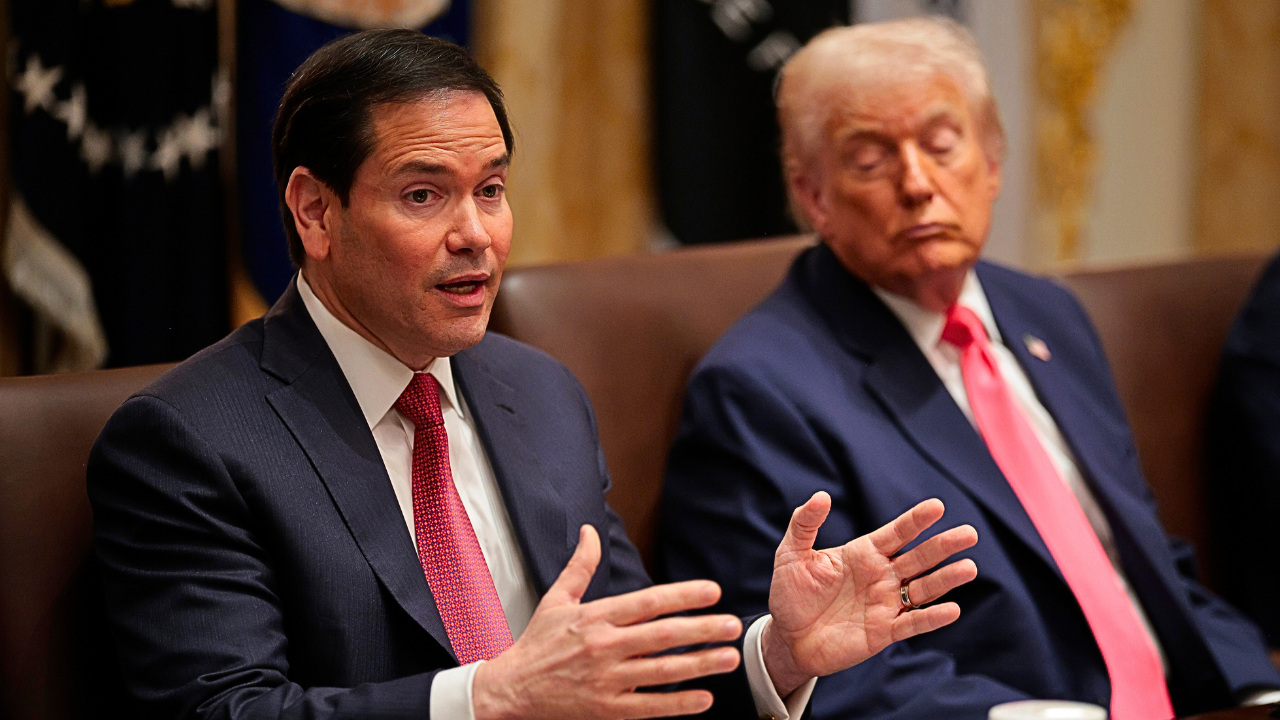
A federal judge has thrown out the Trump administration’s visa freeze affecting applicants from 75 countries, saying the policy went too far and crossed a legal line. The ruling puts a spotlight on the fight between executive power and the limits Congress set for immigrant visa decisions.
U.S. District Judge Jeannette Vargas, a Biden appointee in Manhattan, said Secretary of State Marco Rubio did not have the authority to order blanket refusals for people who had already been found eligible under the immigration rules. She vacated the State Department policy and told the government to go back and review the denials tied only to that freeze.
In her 61-page opinion, Vargas wrote, “The Court holds that the Policy is contrary to law and was issued in excess of Secretary Rubio’s statutory authority,” making clear she saw the directive as more than a technical mistake. The policy, launched in January, suspended immigrant visa issuance for nationals of 75 countries the department said posed a high risk of becoming dependent on public benefits.
The list stretched across Africa, Latin America, the Caribbean, Eastern Europe, Southeast Asia, and the Middle East, giving the policy a massive global reach. Even though consular officers were told to review applicants individually, the judge said that review was basically a dead end if the applicant came from one of the targeted countries.
That point mattered a lot in Vargas’s analysis. She said applicants who otherwise cleared the hurdles still faced denial if they were from the wrong country, and she described the process as one where “The outcome is predetermined. The visa will be refused.”
Vargas said the policy effectively turned into a nationality-based ban and pushed aside the consular officers Congress assigned to handle visa decisions. She argued that the immigration law does not let the State Department say no to someone who is otherwise qualified just because of where that person was born.
The administration tried to defend the policy by pointing to Section 221(g) of the Immigration and Nationality Act, which allows certain visa refusals. Vargas was not persuaded, saying the government failed to identify any law that lets an officer deny a visa to someone already found eligible for it.
She went even harder on that defense, writing, “The Government engages in what is best described as an exercise in Orwellian logic,” a line that signals how sharply she viewed the legal theory behind the freeze. Vargas also said the policy ran afoul of the INA’s ban on nationality-based discrimination in immigrant visa issuance.
Another issue was control. The government argued the consular officers still made the formal refusal, but Vargas said that was just window dressing if the decision had already been dictated from above. “The fact that the mandatory visa refusal is ultimately effectuated by the consular officer hardly means that the consular officer’s role in the statutory scheme has not been usurped,” she wrote.
The ruling drew a line between this case and the Supreme Court’s 2018 decision that upheld Trump’s first-term travel ban. Vargas said that earlier case dealt with presidential authority over who could enter the country, while this one turned on whether the State Department could block immigrant visas for people the law otherwise said were eligible.
That distinction matters because the judge did not wipe out every visa denial tied to the policy. Refusals based on separate legal grounds can still stand, but the denials based only on the 75-country freeze are now set aside, and those cases go back for more proceedings under the court’s decision.
The lawsuit was filed by the Catholic Legal Immigration Network, African Communities Together, five employment-based immigrants waiting on their cases, and six U.S. citizens hoping to bring family members to the country. The decision lands in the middle of a broader immigration crackdown that has already seen the administration move aggressively on visa revocations and screening rules.
