
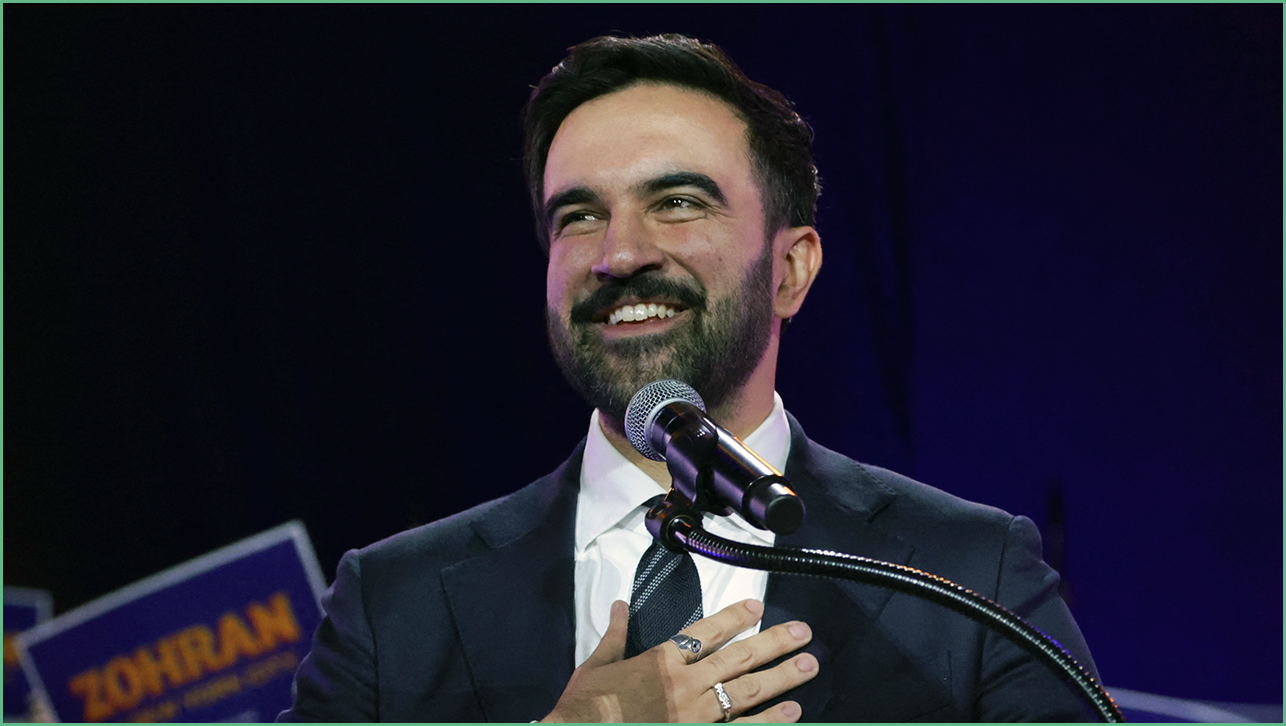
House Minority Leader Hakeem Jeffries publicly backing Zohran Mamdani has exposed a sharp tug-of-war inside the Democratic Party, highlighting a clash between New York progressives and the broader electorate, and laying bare how far the party has drifted toward socialism and fringe rhetoric that risks alienating swing voters nationwide.
Jeffries’ endorsement hands the Democrats a visible symbol of their current direction. Mamdani is young, untested in traditional public service, and carries baggage that many Americans find alarming, not least because some of his statements and associations have been interpreted as hostile toward Israel and the Jewish community.
That disconnect matters because public ideology doesn’t match activist energy. Polling still shows only 26% of Americans describe themselves as “liberal” or “very liberal” while 32% call themselves “moderate” and 33% say they are “conservative” or “very conservative.” Pushing a party toward the far left when most voters sit in the middle or right is a political gamble that looks tone-deaf outside liberal enclaves.
Democratic leaders appear paralyzed between principle and political survival. For weeks they debated endorsements as if optics alone could resolve deep policy divides, but party elites in New York ultimately lined up with their progressive base, signaling that fear of intra-party backlash now often outweighs concern about general election consequences.
Senate Minority Leader Chuck Schumer faces particular pressure as he weighs whether to join the chorus supporting Mamdani. Schumer’s long record of backing Israel and his ties to a large Jewish constituency in New York make this a sensitive moment, and his fundraising numbers suggest he cannot afford to be out of step with both donors and grassroots activists at once.
Fundraising reflects real political vulnerability. Recent quarterly totals showed Schumer lagging behind rising progressive stars, and that shortfall invites primary challengers like Alexandria Ocasio-Cortez in future cycles, especially if he appears to resist the left’s priorities or to waver when activists demand loyalty over judgment.
Mamdani’s refusal to explicitly repudiate slogans like “Globalize the Intifada” and his talk of arresting foreign leaders who visit New York are not mere rhetorical missteps. Those positions fuel legitimate concerns about loyalty to allies, public safety, and whether extreme rhetoric will translate into governing instability if embraced by national party figures.
Outside New York, the party’s tolerance for extreme statements by elected Democrats fuels voter unease. Incidents ranging from past violent fantasies like “getting two bullets to the head,” followed by “die in their mother’s arms,” to demeaning remarks such as “There is nothing more terrifying than a white man with a gun” and dismissive phrases like “white boys” are cataloged by critics and raise questions about standards and accountability within the party.
The ideological shift is not confined to nasty rhetoric; it extends to policy. Gallup and other trend data show a rising openness to socialism among Democrats, with many on the left viewing it as a viable alternative to capitalism. For voters in swing states such as Iowa, Michigan, Pennsylvania, and Arizona, that marks a stark contrast with their economic priorities and makes Democrat messaging a tougher sell.
Local oddities also damage the national brand. Candidates with troubling pasts or comments, whether on tattoos or homophobic slurs, underscore a party that sometimes elevates controversy over electability. Those stories stick in voters’ minds and make it easier for opponents to argue Democrats are out of touch with mainstream values.
Election consequences follow. The house map shows competitive seats clustered outside progressive strongholds, which means the leftward course risks surrendering winnable territory. If national leaders persist in prioritizing ideological purity over broad appeal, they could hand swing districts and crucial control of Congress back to Republicans in a way that looks avoidable from today’s vantage.
