
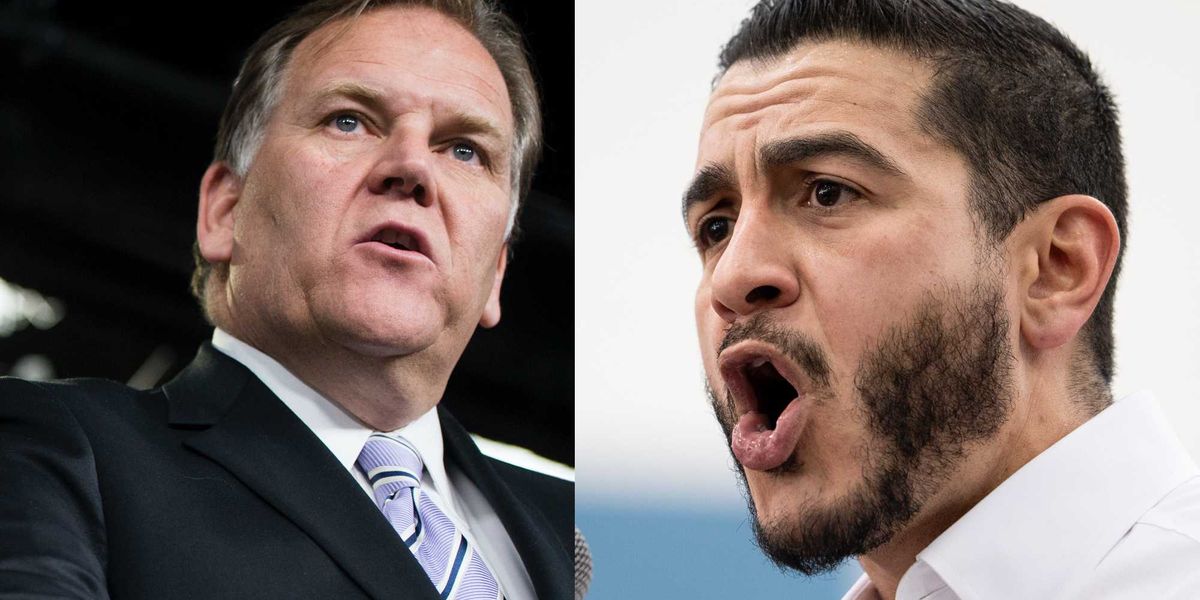
The Michigan Senate race is already shaping up as a hard-edged, personality-driven fight, and Mike Rogers is leaning into that energy with a blistering new ad aimed at Abdul El-Sayed. The spot goes straight for the jugular, framing El-Sayed as an out-of-touch political oddball while Rogers tries to cast himself as the steadier, tougher choice. In a state that rarely hands out easy wins, the message is simple: this contest is going to be fought in the mud, and neither side is backing off.
The ad’s tone is not subtle, and that is exactly the point. Instead of polished applause-line politics, Rogers is pushing a raw attack that tries to define El-Sayed before voters get buried under campaign slogans and glossy mailers. The strategy reflects a broader truth about modern Senate races: first impressions matter, and a sharp, memorable hit can land harder than a stack of talking points.
El-Sayed has long carried a profile that invites strong reactions, and Rogers is clearly betting that swing voters will notice the contrast. On one side sits a candidate trying to look grounded and practical. On the other is a challenger whose public image has often been tied to ideological activism and a more unconventional style, which gives opponents plenty of material to work with.
Michigan itself is a perfect stage for this kind of brawl. The state has a deep blue-collar streak, plenty of voters who distrust political theater, and a long memory for candidates who seem too polished, too strange, or too eager to perform for national attention. That makes attacks about authenticity and temperament especially potent, because voters there tend to reward candidates who sound like they understand ordinary life.
Rogers is also working in a political environment where identity and biography still matter, but not always in the way campaign consultants expect. If a candidate can frame the race as one between common sense and spectacle, the argument can stick fast. That is why ads like this are designed to do more than insult. They are meant to create a mental shortcut, one that voters may carry with them all the way to the ballot box.
There is also a larger Republican lesson in the move. In a cycle where control of the Senate can hinge on a handful of states, candidates cannot afford to spend weeks politely circling the issue. Hard contrast ads can force the opponent onto defense, drain momentum, and keep the conversation focused on qualities that matter to persuadable voters. The risk is that the attack can backfire if it looks too theatrical, but the reward can be huge if it defines the race early.
For Democrats, that means El-Sayed will have to answer more than policy questions. He will need to reassure voters that he is not just loud, different, or pleasing to activists, but also serious enough to handle the job. That can be a tough lane when the other side is pounding home the image of a candidate who looks like a bad fit for Michigan’s political center of gravity.
What makes the ad stand out is how directly it tries to tap into voter instincts. A lot of campaigns talk about change, leadership, and vision. This one is aiming at gut reaction, the kind that can be shaped by a few seconds of sharp editing and an even sharper accusation. Whether that sticks will depend on how voters already see El-Sayed, but Rogers is clearly counting on the fact that elections are often decided by image long before the policy papers come out.
