
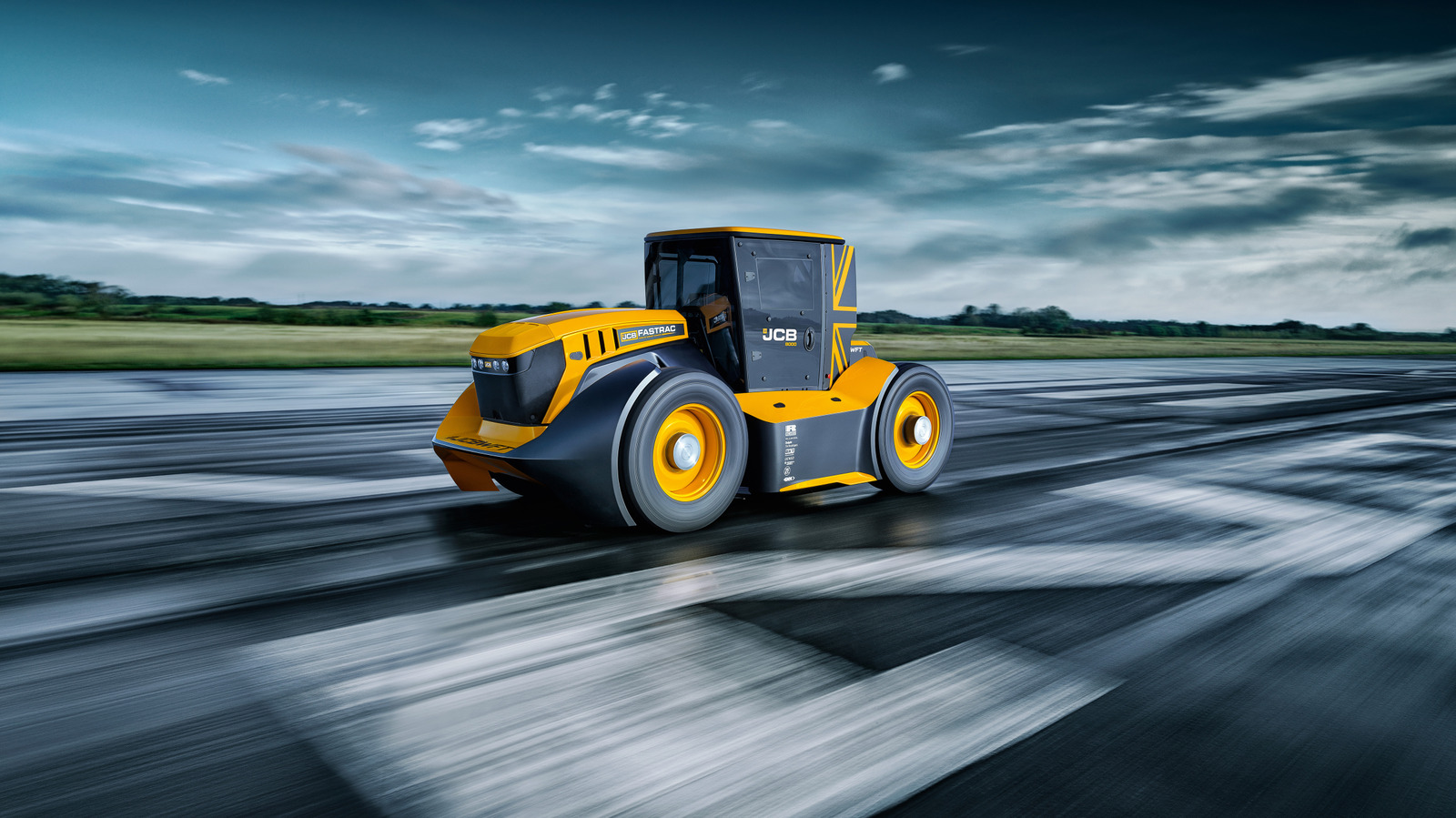
Here’s a short, punchy look at an unlikely headline: a JCB tractor so quick it could legally be stopped for speeding anywhere in the U.S. We’ll unpack what makes it fast, why that matters on public roads, how drivers and cops react, and what this says about modern farm machinery moving past old assumptions. No fluff, just the surprising facts and a few practical takes for anyone who shares the road with a fast tractor.
Tractors have long been slow-moving symbols of steady work, but some modern models rewrite that script with surprising ferocity. JCB’s high-performance machines, especially the Fastrac line, blur the line between field equipment and highway-capable vehicles by boasting top speeds that outpace expectations. That single fact turns a routine farm tool into something traffic cops pay attention to, and it changes how farmers plan trips between fields and markets.
Why would a farmer want a faster tractor in the first place? Time is money, and covering long distances between parcels of land or moving machines between jobs is more efficient at higher speeds. A tractor that can cruise comfortably on secondary roads without impeding traffic saves hours and reduces wear from constant slow driving in higher gears, but it also introduces new safety and legal questions for operators.
Legally, speed limits apply to whatever’s on the road, and that includes tractors with highway-capable speeds. If a JCB hits the posted limit on a county road or interstate access point, local enforcement can treat it like any other speeding vehicle. That raises questions about proper registration, lighting, braking standards, and whether a piece of farm equipment meets the safety expectations set for passenger cars and trucks.
Safety is the real kicker. Tractors are heavy, often tall, and equipped with tires designed for fields, not asphalt at speed. High-speed travel means different stresses on steering, brakes, and suspensions, and accidents can be catastrophic when a slow-moving design meets fast-moving realities. Drivers must be trained to handle the change in dynamics and ensure the machinery is equipped for road travel with appropriate mirrors, lighting, and secure loads.
From a manufacturer’s perspective, the race to make tractors faster is about versatility and customer demand. Farmers want machines that can do the job in the field and get between jobs quickly without needing a trailer or a second vehicle. That push has led to engineering innovations—better gearing, improved drivetrains, and controlled suspensions—that bring trucklike behavior to equipment once limited to 20 or 25 miles per hour.
Cops and communities are adjusting in real time as well. A tractor weaving through traffic at 40 or 50 miles per hour is a new kind of traffic hazard that invites scrutiny and, sometimes, enforcement action. Law enforcement tends to treat roadway safety seriously, regardless of whether the driver is in a pickup or a farming implement, and that means farmers must be ready to show proper licensing and proof the machine is roadworthy.
Ultimately, the story of a JCB that could be pulled for speeding is a neat example of how technology outpaces assumptions. Modern tractors are becoming multi-use machines with highway chops, so drivers, manufacturers, and regulators all face adjustments. For the average person on the road, the takeaway is simple: expect the unexpected, keep an eye on large slow—or suddenly fast—vehicles, and respect that farm equipment is evolving into something more complex than the plodding icons we grew up with.
