
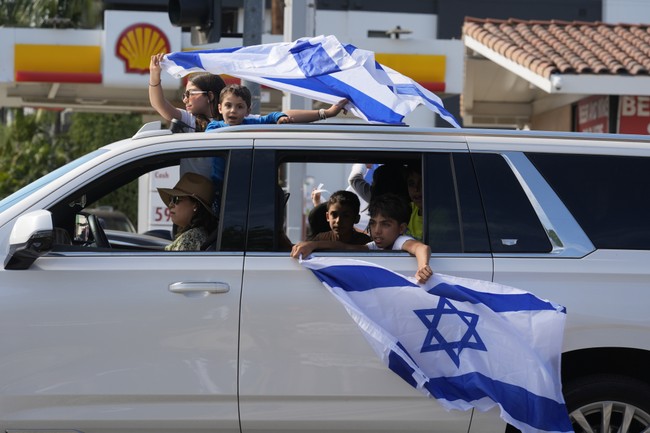
Israel and Hamas have reached a significant agreement for a ceasefire and hostage release deal, a process that has encountered various hurdles typical of negotiations involving such complex and sensitive issues. After enduring several setbacks, it appears that the deal has been officially ratified by officials from Israel, Hamas, the United States, and Qatar.
Israeli Prime Minister Benjamin Netanyahu has been briefed on the agreement, prompting him to call for a meeting with his political-security cabinet, followed by a government session to finalize the plan’s approval. His office released a statement indicating that the families of the hostages were informed of the agreements by the Directorate for Hostages, Missing Persons, and Returnees. Netanyahu has also tasked the Coordinator for Prisoners and Missing Persons to prepare for the hostages’ reception upon their return to Israel.
The Israeli government is scheduled to vote on the proposal on Saturday, which would postpone the release of the initial group of hostages until Monday. Officials pointed to last-minute complications with Hamas as the reason for the delay. Despite progress, the deal remains tentative, pending further discussions by Israel’s security cabinet on Friday, followed by a government meeting to give final approval.
The negotiation process has left some Israelis feeling conflicted, as the deal promises the return of some of their loved ones but at a considerable cost. The first phase of the agreement is expected to commence on Sunday and span six weeks, involving a ceasefire, the withdrawal of Israeli troops, an exchange of hostages and prisoners, and the delivery of humanitarian aid into Gaza. United States President Joe Biden announced that American hostages held in Gaza would be released during this phase.
Subsequent phases of the agreement are less clearly defined and will be determined as the first phase unfolds, according to Qatari Prime Minister Mohammed bin Abdulrahman Al Thani. The agreement stipulates that for each hostage released, Israel will free a greater number of Palestinian prisoners.
Domestically, the agreement has sparked debate regarding which political figure deserves credit—outgoing President Joe Biden or President-elect Donald Trump. This topic has become a focal point of discussion within the political landscape.
The hostages were taken by Hamas following a sudden and brutal assault on October 7, 2023, which resulted in the deaths of over 1,200 individuals. In retaliation, Israel launched military operations, leading to prolonged conflict between the two parties.
Hamas’s actions have led to widespread skepticism about its credibility, especially following statements from its leader, Khalil al-Haya, who expressed pride in the October 7 attack and wished for its recurrence. Such sentiments raise doubts about the long-term viability of peace in the region, as many believe that stability can only be achieved with significant changes within Hamas.
Despite these challenges, there remains hope for the safe return of the hostages. The ongoing situation underscores the complexity of peace processes in the Middle East, where deep-seated tensions and historical grievances continue to present formidable obstacles to lasting resolution.
