
Red Voice Media
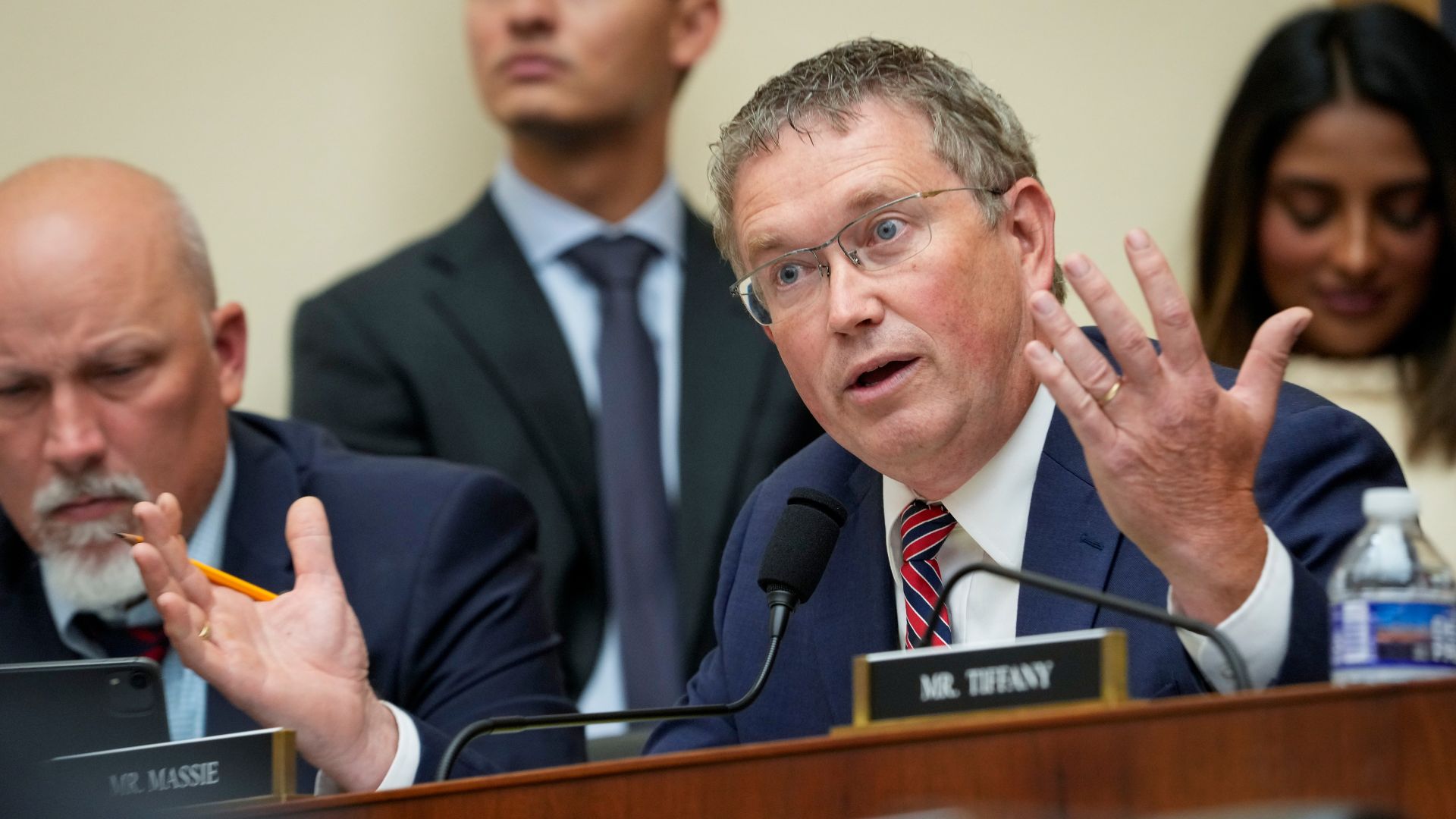
In a recent exchange that highlighted the ongoing debate over government spending and inflation, Rep. Thomas Massie (R-KY) made his case against what he called reckless fiscal policies. During a discussion with Rep. Jamie Raskin (D-MD), Massie argued that the federal government’s decision to print vast sums of money has directly led to rising inflation. He emphasized that the $5 trillion added to the economy in recent years has diluted the value of the dollar, creating a financial burden for everyday Americans.
Massie explained the concept of monetary dilution in simple terms, stating, “This is what happens when you have a quantity of something and then you add more to it. This is dilution.” He likened the situation to a science project that even a child could grasp, showcasing how increasing the money supply affects its overall value. By stating, “when you print $5 trillion and you put it into the economy, you have diluted the value of the money,” Massie underscored the straightforward nature of the problem.
He went on to discuss the impact of inflation on workers’ wages, noting that even if nominal pay remains unchanged, employees are effectively earning less due to the devaluation of money. “For instance, if you had a minimum wage at some amount, and somebody was making minimum wage, and they were still making minimum wage after this money was printed, they actually are making considerably less in terms of real dollars,” he explained. This statement reflects a deep concern for the struggling workforce as inflation continues to rise.
Massie dismissed various explanations for increasing costs, such as supply chain issues or geopolitical events, arguing that inflation is a widespread problem that cannot be pinned down to isolated factors. He pointedly stated that the massive $5 trillion printed is likely the primary driver of current inflation. “You know, we can say, well, eggs went up because feed went up, fuel went up because there’s a war in Ukraine,” he said, illustrating how easy it is to find excuses for price hikes.
In response to Raskin’s inquiries about global inflation, Massie was quick to connect the dots. “Yes, I’m glad you asked me that, Professor Raskin, because they did the same thing in Europe,” he remarked. He explained that countries worldwide have also printed money, leading to similar inflationary trends. This, he argued, might be the only factor that has kept the dollar somewhat stable amid global fiscal chaos.
As the conversation shifted to the looming debt ceiling debate, Massie questioned the logic behind continued government spending. He asked, “Why? Why isn’t anybody proposing to print more money?” This pointed question aimed to challenge the rationale of those advocating for fiscal irresponsibility. Massie’s assertion that printing money is “poison” to the economy reflects a belief that such moves only exacerbate financial instability.
Concern over inflation and government spending is mounting, particularly among conservatives who fear that continued fiscal irresponsibility will erode the value of Americans’ savings. Massie’s warnings serve as a rallying cry for those advocating for more responsible economic policies. As the debt ceiling deadline approaches, discussions around these issues are expected to grow more intense.
The implications of Massie’s statements resonate with many who are feeling the pinch of rising prices in their everyday lives. His emphasis on the simplicity of the dilution principle aims to make the concept accessible to everyone. By framing the issue in straightforward terms, he hopes to engage a broader audience in understanding the consequences of government actions on the economy.
As the debate unfolds, Massie’s perspective reflects a broader concern shared by many regarding the direction of fiscal policy in the United States. He argues that without a shift towards more prudent spending habits, the financial future for many Americans could become increasingly precarious. The discussion around inflation and government spending is not just about numbers; it’s about the real-world impact on families and workers across the nation.
In a political climate often marked by division, Massie’s comments stand out as a call for clarity and accountability in economic decision-making. He challenges his colleagues to reconsider the implications of their fiscal choices and the long-term effects on the American populace. By engaging in this dialogue, he hopes to inspire a movement towards responsible governance.
As representatives continue to debate these vital issues, the stakes remain high for millions of Americans watching closely. Massie’s focus on the dangers of unchecked spending offers a perspective that resonates with those who prioritize financial stability. With the debt ceiling debate looming, the urgency of these discussions cannot be overstated.
The rising cost of living is a pressing concern for families and individuals struggling to make ends meet. Massie’s arguments highlight the need for a thoughtful approach to economic policy that prioritizes the well-being of the American people. By advocating for a reevaluation of current spending practices, he aims to protect the hard-earned dollars of citizens.
As the political conversation evolves, Massie’s insights serve as a reminder of the importance of fiscal responsibility. The implications of government spending reach far beyond the halls of Congress; they touch the lives of every American. By fostering a dialogue rooted in understanding and accountability, there’s hope for a more stable economic future.
