
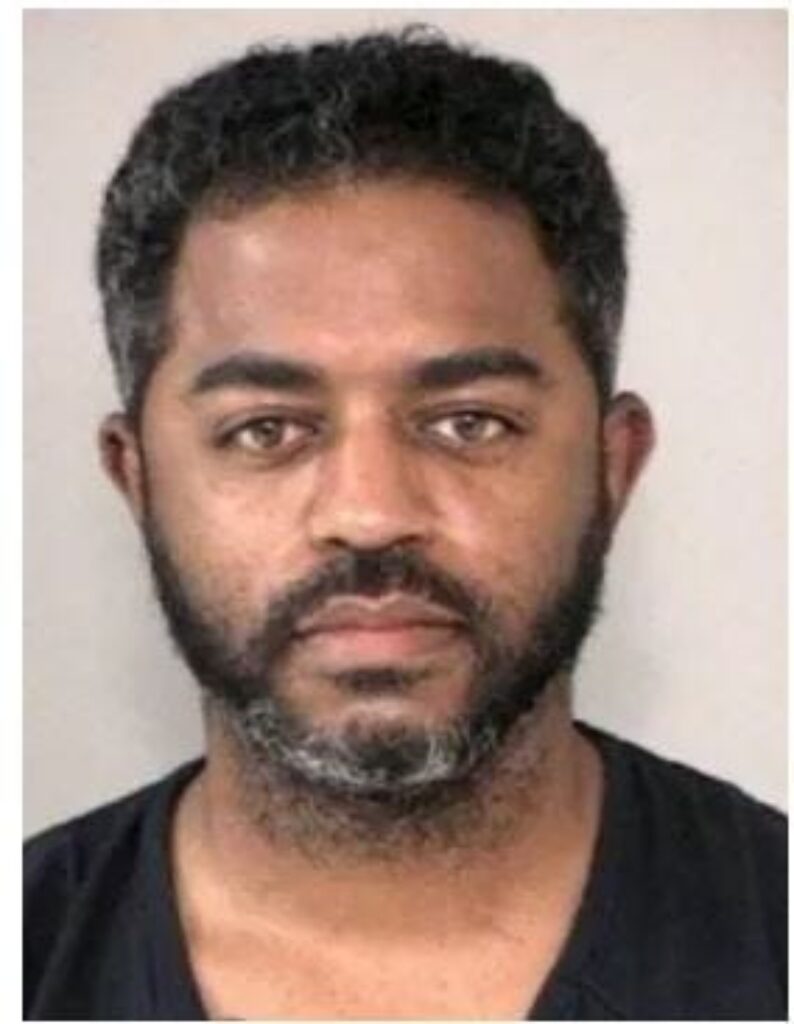
The investigation into Shamsud-Din Jabbar, the ISIS-inspired terrorist responsible for a deadly attack on New Orleans’ Bourbon Street, has revealed shocking details about his radicalization, planning, and motives. Jabbar’s actions resulted in the tragic deaths of 14 innocent people, leaving a trail of destruction and unanswered questions.
Jabbar, a Houston native, was shot and killed during the New Orleans attack, but the aftermath of his crime unveiled a chilling picture of his preparation. A raid on his north Houston trailer uncovered bomb-making materials, chemical residues, and other evidence linking him to ISIS.
Exclusive images showed a Quran prominently displayed, open to Verse 9:111, a passage often cited by extremists for its reference to martyrdom and fighting in the name of Allah. Surrounding the Quran were other religious texts and a prayer rug, further indicating his ideological leanings.
EXCLUSIVE TOUR of the NOLA terrorists home—-
where we found a bomb-making station and a Quran open to a chilling passage about martyrdom @nyposthttps://t.co/LKV7npCOE5 pic.twitter.com/a1znIURjyM
— Jennie Taer
(@JennieSTaer) January 2, 2025
An inside look into the NOLA terrorist’s Houston lair pic.twitter.com/x9gQs18Wjx
— Jennie Taer
Hours before carrying out his attack, Jabbar posted five disturbing videos on Facebook. In the first video, he admitted he initially planned to kill family and friends but abandoned the idea, believing it wouldn’t achieve the media impact he desired.
In subsequent videos, Jabbar revealed he had joined ISIS months earlier and shared his last will and testament. These recordings not only provided insight into his mindset but also underscored his alignment with ISIS’s ideology.
Jabbar’s journey from a U.S. Army veteran to a terrorist remains a complex narrative. After enlisting in 2006, he served in Alaska, North Carolina, and Afghanistan. Although he didn’t engage in combat, he rose to the rank of staff sergeant by 2013 before leaving the military in 2015.
Following his service, Jabbar pursued a lucrative career in the tech industry, holding positions at prestigious firms like Accenture, EY, and Deloitte. Despite his professional success, his personal life was fraught with turmoil. Two failed marriages, financial difficulties, and a restraining order for threatening his second wife marked his descent into isolation and frustration.
His younger brother, Abdur Jabbar, described him as a kind individual but admitted the terrorist’s actions appeared driven by radicalization rather than religious devotion.
The FBI confirmed that Jabbar acted alone during the attack, alleviating fears of a broader network. Investigators seized three cell phones and two laptops from a New Orleans Airbnb, but no evidence suggested accomplices.
Neighbors in Jabbar’s Houston community were blindsided by his actions. Just hours before the attack, he told them he was relocating to New Orleans for a new IT job. He declined offers to help with the move, claiming he was heading to a furnished apartment and needed nothing from his trailer.
One neighbor, Muntaz Bashir, expressed shock, saying, “Unfortunately, you can’t read someone’s mind.”
Jabbar’s trailer, now a crime scene, painted a grim picture of his double life. In addition to bomb-making materials, agents found children’s toys and bunk beds, hinting at a life he left behind. A keffiyeh hung in his closet, a symbol often associated with Middle Eastern heritage.
The trailer was left in disarray following the FBI raid, with furniture overturned and the front door battered open.
Despite Jabbar’s military background and high-profile tech career, he managed to carry out one of the deadliest domestic terror attacks in recent history. Lawmakers were briefed on the incident, with authorities confirming he was not on any terror watchlists prior to the attack.
FBI Deputy Assistant Director Christopher Raia urged vigilance, reassuring the public about Bourbon Street’s safety but emphasizing the unpredictable nature of lone-wolf attackers.
Jabbar’s trajectory underscores the ongoing threat posed by radicalization and its ability to infiltrate seemingly stable lives. His act of terror was not born from an impoverished or uneducated background but rather from an unsettling combination of personal grievances, ideological manipulation, and a calculated desire for notoriety.
The horrifying details of Jabbar’s life and crime offer a sobering reminder of the persistent dangers of terrorism. As the nation mourns the victims of his attack, the investigation into his radicalization and motives continues, aiming to prevent future tragedies.
The post Inside Look at New Orleans Terrorist’s Trailer and Bomb Plot appeared first on Daily News Cycle.
