
Industrial exoskeletons are wearable systems that take some of the grunt work off human bodies, cutting strain and extending endurance on physically demanding jobs. This article explains the main types — passive, powered, and soft — gives real examples in the field, highlights measurable benefits, and outlines practical limits like weight, fit, and cost that shape adoption on job sites today.
Industrial exoskeletons strap onto the body and share the load so your muscles do less of the heavy lifting. Workers who spend hours overhead, bending, or carrying report less fatigue and steadier productivity when the gear is used correctly. This tech is already showing up in real workplaces and changing day-to-day pain points for physical labor.
Passive exoskeletons skip batteries and motors and instead use springs and clever mechanics to redistribute forces away from stressed muscles. A clear example is the Hilti EXO-O1, a shoulder harness that moves arm weight toward the hips with spring-loaded supports. Tests have shown it can reduce shoulder muscle load by up to 47% during overhead work, and many users say tools feel nearly weightless by the end of a shift.
Lower-back support is another common passive approach, and the Laevo FLEX is a strong example for that class. It uses spring-based assistance to ease the strain when bending and lifting while letting people move dynamically without switching modes. The Laevo FLEX offers adjustable support and is built for long wear across different environments without adding motors or batteries.
Passives are typically lightweight, often between about 4.4 and 8.8 pounds, and they provide continuous support during use. That steady help is good for repetitive tasks, but these systems cannot adapt on the fly to changing movements or loads in real time. Fit and correct alignment remain crucial to avoid discomfort or restricted motion.
>
WEARABLE ROBOTICS ARE CHANGING HOW WE WALK AND RUN
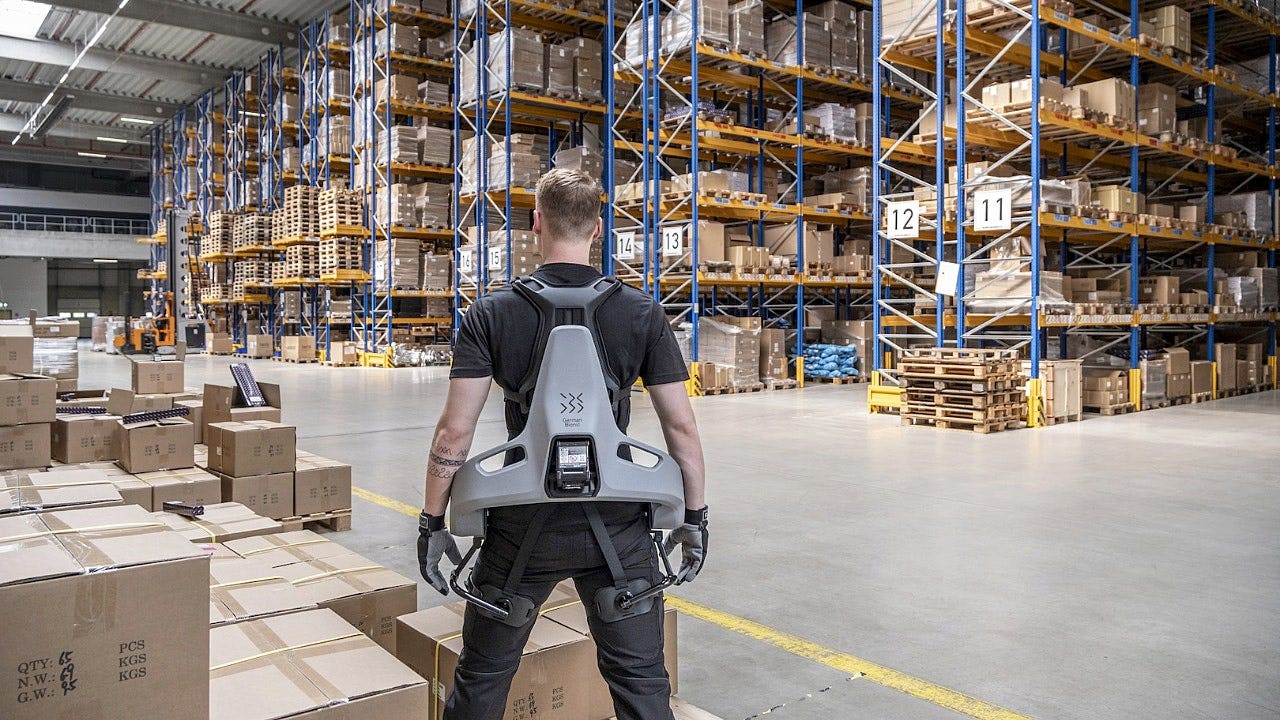
Powered exoskeletons add motors, sensors, and processors to actively assist movement and respond as you work. The German Bionic Exia is one such powered back exoskeleton designed for warehouse and logistics environments, where repeated lifting is common. These systems detect motion and provide support almost instantly, making the assistance feel natural instead of delayed.
When tuned well, powered designs can dramatically cut the effort needed for high-volume lifting tasks and reduce fatigue over a shift. The trade-off is weight and price: some powered systems exceed 40 pounds and carry price tags in the tens of thousands of dollars, so companies usually test them in pilot programs before wider rollouts.
Soft exosuits favor cloth, straps, and tensioning systems rather than rigid frames, giving a more flexible feel and lighter footprint. The HeroWear Apex 2 is a prime example, weighing about three pounds and wrapping around shoulders and waist to aid lifting movements. In warehouse trials, soft back-support suits improved productivity while lowering reported lower back discomfort for repetitive work.
Soft systems let people move more naturally and are less intrusive, but they deliver lower peak force than rigid or powered alternatives. That makes them a good match for repetitive bending and moderate lifting rather than heavy, sustained loads. Their accessibility is improving, but many brands still sell primarily through business channels.
The real-world benefits show up where strain is most common: holding tools overhead, constant bending, and repetitive lifting. Shoulder systems can cut muscle load significantly, back supports shift load away from the spine, and soft suits reduce fatigue over many repeated motions. These gains translate to fewer sore bodies and steadier output by the end of a long shift.
There are practical limits to adoption, though. Proper fitting and training are essential, because a poor fit can cause new discomfort or restrict movement. Weight matters too; even small devices add pounds, and powered systems can be heavy. Cost is another hurdle—passive units may cost a few thousand dollars while powered rigs often run much higher.
Long-term reliance on assisted movement also raises a question about muscle engagement, so experts advise combining exoskeleton use with sound ergonomics and continued movement. Employers tend to see benefits in fewer injuries and reduced absenteeism, yet many still start with pilots to evaluate real workplace fit and return on investment.
Most industrial exoskeletons are sold directly to companies rather than individuals, with manufacturers favoring demos, pilot programs, and bulk orders. Some lighter passive and soft systems are easier to access, but widespread retail availability remains limited. As more workplaces test these devices, broader availability could follow.
Industrial exoskeletons are moving from early trials into everyday use, helping people get through demanding shifts with less strain. They are tools that augment human workers rather than replace them, and improvements in comfort and intelligence will likely expand their role on job sites in the years ahead.
