
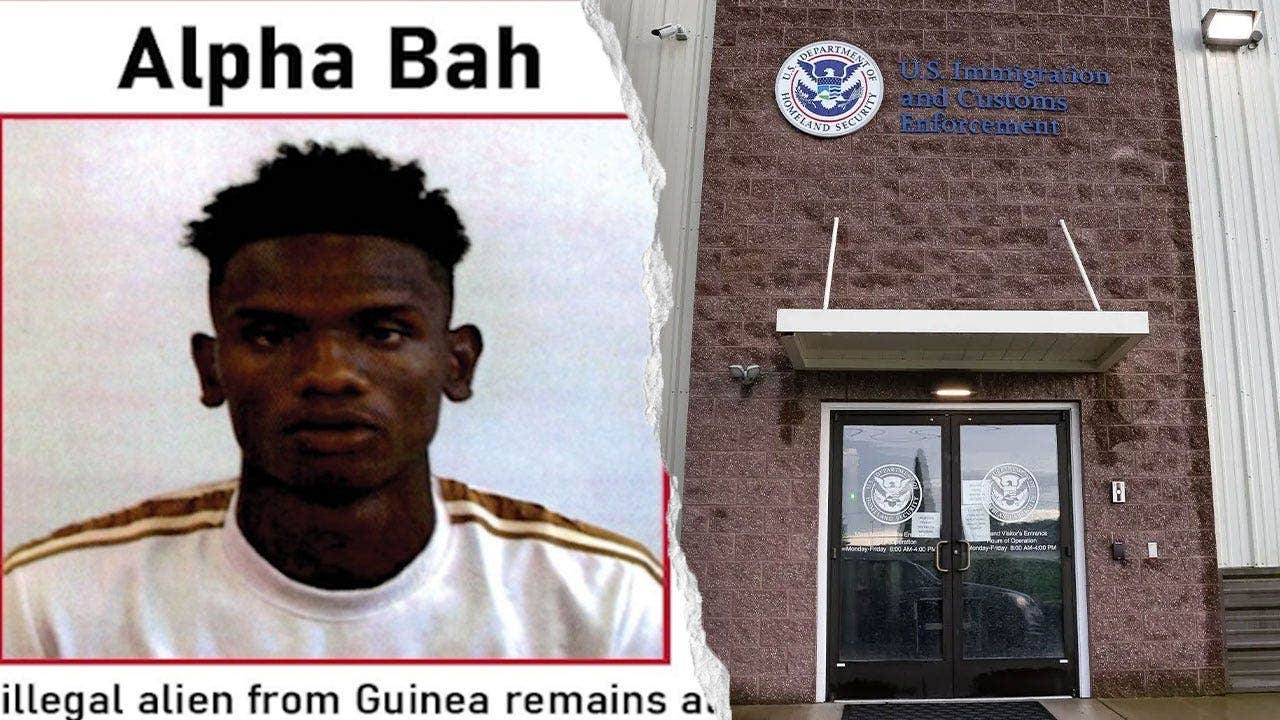
Federal immigration officers have taken an accused NYPD attacker into custody after a tense manhunt that stretched across New York City and highlighted the fallout from sanctuary policies. The arrest of Alpha Bah landed fast and hard, with agents tracking him to a temporary residence, moving in carefully, and ending the search without incident.
Bah, described by DHS as an illegal immigrant from Guinea, was arrested Friday afternoon by ICE after investigators developed fresh intelligence about where he was staying. Officers kept eyes on the area, watched his movements, and waited for the right moment to act.
The case drew intense attention because Bah had already been released by local authorities even after federal immigration officials asked to hold him. That decision set off criticism from DHS, which argued that the city’s sanctuary approach had handed a dangerous suspect another chance to disappear into the streets.
According to federal officials, Bah was first arrested on Oct. 7 on charges that included aggravated assault on a police officer with a deadly weapon, resisting arrest, obstructing governmental administration and intent to obtain transportation without paying. ICE lodged a detainer with Queens Central Booking, but Bah was later released without notice to federal immigration authorities.
That detail quickly became the flashpoint. For critics of sanctuary policies, the issue is not abstract, because it means a person already accused of violence can walk free while federal agents are left chasing leads across the city.
ICE Enforcement and Removal Operations used surveillance and identification tools to confirm they had the right man. Agents first saw someone matching Bah’s description leaving the residence and meeting with a group of unidentified people on a public street, but they held back because school-aged children were nearby.
About an hour later, the target was alone, and officers moved in. They identified themselves as police and ICE, asked biographical questions, checked a photograph, and used Mobile Fortify, a biometric system, to verify his identity.
Once confirmed, officers served him with an administrative immigration arrest warrant and took him into custody without a fight. He was then transported to 26 Federal Plaza in Manhattan for processing.
The arrest also revived a broader argument about how New York handles criminal cases involving illegal immigrants. Federal officials say local policies can soften consequences, block cooperation, and leave immigration agents cleaning up the mess after someone has already been released.
Bah’s case fits neatly into that fight because it is tied to both a specific accusation and a bigger political standoff. On one side are federal officials demanding cooperation with detainers, and on the other are city policies that critics say put ideology ahead of public safety.
The timing matters too. The arrest came after reports that Bah had remained at large despite repeated federal requests, giving the case an added sense of urgency once agents finally located him. That kind of delay is exactly what drives frustration inside DHS and ICE, where officials say a missed hold can turn a local arrest into a citywide search.
Federal officials have argued that sanctuary policies create real-world consequences, not just paperwork fights. When a person accused of assault is released instead of transferred, the burden shifts to federal officers and the public is left to wonder who is really in control.
Bah’s apprehension closed one chapter, but the larger dispute keeps rolling. Every case like this adds more heat to the argument over whether New York’s policies protect communities or shield people who should have been turned over to federal custody in the first place.
