
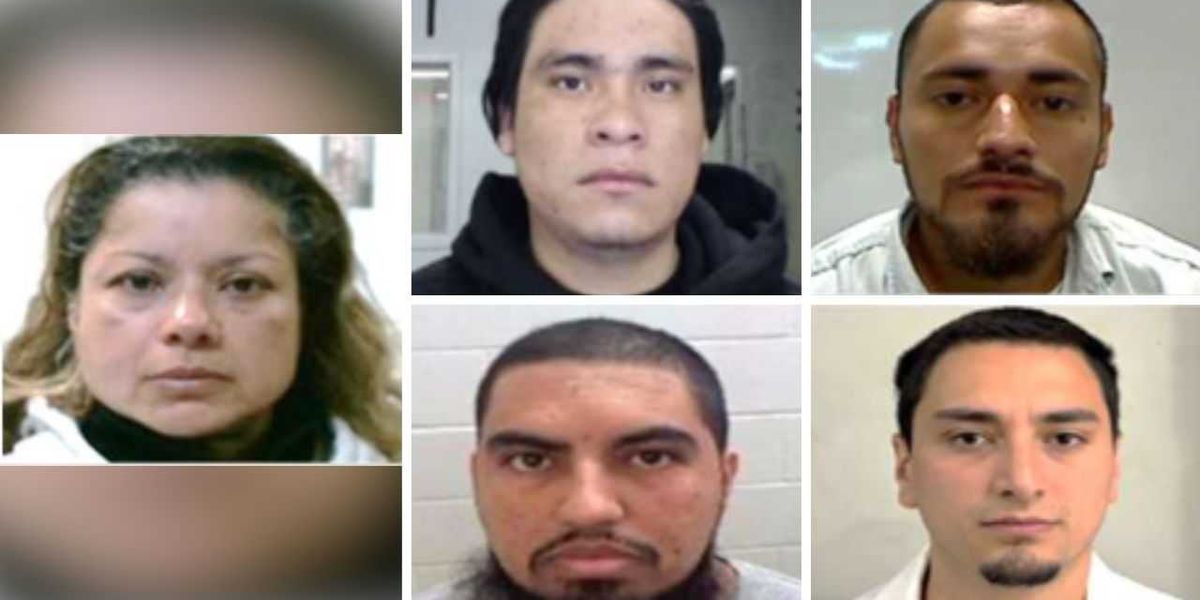
Federal immigration agents arrested multiple noncitizens this week who have documented convictions for some of the most serious crimes — from child cruelty and sexual violence to drug trafficking and burglary — and officials are framing these actions as proof that enforcement still works despite pushback from local sanctuary leaders. The Department of Homeland Security highlighted a set of cases that show criminal histories spanning different states and decades, and agency spokespeople were blunt about the priorities driving these operations and the public safety rationale behind them.
ICE officers picked up Elipidia Aguirre-Romero after she was tied to a conviction for child cruelty in Fresno, California, a case with consequences that could include injury or death to a victim. Local law enforcement records and federal immigration files show why agents prioritized the arrest, and the case is being used as an example of why immigration enforcement remains a core responsibility for protecting communities. Supporters of strict enforcement point out that leaving known offenders at large undermines trust in public safety institutions.
Jose Alfredo Patino-Avelino was arrested following convictions in Santa Barbara for sexual battery by restraint and assault with intent to rape and mayhem, charges that carry serious implications for victims and neighborhoods alike. These kinds of convictions are precisely the sort that authorities say justify detaining and removing noncitizens who have repeatedly broken the law. For many Republicans and law-and-order advocates, the presence of such offenders in local communities is intolerable and sanctions from federal authorities are both necessary and overdue.
Saul Alberto Garay-Amaya faces a string of grave charges dating back to a 2020 arrest in Fairfax, Virginia, including sexual penetration with an animate object by force, strangulation resulting in wounding or bodily injury, and abduction by force, intimidation, or deception; the Vienna Police Department that his arrest came after “a lengthy and thorough investigation by VPD Detectives after receiving info that he had sexually assaulted a female victim.” Cases like this are particularly chilling to residents and elected officials alike, and they are cited by enforcement proponents as examples of what happens when dangerous offenders slip through the cracks.
Fidel Larreta-Boltor was taken into custody after prior convictions for trafficking heroin through possession, sale, and delivery in Forsyth County, North Carolina, a pattern that underscores the link between some immigration cases and narcotics distribution networks. Federal agents say arrests like this are part of a dual mission to remove criminal noncitizens and to disrupt wider drug markets that harm families. Conservative voices argue that keeping these offenders out of the country is a direct way to reduce addiction, crime, and the social costs that follow.
Yeison Beltran-Avila was arrested following a conviction for burglary in Queens, New York, another example officials point to when discussing the mix of offenses that lead to immigration actions. Burglary convictions, combined with other criminal history or illegal presence, often trigger federal interest and subsequent removal proceedings. The Biden administration’s critics on the right say such cases highlight a continuing need for robust deportation policies and for state and federal cooperation to prioritize public safety.
Department of Homeland Security officials framed the round of arrests as part of a nationwide push to target those officials describe as the most dangerous criminal noncitizens. “Yesterday, ICE arrested child abusers, sexual predators, and drug traffickers. Nearly 70% of ICE arrests are of illegal aliens charged or convicted of a crime in the U.S.,” DHS Acting Assistant Secretary Lauren Bis stated. That statistic is frequently cited by Republicans to argue that immigration enforcement benefits community safety and should be protected and funded accordingly.
Agency statements did not shy away from confronting local politicians who resist cooperation with federal immigration efforts, and that rhetoric is central to the political debate. ‘Despite smears from sanctuary politicians, ICE law enforcement officers continue arresting the worst of the worst.’ That line captures the Republican view that sanctuary policies shelter criminals and that restoring cooperation between local police and federal immigration authorities is essential for public safety.
These arrests will feed the broader argument over immigration policy heading into upcoming legislative and political fights, with enforcement advocates using the cases as a call to action. For those who prioritize strict border and interior enforcement, each arrest is evidence that federal agencies can and should remove convicted criminals from U.S. communities, while critics continue to raise concerns about civil liberties and due process in immigration enforcement operations.
On 10/22/20 VPD and members of the US Marshals Service arrested Saul Alberto Garay-Amaya. This arrest resulted from a lengthy and thorough investigation by VPD Detectives after receiving info that he had sexually assaulted a female victim last month @TownofViennaVA @USMarshalsHQ pic.twitter.com/StRpwuUHvA
— Town of Vienna Police (@VPDVA) October 22, 2020
