
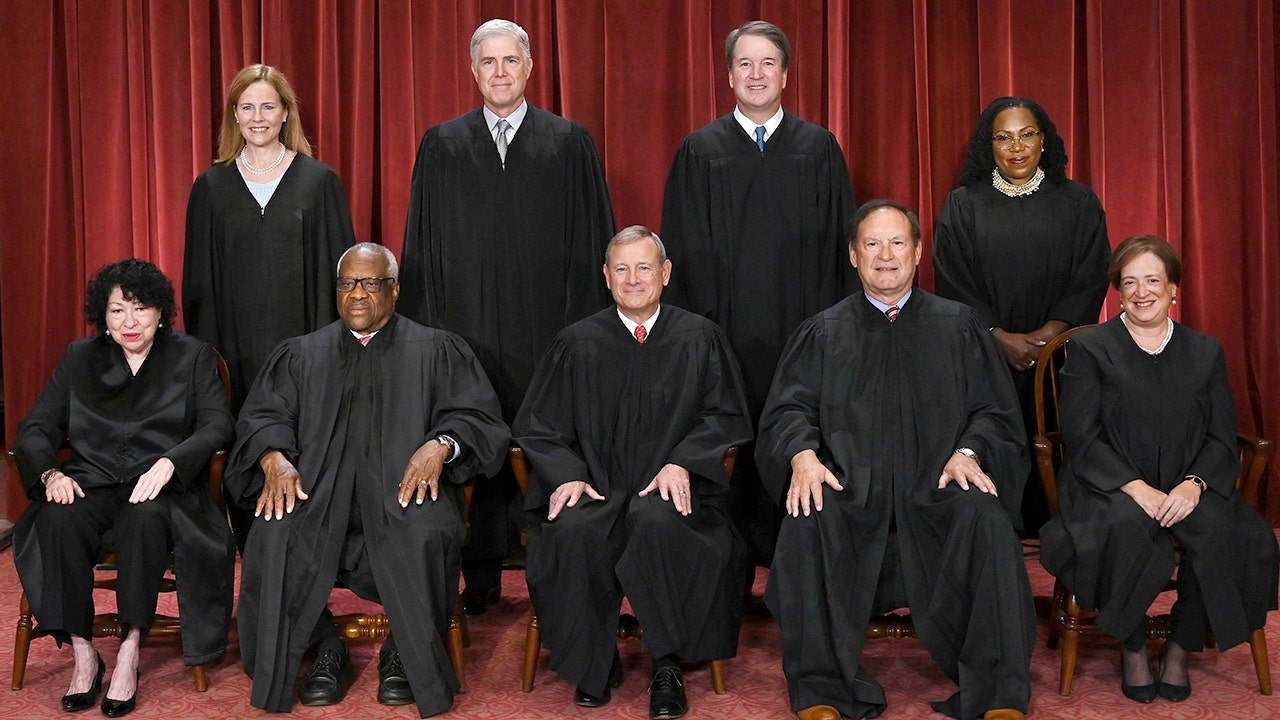
As the Supreme Court prepares major decisions this June, debate has flared over proposals to change the Court’s size and rules. This piece argues from a conservative perspective that packing the Court or reshaping its structure for short-term political gain would wreck judicial independence, invite retaliation, and hollow out constitutional protections. It lays out why elected officials should use the legislative process instead of altering the judiciary, and why turning the Court into a political tool would damage civil liberties for everyone.
Every time the Court hands down a ruling that frustrates the political left, calls for “court reform” heat up. Those calls have shifted from a common complaint to an open embrace of expanding the Court as a way to secure policy wins. That turn matters because it signals an appetite to treat the judiciary like just another seat at the partisan bargaining table.
Some of the loudest demands come from high-ranking Democrats who say there should be no sacred cows when the Court disagrees with them. “The Supreme Court is a disgrace. In the new Congress, we’re going to have to do something about this Supreme Court and let me be very clear: Everything is on the table — everything — to deal with this corrupt MAGA majority.” That kind of rhetoric makes it clear they are talking about weaponizing institutional change to erase judicial outcomes they dislike.
Other progressive figures have been equally blunt: “Term limits for the Supreme Court. Enforce a binding Code of Ethics. Impeach these corrupt justices. Expand the Court.” When leaders lay out a menu of remedies that includes packing the Court, it stops being a debate about transparency or accountability and starts to look like political retaliation.
There is also a strain of messaging that frames the Court as illegitimate because it does not deliver a particular policy. “Congress must immediately … take action to restore the integrity and legitimacy of this far-right majority Supreme Court—including expanding the Court, imposing term limits on Supreme Court justices, and passing a binding Supreme Court code of ethics. Every option should be on the table.” Presented like that, institutional change becomes a tool of policy enforcement rather than a careful adjustment to protect the system.
Congress has the power to legislate, and when lawmakers disagree with a judicial ruling the constitutional response is to pass laws that address the issue. Changing the number of justices to tilt the balance abandons that constitutional framework. It replaces reasoned lawmaking with the blunt instrument of packing the bench to achieve an immediate political result.
Packing the Court would also destroy faith in judicial impartiality. If one party expands the Court when it loses, the loser will expand it back when it wins. The result is an escalating cycle where the judiciary becomes an arm of whoever controls Congress and the White House. That outcome would make judicial decisions subject to the ebb and flow of partisan advantage rather than consistent legal principles.
The risk to civil rights is real. Courts protect rights that are not always popular, and their role is to apply the Constitution even when the politics are tough. Turn the judiciary into a political instrument and rights will be safe only as long as the current majority wants them to be. In that world, protections become fragile and contingent.
Leaders on the Republican side have warned against this path, arguing that the legitimacy of the Court must be preserved. Altering the Court for short-term gain is not a correction; it is a structural change that undercuts the separation of powers. If you care about stable, predictable rights and a truly independent judiciary, the answer is not to remake the Court every time politics shifts.
Reasonable people will disagree with Court decisions. That is part of the constitutional bargain. But changing the Court to secure preferred outcomes is a step toward a purely political judiciary and away from an institution meant to check power. The better path is to fight in the political arena, pass laws, and protect judicial independence so the Court can do its job without becoming another arena for partisan score settling.
