
• Humanoid robots and border security
• Phantom’s sensing, navigation, and terrain handling
• National security talks and DHS interest
• Surveillance, reconnaissance, and tunnel monitoring
• Human officers staying in control of enforcement
• Weather resistance and the next robot version
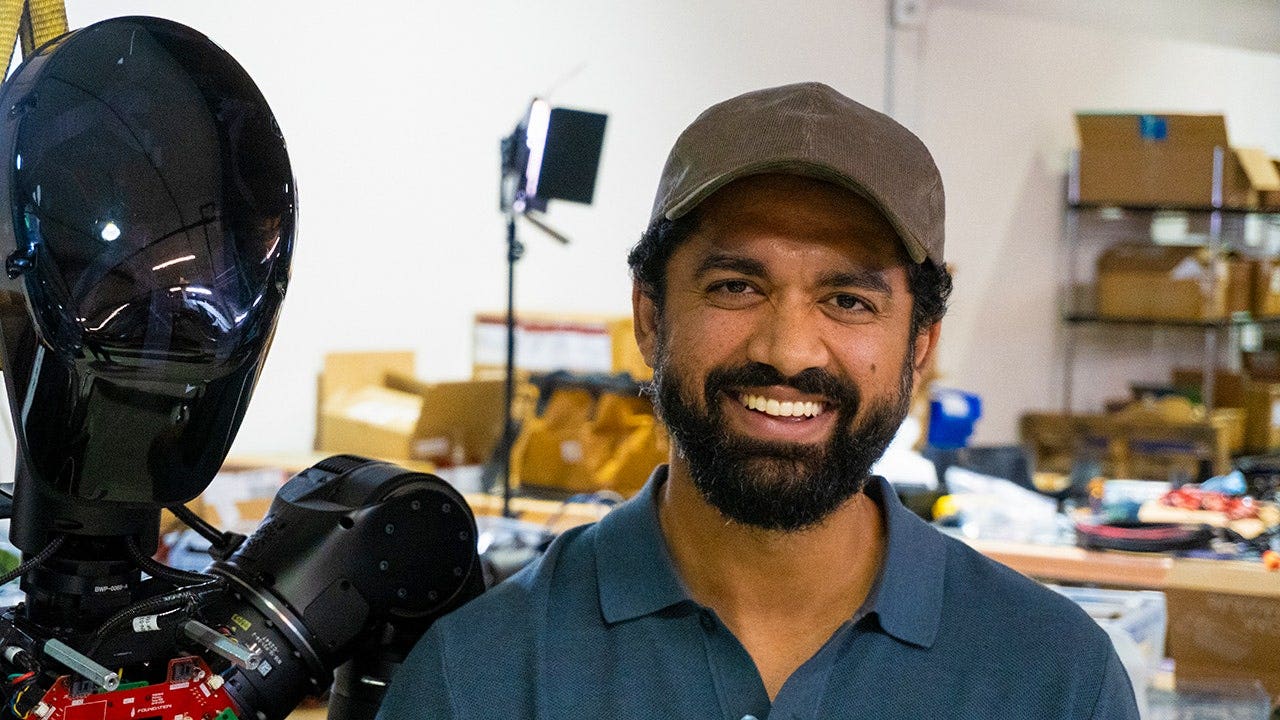
Robots that look and move more like people are edging from sci-fi into the real world, and border security is one of the places where that shift could matter fast. A U.S. robotics company says its Phantom machine has already been shown to federal officials as a tool that could help spot people, cross rough ground, and support agents working in hard-to-reach areas.
Sankaet Pathak, founder and CEO of Foundation, says the company has been in conversations with several national security agencies, including DHS. The pitch is simple enough to grab attention: let machines handle the risky reconnaissance first, then bring in human officers when there is something real to act on.
Pathak described a future where humanoids could move through uneven terrain that slows down people, vehicles, drones, and fixed cameras. In his view, that gap is exactly where a walking robot starts to make sense, especially when the job calls for constant monitoring instead of a quick pass through the area.
“We’re in conversations with almost all national security government bodies, so Air Force, Navy, Army, DHS,” Pathak said. “We continue to have dialogues. We’re starting to negotiate contracts and some applications for them.”
The company says Phantom can tell humans apart from other objects, map its surroundings, and navigate without a person steering every move. That matters along a border where the terrain can be brutal, the visibility can be lousy, and the next step often depends on catching small signs before they turn into a bigger problem.
Foundation’s argument is not that robots replace officers. It is that machines can work the overnight shift, watch the same stretch of ground without blinking, and flag unusual activity before a person has to decide what comes next.
A DHS spokesperson said there is no formal arrangement in place right now, noting that the department does not currently have any non-contractual agreements, pilots, or active prime contracts with Foundation. That leaves the idea in the realm of testing and discussion, not a live deployment.
Even so, Pathak sounds convinced the concept is closer than people think. He pointed to border tunnels as another place where the technology might prove useful, since underground routes are exactly the kind of environment that can complicate routine surveillance.
“If drones and watchtowers were able to solve for everything, why do we still have humans at the border?” Pathak told Fox News Digital.
The broader vision is a layered system where robots do the first look and humans keep the final say. Pathak said the machine would detect, flag, and then hand off the judgment call to officers, which keeps the technology in an assist role rather than turning it into an independent enforcer.
That is also why the company sees Phantom as a reconnaissance platform before anything else. If an area needs eyes on it around the clock, a robot that can move, observe, and report back may be more useful than a camera fixed to one spot or a drone that cannot linger long enough.
Weather is still a hurdle, though, and Pathak said the current version has limits when it comes to outdoor conditions. Foundation expects a second-generation model soon, one built to be waterproof, dustproof, and tougher overall for rough field use.
“Our biggest thing is if we can keep our officers in a safe place, and these robots can continue to surveil 24/7,” Pathak said. “Tomorrow I think we could do a pilot. Next couple of months, we can do something much larger.”
He also said the company would be open to arming robots for border operations if the federal government ever asked for that capability, though not as a near-term move. For now, the focus stays on detection, mapping, and passing useful information to the people who still make the call.
