
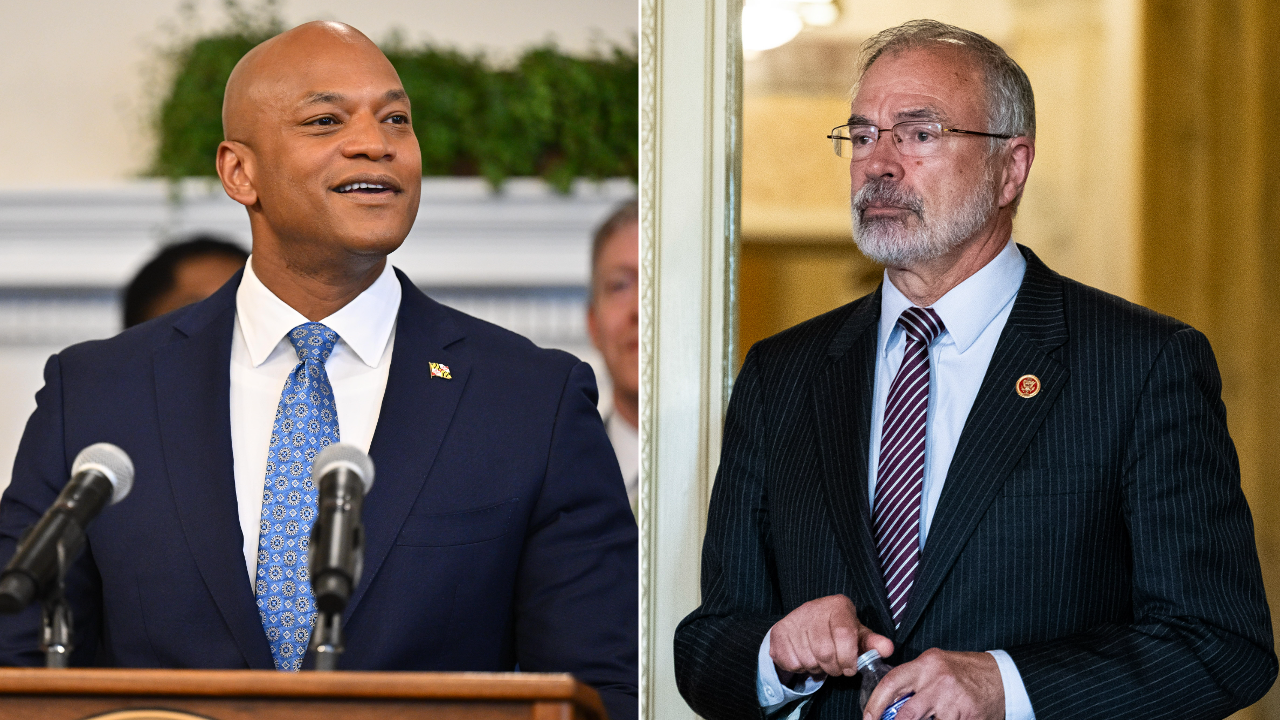
Maryland’s redistricting fight is turning into a loud, high-stakes clash over power, maps, and political ambition. Rep. Andy Harris is accusing Gov. Wes Moore of using the debate as a launchpad for bigger national goals, while Moore says the move is about responding to GOP-driven map battles elsewhere. At the center is a proposed constitutional amendment that could give Democrats much more control over how Maryland’s congressional lines are drawn.
Harris, the lone Republican in Maryland’s congressional delegation, says the effort is aimed squarely at wiping out his seat. He argues that the push has less to do with good government and more to do with setting up a future White House run for Moore. That charge gives the issue extra heat, since Moore has become a rising Democratic figure with plenty of attention beyond Annapolis.
The amendment would go to voters in November if it clears the ballot process, and that alone could reshape the state’s political future. If approved, it would give the Democratic-controlled General Assembly far more room to redraw congressional districts before the 2028 election. Harris says that kind of flexibility is exactly what opens the door to a map designed to squeeze out Republicans.
His district is a tough one for Democrats to erase casually. Maryland’s First Congressional District stretches across the Eastern Shore and includes parts of Baltimore County, giving it a mix of rural and suburban voters that has helped Harris hold the seat since 2011. Harris says lawmakers are trying to carve the district in a way that makes a Republican win nearly impossible.
Moore, for his part, has denied any presidential plans for 2028, but the speculation has not gone away. Harris seized on that uncertainty, saying the governor’s public push on redistricting looked more like a political stage act than a policy move. The argument is simple and sharp: this is about national positioning, not Maryland’s day-to-day needs.
The complaint has also landed in court. The Oversight Project, a conservative watchdog group, filed a challenge in Anne Arundel County Circuit Court seeking to block the measure from reaching the ballot, arguing that state leaders missed the deadline for introducing statewide questions. That legal fight adds another layer to an already messy process and could complicate the amendment before voters ever see it.
Harris says the proposal creates a clear double standard. Under the current constitution, congressional and state legislative maps are supposed to respect natural boundaries and county and municipal lines, but the amendment would loosen those restrictions for U.S. House districts while leaving them intact for state maps. In his view, that setup is proof the goal is not fairness, but selective advantage.
The backstory matters here, too. Maryland courts previously rejected a Democratic-drawn congressional map after finding it did not give enough weight to natural boundaries and political subdivisions. Harris points to that ruling as a warning that even a constitutional change would not necessarily shield a new map from another legal challenge if it goes too far.
That is why the fight could stretch well past Election Day. Harris has said he would sue if lawmakers try to hollow out his district or weaken Republican voting power too aggressively. He says no amount of political messaging can hide what he sees as an obvious attempt to force one party’s hand while calling it reform.
Moore has defended the amendment as part of a broader response to Republican redistricting efforts around the country, which he has described as “political redlining.” He argues that waiting for a perfect national solution would leave Democrats stuck while other states keep moving their lines. That framing keeps the governor on offense, even as critics say he is chasing a bigger spotlight.
The broader fight also reflects how raw redistricting has become in modern politics. Both parties have used court battles, legislative maneuvers, and ballot language to shape the map long before the next census arrives. In Maryland, the immediate question is whether voters will buy Moore’s argument that change is needed, or Harris’ warning that the proposal is a direct threat to representation in one of the state’s most Republican-leaning corners.
