
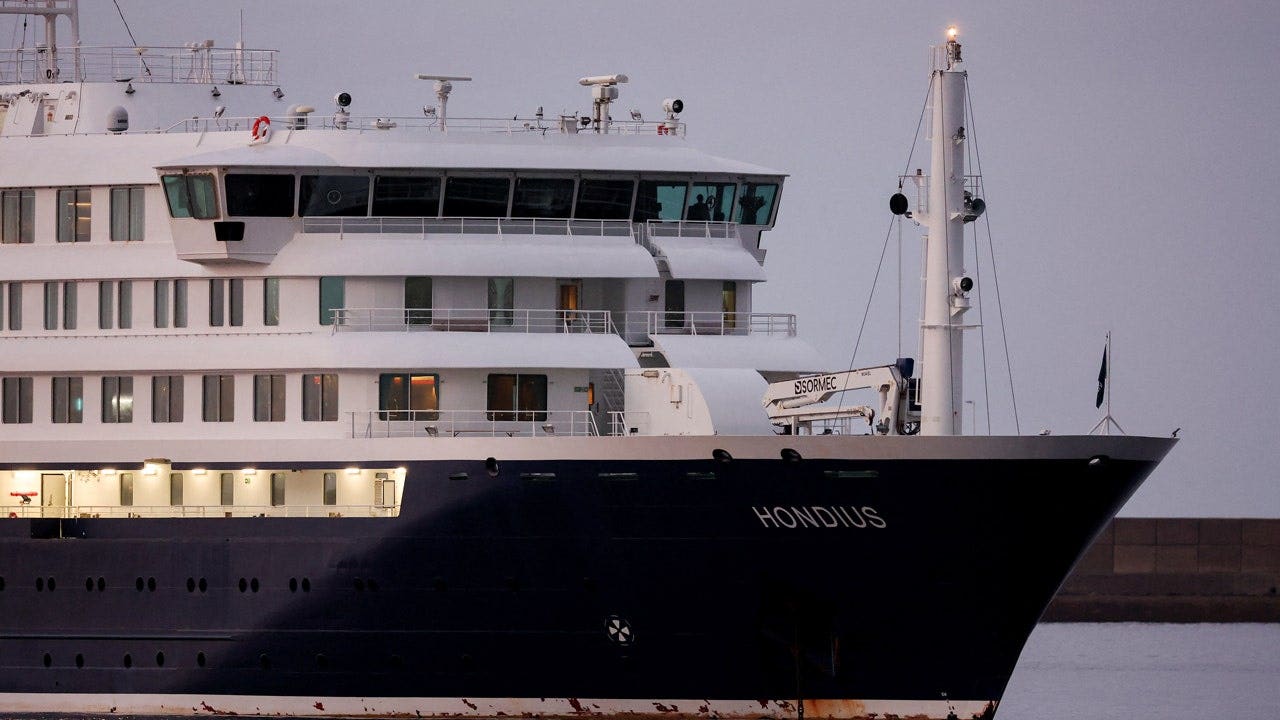
The cruise ship at the center of a deadly hantavirus incident docked off Tenerife and began moving people ashore, as health officials tested and isolated passengers and coordinated flights home. Spanish teams screened everyone for symptoms before small boats ferried travelers to the island, and international health agencies scrambled to manage containment and follow-up. The situation has prompted targeted quarantines, careful monitoring, and plans to disinfect the vessel before it sails on.
The vessel arrived early Sunday and authorities moved quickly to transfer passengers ashore under controlled conditions. Spanish health teams checked people for symptoms and only allowed those who were asymptomatic to be taken off the ship in small craft. The priority was to prevent any possible spread while arranging transport and accommodation for different nationalities.
Spanish passengers were placed on a flight to Madrid and taken to a military hospital where they will remain under quarantine as officials continue assessments. Medical staff there will run diagnostic checks and watch for any developing signs, keeping the group isolated to limit risk. Officials emphasized the need for observation even when people appear well.
Seventeen Americans who had been aboard the MV Hondius are set to be flown to a medical facility in Nebraska once U.S. health authorities clear them to disembark. Federal screening is planned on arrival, with options including a short stay at the National Quarantine Unit or returning home under strict monitoring. Those who head home will stay in contact with local health officials and monitor themselves for 42 days.
The ship had altered course from the coast of Cape Verde midweek after the World Health Organization and European partners asked for help containing the outbreak. WHO officials traveled to the island to coordinate with Spanish authorities and oversee response measures. The goal was to combine on-site care with careful movement of passengers to reduce risks.
Health teams reported that eight people on board fell ill, three of whom died, and six infections were laboratory confirmed with two others still suspected. Tests identified the strain involved as the Andes hantavirus, a variety known to cause severe illness in humans. Because of that, officials treated the situation with extra caution even as they worked to reassure the public.
“I know you are worried. I know that when you hear the word ‘outbreak’ and watch a ship sail toward your shores, memories surface that none of us have fully put to rest,” he said. The WHO director spoke directly to those fears and aimed to balance concern with facts, urging calm while actions were carried out. Authorities continued surveillance and contact tracing as part of the response plan.
“The pain of 2020 is still real, and I do not dismiss it for a single moment. But I need you to hear me clearly: this is not another COVID-19. The current public health risk from Hantavirus remains low. My colleagues and I have said this unequivocally, and I will say it again to you now,” he continued. Those words were intended to put the outbreak in context while acknowledging public anxiety about infectious threats. Officials kept reminding people that the pathogen and its transmission dynamics differ from respiratory pandemics.
“Three people have lost their lives, and our hearts go out to their families,” he wrote, reiterating that the public health risk posed by the virus remained low. The loss of life underscored the seriousness of the illness for those affected and the human toll behind the technical assessments. Health teams pledged support for victims’ families while pushing forward with containment measures.
About 30 crew members are expected to remain on board so the ship can continue to its next port while essential operations are maintained. Once it reaches the Netherlands, the plan is to carry out a full decontamination and cleaning process before allowing normal operations to resume. Authorities stressed that thorough disinfection and follow-up inspections are crucial steps in reducing future risk and restoring confidence.
