
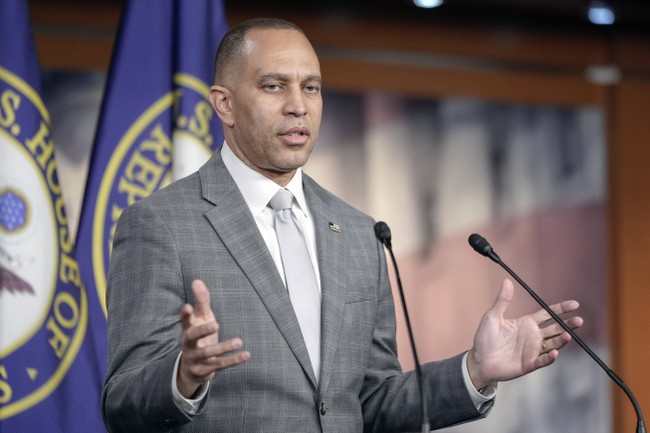
Representative Hakeem Jeffries recently made remarks that have sparked significant attention. Captured in a brief clip, Jeffries called for Democrats to oppose the Trump agenda by fighting legislatively, in the courts, and even in the streets. Such rhetoric from Jeffries, a prominent Democrat, raises questions about the implications and underlying intentions of his statement.
This isn’t the first time Democrats have been accused of using incendiary language. Critics often argue that left-leaning politicians resort to aggressive rhetoric, which they claim contradicts their calls for peace. The summer of 2020 serves as a reminder when protests sometimes turned violent, with cities experiencing significant unrest.
There’s a pattern where Democrats accuse Republicans of actions they themselves are criticized for. The recent remarks by Jeffries echo past calls from figures like Maxine Waters, who in 2018 encouraged confronting members of the Trump administration. These statements often lead to debates on the boundaries of political discourse.
Commentary on social media platforms like X illustrates the divided opinions on Jeffries’ words. Some users perceive his call as an invitation to chaos, while others see it as a legitimate expression of dissent. The reactions reflect broader tensions in American political life, where language can escalate into action.
The historical context of political movements using force isn’t lost on observers. Critics argue that certain factions within the left have a history of resorting to forceful measures. This has led to fears that such rhetoric might embolden those prone to violence.
While Jeffries might argue for peaceful protests, the potential for misinterpretation is significant. If a Republican were to make similar statements, it could lead to widespread condemnation. This discrepancy highlights the double standards often perceived in media coverage and political commentary.
The reelection of Donald Trump has stirred emotions across the political spectrum. As tensions rise, the potential for unrest becomes a genuine concern. With summer approaching, some worry about a repeat of past disturbances.
For Democrats, pursuing a path of confrontation might not yield the desired results. History shows that provoking political violence can backfire. The metaphor of a pack of wolves against a group of chihuahuas illustrates the potential mismatch in strength and strategy.
With President Trump back in office for only a short time, political dynamics are rapidly shifting. As events unfold, staying informed becomes increasingly important. Subscribing to VIP accounts offers an opportunity to access exclusive content and insights.
The political landscape is complex and ever-evolving. As debates continue, understanding the nuances of these discussions becomes crucial. The interplay between rhetoric and action remains a focal point of concern for many.
Political discourse requires careful navigation to avoid unintended consequences. Words have power, and their impact can transcend initial intentions. As such, responsibility in communication is a shared obligation among public figures.
The role of media in shaping narratives is undeniable. Coverage often influences public perception and can amplify or mitigate the effects of political statements. This underscores the importance of balanced reporting and critical analysis.
Discussions around political violence are sensitive and multifaceted. Navigating these conversations demands a nuanced approach to avoid escalating tensions. The consequences of misjudged rhetoric can have far-reaching effects.
For those interested in comprehensive coverage, media outlets offer a variety of options. From news articles to feature-length films, subscribers can explore a wealth of information. Promotions and discounts make these resources more accessible to a broader audience.
Engagement with political content requires discernment and critical thinking. Readers are encouraged to consider multiple viewpoints and challenge their assumptions. This approach fosters a more informed and balanced understanding of current events.
The ongoing debate over political rhetoric and its implications remains a key issue. As figures like Jeffries and others continue to shape discourse, the public’s role in engaging thoughtfully and responsibly is paramount.
