
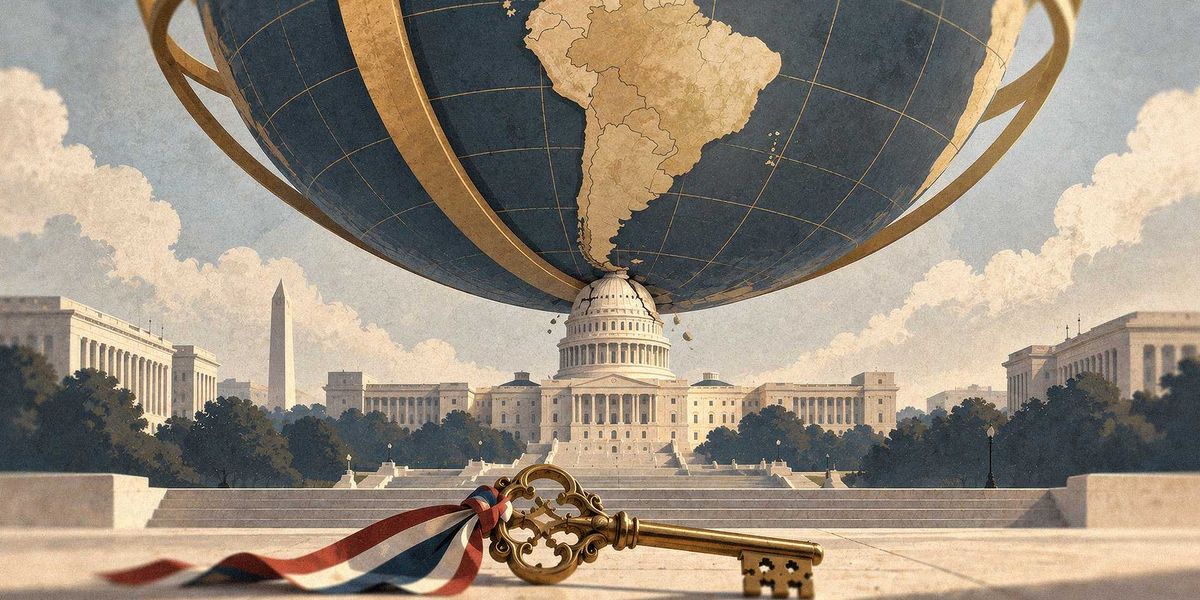
America keeps getting told that fairness means opening every gate, erasing every boundary, and treating hard-won national inheritance like a global public utility. That sounds noble until the bill arrives in the form of weaker wages, diluted citizenship, and institutions that seem more loyal to abstract theory than to the people paying for them.
The modern meritocracy pitch has a polished surface, but it often hides a much rougher reality. It rewards credential games, rewards elite institutions, and often leaves ordinary Americans wondering why they are expected to compete against a system that keeps changing the rules in the middle of the race.
At the center of the problem is a simple but uncomfortable truth: countries are not just labor markets. They are homes, with histories, cultures, legal borders, and obligations to the people already inside them. When those things get treated like outdated baggage, the result is not progress but drift.
The promise of meritocracy is that the best rise. In practice, that ideal gets bent into something far less honest, where credentials become a kind of social currency and education turns into a sorting machine for the already connected. Instead of lifting everyone, the system often crowns the same narrow class and calls it fairness.
That distortion becomes even sharper when universities and employers lean hard on global recruitment while local communities absorb the fallout. Public institutions that are supposed to serve the nation can start acting like pipeline managers for a borderless economy, handing prestige to those who know how to play the game while the broader public gets lectures about being more open-minded.
Work visas and legal immigration are usually defended with the language of necessity, but necessity has a way of stretching far past its original meaning. If every labor shortage is met by importing new workers instead of raising wages, training citizens, or fixing broken systems, then the pressure never really resolves. It just gets passed along to the people least able to absorb it.
The same pattern shows up in higher education, where admissions and hiring often seem to prize appearance over substance. Diversity, equity, and inclusion programs were sold as a corrective, yet too often they create another layer of bureaucracy that keeps attention on categories while ignoring competence, loyalty, and national interest.
Americans are not wrong to notice that the language of inclusion can be used to make exclusion of their own concerns sound virtuous. When citizens point out that schools, courts, and employers seem more interested in global signaling than in serving the public, they are not asking for isolation. They are asking for a basic sense that the nation still belongs to the people who built and maintain it.
The issue is not whether talent exists abroad, because of course it does. The issue is whether a society can keep importing endless competition without eventually cheapening its own inheritance. A country that treats citizenship as a trivial detail soon discovers that citizenship stops feeling meaningful at all.
That is where the talk about meritocracy becomes especially slippery. If the standards are written by institutions detached from ordinary life, then “merit” starts to mean whatever those institutions say it means. The people who can afford the right schools, the right internships, and the right cultural scripts end up looking like natural winners, while everyone else is told the system is perfectly fair.
There is also a deeper moral instinct at work here, one that many Americans still understand even if elites mock it. Inheritance is not a dirty word. Parents want their children to have a country worth inheriting, not a hollowed-out shell that has been endlessly optimized for someone else’s ambitions.
That is why debates over citizenship, legal immigration, and work visas keep landing with so much force. They are not just policy disputes, they are arguments over ownership, belonging, and the right of a people to preserve what they have built. When courts and administrators act as though those concerns are old-fashioned, they only widen the gap between the governing class and everyone else.
The smartest societies do not confuse self-respect with selfishness. They know that a nation cannot remain stable if it stops valuing its own citizens first. And once that idea starts slipping, the whole performance of merit, opportunity, and progress gets a lot harder to believe.
