
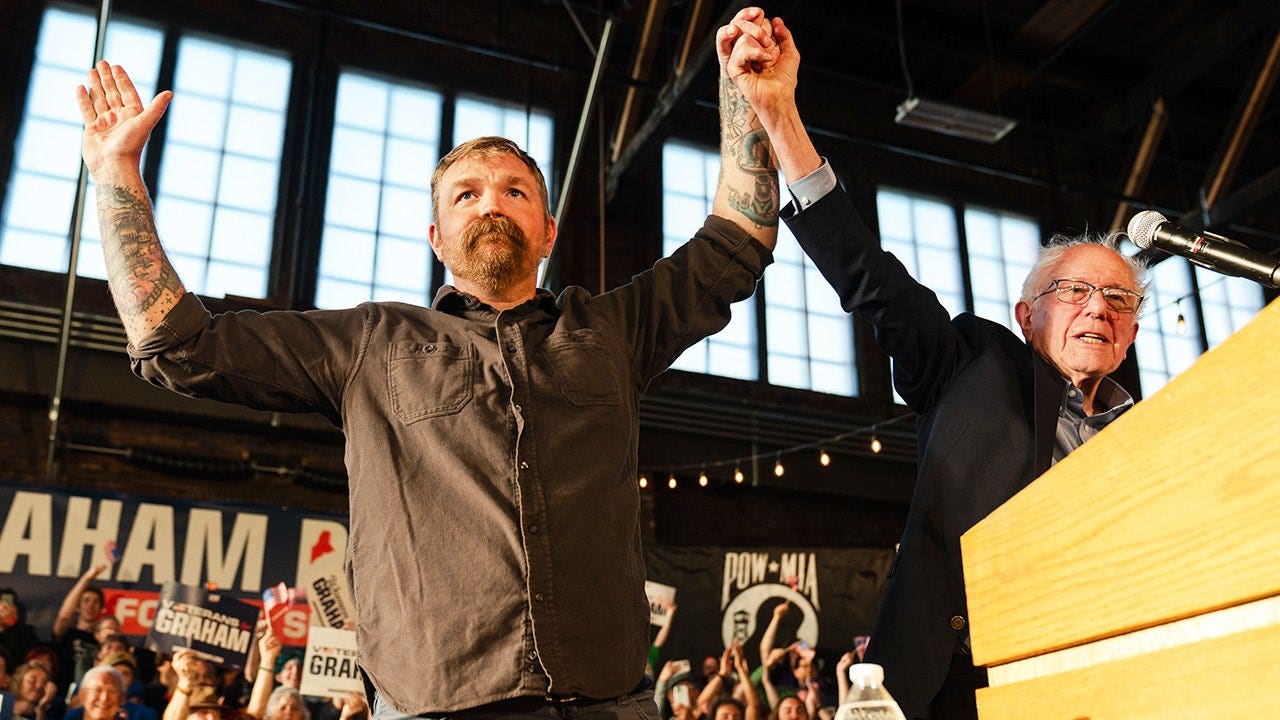
Democrats are doubling down on Graham Platner despite a stack of troubling revelations: a Nazi-linked tattoo, a trail of offensive online posts, reports of sexually explicit messages, and accounts of abusive behavior. This piece walks through those claims, how Platner has tried to explain them, and why party leaders keep standing by him anyway.
It’s hard to square the party’s support with what’s come out about Platner. He has a tattoo tied to Nazi imagery and a history of inflammatory forum posts that mocked rural voters and demeaned rape victims, and yet the campaign keeps moving forward as if none of it matters.
Platner once said, “I’m proud that I got through a dark period in my life, and I’m proud of the life that I live now.” That line sounds like a closing chapter, but the timing and the new details make it reasonable to ask when that chapter really ended.
Recent reports include claims from his wife to campaign staff that he sent sexually explicit messages to multiple women using the messaging app Kik. Those allegations matter because they suggest the behavior critics call a dark period may have stretched far later than he admits.
Even the New York Times ran a piece that was careful in tone but still surfaced more bad context. Headlines and loud quotes in the debate—like “DEMOCRATS ‘SELLING THEIR SOUL’ TO EMBRACE PLATNER ARE IN FOR RUDE AWAKENING WITH MAINE VOTERS: GOP LAWMAKER” and “GRAHAM PLATNER DENIES DAMNING NEW REPORT ALLEGING ABUSE AS ‘SIMPLY NOT TRUE'”—grab attention, but the substance beneath them is what should stick.
The Times interviewed women who dated him and reported disturbing claims. “Ms. Fifield said he told her that he and other members of his unit selected the tattoo because ‘they were like a death unit, they were killers,’ and saw a parallel between their unit and the Nazi Schutzstaffel, or S.S., unit, that used the skull-and-crossbones image. ‘They literally, deliberately, selected it because it was relevant to their military unit,’ she said.”
That testimony directly contradicts the story Platner offered after removing the ink in October 2021, the idea that it was just a cool design grabbed on leave. If an ex says she warned friends about the tattoo months before its removal, it raises the obvious question of how honest his early explanations were.
Allegations about physical roughness also surfaced in those interviews. “But she said he regularly grabbed her by the shoulders — sometimes hard enough to leave marks — and, on one occasion, yanked her out of a cab by her wrist after an argument when she wanted to stay in the car. During one argument, she recalled, he twisted her arm behind her back, shoved her into a bedroom and held the door closed from the other side so she couldn’t get out, telling her to remain there until she was ‘calm.’ Eventually, Ms. Fifield said, she fell asleep and left the next morning.”
Platner has tried to reassure party figures. He met with Democratic senators and reportedly said there were no more negative stories waiting to be told. As one attendee later put it, there is a difference between marital problems and allegations of assault, and Platner pushed back, denying any “credible” accusations of assault were forthcoming.
Republicans watching this think the calculation is obvious: if a party is willing to accept a candidate with a Nazi-linked tattoo and a record of mocking victims and soldiers, how much lower will the bar go? With the primary still ahead and new details continuing to surface, voters deserve a clear answer about what the party is willing to tolerate. How comfortable are Democrats betting the Senate on a nominee shadowed by so many questions?
