
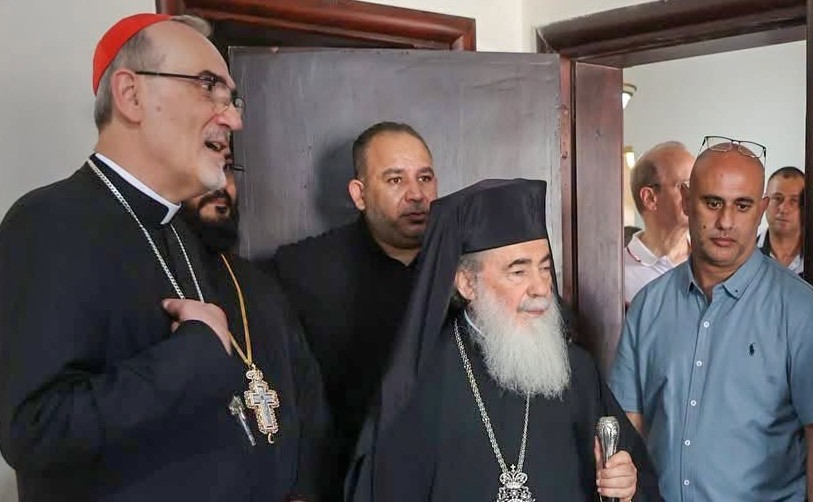
The leaders of the Jerusalem churches, Cardinal Pierbattista Pizzaballa and Theophilos III, went into Gaza to stand with Christian families caught in the crossfire, urging them to hold on to hope, peace, and fidelity to the Gospel while war, displacement, and deepening humanitarian need press in on every side. Their visit put a human face on a community squeezed between violence and scarcity, and it showed religious leaders refusing to turn their backs. This piece follows what they saw, why it matters, and what it asks of those watching from afar.
The scene on the ground is hard to imagine unless you’ve walked the streets where entire neighborhoods have been emptied and churches are sheltering people with nowhere else to go. The patriarchs moved through ruined blocks and cramped makeshift shelters, meeting families who have lost homes and livelihoods. They listened to stories of fear and resilience that rarely make the evening headlines.
For Gaza’s Christians, being a tiny minority has always meant a delicate balance of faith and survival, and that balance has been shattered by recent events. The call to maintain peace and fidelity to the Gospel is not a set of abstract words for these communities; it’s a daily practice that now carries an extra weight. When a bishop or patriarch presses a hand or says a prayer, it’s both pastoral ministry and a public witness in a very dangerous place.
From a practical standpoint, the patriarchs’ presence also underscores the urgent need for humanitarian corridors and consistent aid delivery. People are running out of essentials—food, clean water, medicine—and the international response has struggled to meet the scale of need. It’s simple: without safe, reliable access for relief groups, more lives will be at risk and more families will be forced to leave the places their ancestors called home.
Those who follow this from a conservative angle will hear another message too. Standing with civilians and defending religious freedom need not contradict supporting a nation’s right to defend itself against terror. You can condemn atrocities, demand accountability, and still insist that enemies of peace who use civilians as shields must be confronted. The challenge is to pursue security in ways that reduce civilian harm and allow communities of faith to survive and thrive.
Religious leaders visiting the front lines do something politics alone rarely can: they humanize suffering. They remind us that beyond grand strategies and diplomatic statements there are people who want to worship, to teach their children, and to live in peace. That reminder matters for policymakers, donors, and ordinary citizens who wonder how to respond with compassion that actually helps.
There is also a moral responsibility here for Western governments that claim to care about religious liberty and the protection of minorities. If we value freedom of worship, we should be taking concrete steps to protect vulnerable congregations, press for safe humanitarian access, and back diplomatic moves that create realistic windows for relief and evacuation when needed. Words of sympathy are not enough; policy must match principle.
The visit by Cardinal Pizzaballa and Theophilos III is a vivid example of leadership that mixes pastoral care with public witness. They are not just consoling the wounded; they are calling attention to a crisis that demands clearer moral clarity and firmer action. That call should land with anyone who believes in protecting the innocent, preserving religious life, and holding fast to the values that sustain plural societies.
What happens next will be shaped by choices made in capitals and aid warehouses as much as by the courage of people who refuse to abandon their neighbor. The patriarchs’ message—stay hopeful, be at peace, keep the faith—sits beside a practical plea: open pathways for relief, defend the vulnerable, and refuse to let faith communities be erased. The concrete work of relief, protection, and rebuilding is where intentions turn into real results for families trying to survive and rebuild.
