
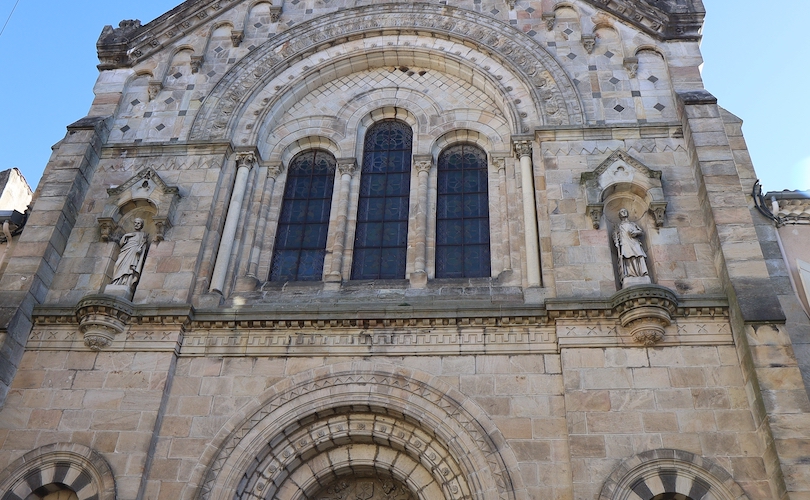
In recent days France saw two sharp incidents targeting Christian symbols: a church was vandalized, and a local group described as ‘anti-fascist’ publicly objected to a cross on display. These events reopened debates about religious freedom, public order, and how a free society defends places of worship. The reactions crossed lines between legal response and cultural argument, spotlighting how fragile civic respect can be. This piece lays out what happened and why it matters from a perspective that values law, faith, and clear consequences for disorder.
A church building was defaced, with property damaged and sacred space violated. Attacks on houses of worship are not just property crimes; they wound communities and test the resolve of leaders who must protect both people and beliefs. When a church becomes a target, the legal system must respond swiftly to deter copycats and reassure congregations that they are safe. Citizens want to know their rights are upheld and that vandalism will not be left to fester into intimidation.
At the same time, a public dispute arose over a Christian cross displayed in a visible location, challenged by a group labeled ‘anti-fascist’. The confrontation was less about a single object and more about how public symbols fit into a secular, plural society. French tradition of laicite often pushes religion out of government spaces, but private or community religious displays have protection too. Tensions spike when activism crosses into coercion or when protests become a pretext for erasing religious identity.
Officials and community leaders have a clear responsibility: defend freedom of conscience and maintain public order. That means enforcing laws against vandalism and threats, while also protecting peaceful protest within legal boundaries. Failure to act decisively hands momentum to those who would normalize aggression or redefine public norms by force. Rule of law should not bend to the loudest faction in the street.
Religious liberty is not an abstract privilege; it is a practical right that allows people to practice, display, and pass on their beliefs. When a cross is challenged or a church is vandalized, neighbors watch and measure whether society treats faith communities as entitled to normal protections. Citizens expect equal enforcement of laws whether the target is religious, political, or cultural. Unequal treatment erodes trust and stokes grievance.
France’s historic struggles with secularism and integration make these incidents especially sensitive. The country has a proud tradition of liberty, but that tradition must include room for visible faith in everyday life. Insistence on public neutrality should not become hostility to personal expression. Democracies survive by tolerating a wide range of convictions without letting any group intimidate another into silence.
Civic leaders must also speak plainly about consequences and discourage escalation. Law enforcement needs clear protocols for responding to attacks on places of worship, and local governments should support repairs and security where needed. Community dialogues can help, but they must be backed by firm action when illegal acts occur. Respect is earned and enforced through consistent, impartial application of laws.
Political voices should avoid exploiting these incidents for score-keeping and instead focus on solutions. Calling out wrongdoing and defending basic freedoms resonates across the spectrum, especially when framed around safety and dignity. This is not a time for rhetorical games; it is a moment to reinforce principles that let diverse communities coexist. Practical steps matter more than partisan point-scoring.
Civil society also has a role: religious groups, neighborhood organizations, and civic associations can build bridges before conflicts erupt. Outreach, shared public projects, and routine cooperation reduce the odds that symbols or buildings become flashpoints. When communities know each other, they are less likely to tolerate attacks or allow protests to spiral into hate. Prevention is as important as enforcement.
The recent vandalism and the ‘anti-fascist’ challenge are reminders that freedom requires vigilance. Communities and officials must act together to protect worship, property, and the rights of peaceful expression. Clear laws, decisive enforcement, and steady civic leadership create the environment where disagreements get debated rather than enforced. That mix of respect and resolve is the only reliable defense against the next provocation.
