
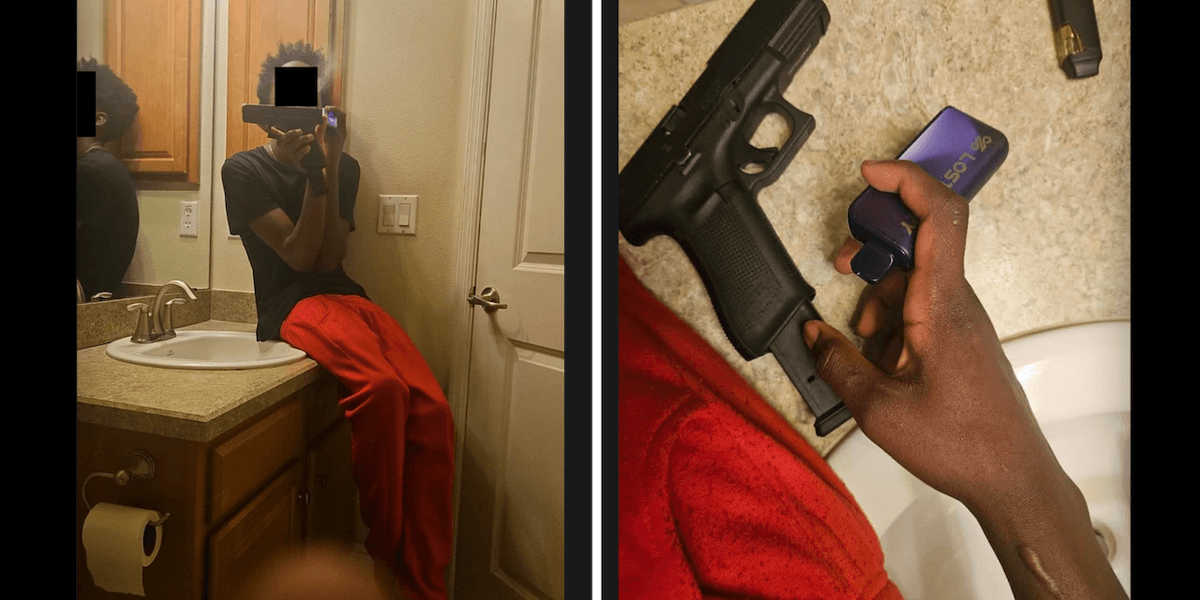
A teenager in Florida was taken into custody after sending a photo of a handgun and a written threat over social media, prompting a law enforcement response and a wider look at how young people use online platforms to settle conflicts.
Flagler County deputies opened an investigation after a concerned parent called 911 when her child reported receiving a threatening message. The suspect, also 13, allegedly sent multiple Instagram messages that included a photo of himself holding a handgun and a text that read: “Tn 8:00 pm we be there we alr got lo.”
The victim told investigators he interpreted the messages as a plan to come to his home at 8 p.m. and shoot him, which escalated the situation beyond a simple online spat. Officers treated the threat seriously and moved quickly to verify the sender and the content of the messages. That rapid response is what likely prevented a dangerous confrontation from unfolding later that night.
When deputies contacted the suspect, he reportedly said he and the victim had once been friends but had a falling-out. The suspect acknowledged messaging the victim that day and told deputies the plan was to fight, a detail that shifted the case from an argument into a criminal threat. That admission helped justify arrest and a transfer to juvenile authorities.
Law enforcement arrested the 13-year-old and initially held him at the Sheriff Perry Hall Inmate Detention Facility before transferring him to the Florida Department of Juvenile Justice. Juvenile charges and proceedings now take the place of schoolyard consequences, and the case will move through the juvenile system. The handling of the arrest underscores how online threats can trigger formal criminal processes, even for very young teens.
‘I want to remind parents to stay engaged in what their kids are doing online and who they’re talking to.’
Sheriff Rick Staly put the danger in plain terms: “Threats are no joke, and we take every threat seriously. This teen had already made plans to fight the victim, and he made it clear it wasn’t going to be a fistfight,” Sheriff Rick Staly said. “I want to remind parents to stay engaged in what their kids are doing online and who they’re talking to. Teach them the proper way of handling disagreements and be the sheriff of your home.”
Incidents like this are not isolated. In recent months Florida law enforcement agencies have handled a string of cases involving preteens and teens accused of making violent threats, bringing weapons or posting disturbing plans online. Those cases range from threats to bring a gun to school to written lists naming potential victims, and they often end with arrests and juvenile court involvement.
Schools and parents are left scrambling to respond, while police must balance public safety with the realities of juvenile justice. The pattern shows how quickly online disputes can escalate and how children’s digital behavior has real-world consequences. It also raises questions about supervision, social media access, and how communities can better spot red flags before a threat becomes a tragedy.
The use of coded language and shorthand in the suspect’s message illustrates a challenge for investigators and parents alike: deciphering intent in short, cryptic texts. What looks like slang can hide threats that people interpret differently depending on context and history between the parties. That ambiguity makes parental involvement and prompt reporting to authorities even more important when content appears threatening.
Law enforcement officials emphasize prevention through parental engagement and school communication, asking adults to monitor online interactions and teach conflict resolution. When a message contains a weapon image and a time and place, authorities say it must be treated as credible until proven otherwise. Prompt reporting, careful documentation and cooperation with investigators were key in this case and in similar incidents across the state.

Image source: Flagler County (Fla.) Sheriff’s Office

1 Comment
The moral character of our youth has become infused with immoral behavior that is criminal and is becoming wide spread because our eleted officials disregard these acts by the youth today and when these things happen law enforcement has its duty to stop this when the info leads to the one responsible for the threats.