
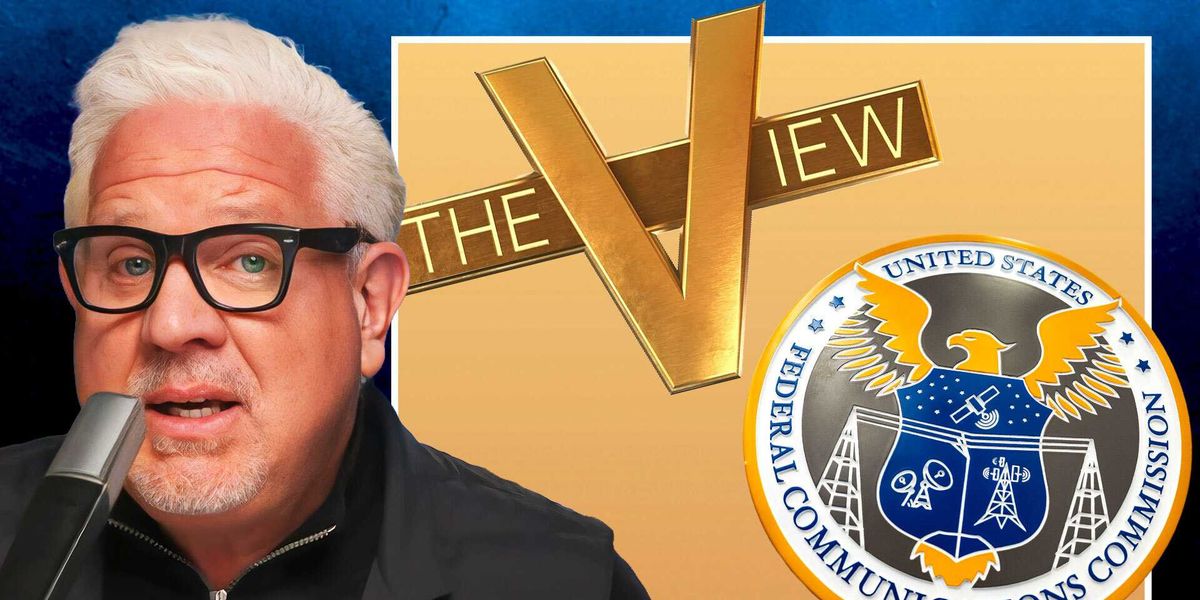
The FCC has opened a probe into The View after the show hosted Democrat James Talarico, raising questions about the equal time rule that requires non-news programs to offer opposing political perspectives. Conservatives argue networks are gaming the system by calling opinion-heavy shows news, and that labeling matters when it shields outlets from balance requirements. Glenn Beck weighed in skeptically, suggesting ABC might claim news status to avoid obligations while also warning that proving a violation may not be straightforward.
The core issue is simple: if a show is not news, broadcasters must offer equivalent airtime to opposing political voices. That puts The View under a microscope because it regularly mixes current events with opinion and celebrity chatter. For Republicans, the worry is familiar—networks tilt left, then claim protections that should apply only to genuine news programming.
Conservatives see the FCC action as overdue enforcement, not censorship. When political guests appear on programs that function like platforms rather than hard news outlets, fairness rules should matter. This is about treating political speech consistently instead of letting major networks pick winners by label alone.
Glenn Beck pushed back on rushing to judgment even while criticizing The View’s tone and content. “If you are a news show, you don’t have to have both sides on, because it’s news. It’s breaking every day. It’s changing every day. We have a hard enough time booking guests for a subject. Imagine having to book a guest that has the opposite view of everything you just are covering,” Glenn explains on “The Glenn Beck Program.”
His point is procedural as much as political: how regulators classify a program changes what broadcasters must do. “So that’s the rule. Now, ABC claims that ‘The View’ is a news show,” he says. If ABC can successfully argue that point, the equal time argument weakens even if the show feels more opinion than reporting.
Beck did not hold back on how he feels about the show itself. “I don’t watch ‘The View.’ I never have watched ‘The View.’ I have only watched the clips of ‘The View,’ because, for the love of everything that is good and sacred, little baby Jesus cannot save my soul from darkness if I watch that thing every day,” he continues. That blunt assessment fuels the larger complaint that such programming blurs lines intentionally.
Still, Beck acknowledged the gray area. “So I don’t know for sure, but from the clips that I have seen over the years, I would say that’s a news show,” he adds. From his perspective, frequent discussion of current events pulls The View toward news territory, even if the style is highly opinionated.
The debate gets messier when other programs are dragged into the comparison. “If what they talk about most of the time is the news of the day, I would consider that a news show,” he says, pointing out that it’s his “understanding that Jimmy Kimmel is also considered a news program.” That raises questions about consistency in how networks are treated.
Beck was blunt about late night hosts who wear opinion like a costume. “That’s not a news program. I did one search. How many politicians has Jimmy Kimmel had on his show in the last 60 days? And the answer was one. What is the balance of his show? The balance of his guests are Hollywood,” he continues. “It’s an entertainment show, not a news show. That one clearly doesn’t qualify.”
Republicans pressing the FCC want rules applied evenly, not skipped based on branding or influence. If a program functions like a platform for political viewpoints, it should face the same fairness checks as any other non-news outlet. The public deserves clarity about which broadcasts are news and which are opinion dressed as news.
At stake is more than one segment or one guest. This probe will test whether regulators will hold networks to the written standard or let subjective labels decide. Conservatives will watch closely, arguing enforcement must be principled rather than partisan.
Whatever the outcome, the case has already sharpened the debate over media responsibility and the boundaries between entertainment and reporting. Networks benefit from ambiguity, and critics on the right see this as a moment to demand clearer lines and equal treatment under the rules.
