
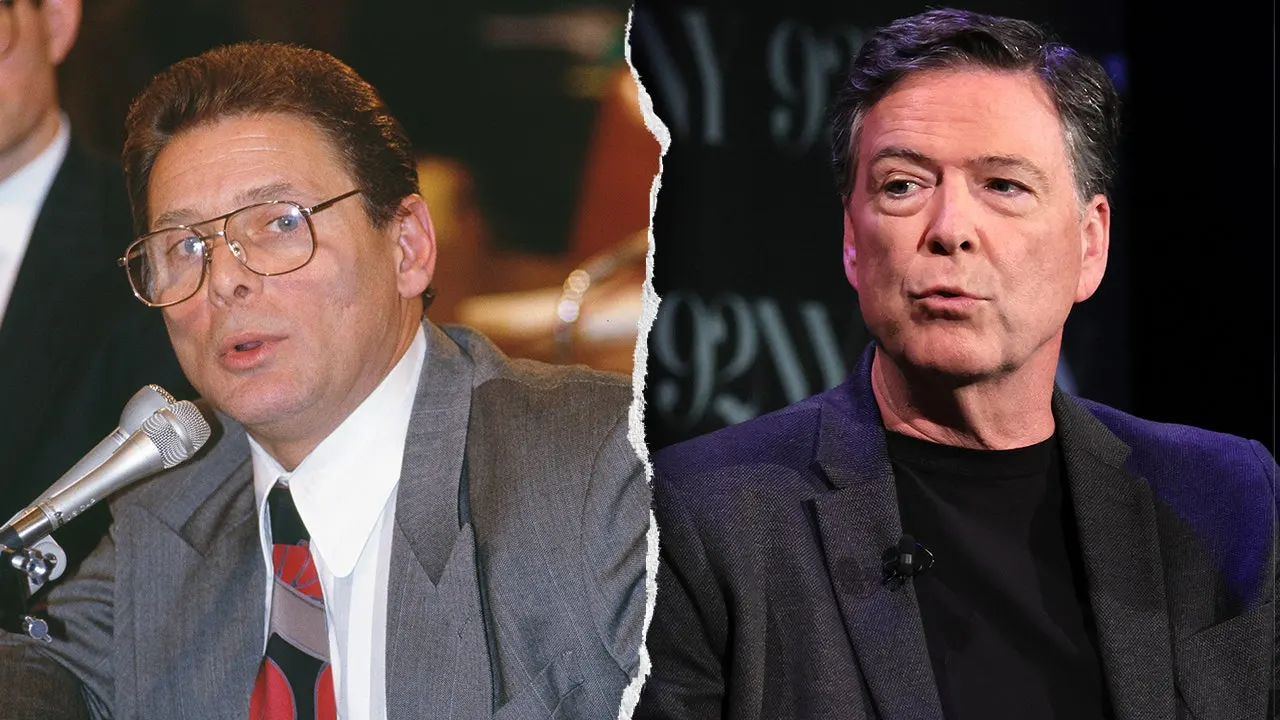
The FBI’s use of Salvatore Gravano in the James Comey case has added a strange, sharp edge to an already heated fight over one social media post. At the center is a simple but explosive question: whether Comey understood the meaning of “86” when he shared a seashell image that prosecutors say carried a threat toward Donald Trump.
According to court filings, investigators spoke with Gravano, the former Gambino underboss known as “Sammy the Bull,” because of his background in mob language and his past connection to Comey’s old prosecution work. Gravano reportedly told an FBI agent that Comey “had to know” what the term meant, at least in the criminal sense of getting rid of someone or worse.
That detail matters because Comey is facing federal charges in the U.S. District Court for the Eastern District of North Carolina, Eastern Division. Prosecutors say the Instagram post showing seashells arranged to read “86 47” was not some harmless beach photo, but a message that pointed toward violence against Trump, the 47th president.
The filing tied Gravano’s comments to a May 2026 phone call with an FBI case agent. During that conversation, Gravano said the term “86” carried a mob meaning that he associated with killing, even though he did not say he and Comey ever discussed the phrase directly.
That gap is important for the defense. Comey’s lawyers are trying to chip away at the idea that his history with a major mob case automatically proves he knew how the slang would be read years later.
Prosecutors, though, are pushing a broader theory. They say the post was meant to signal danger, with “86” understood as killing and “47” pointing straight at Trump, and they argue the meaning was obvious enough to support the charges.
Comey has said something very different. He has claimed he found the seashell arrangement rather than staged it, and that he did not realize people would read it as a violent message aimed at the president.
He has also said he took the post down quickly because he wanted no part of violence. In a 2025 interview, he insisted he did not believe there was any dark intent behind it, adding that the display looked more like creative political expression than a threat.
Gravano’s own comments cut in both directions. On one hand, he backed the idea that “86” could mean killing in a gangster context. On the other, the affidavit says he did not claim Comey personally said he would kill Trump, which gives the defense room to argue that the post was interpreted too aggressively.
The case has become even more tangled because Gravano was not just any witness. He had firsthand familiarity with the old Gambino prosecution and once worked in the orbit of the very legal history the defense is now trying to use as cover for Comey’s side of the story.
That mix of old mob language, modern social media, and a former FBI director under indictment has turned a single phrase into a full-blown legal battle. What one person sees as slang, another sees as menace, and the court now has to sort out whether the government can prove intent rather than just outrage.
For Comey, the stakes are obvious. If prosecutors can connect the post to a threat, the case gets much heavier; if the defense can convince a jury that the message was misunderstood, the whole thing starts to look like a dangerous stretch.
That is why the Gravano interview landed with so much force. In a case built around a tiny phrase and a pile of interpretation, even a short recorded conversation with a former mob figure can change how the whole story sounds in the courtroom.

1 Comment
OF COURSE HE KNEW!!! Are we to think he is a simpleton or like little Goldie Locks!!!
GET REAL and PUT IN WHERE HE BELONGS for all of his many Crimes against not just Trump but America!!! His Conspiracy alone with Hillary to keep her out of Prison where she also truly belongs is enough for a Life Sentence in GITMO if not execution for Sedition and Treason!!!