
By OBBM Network Editorial Staff
Derived from an episode of The Sam Sorbo Show.
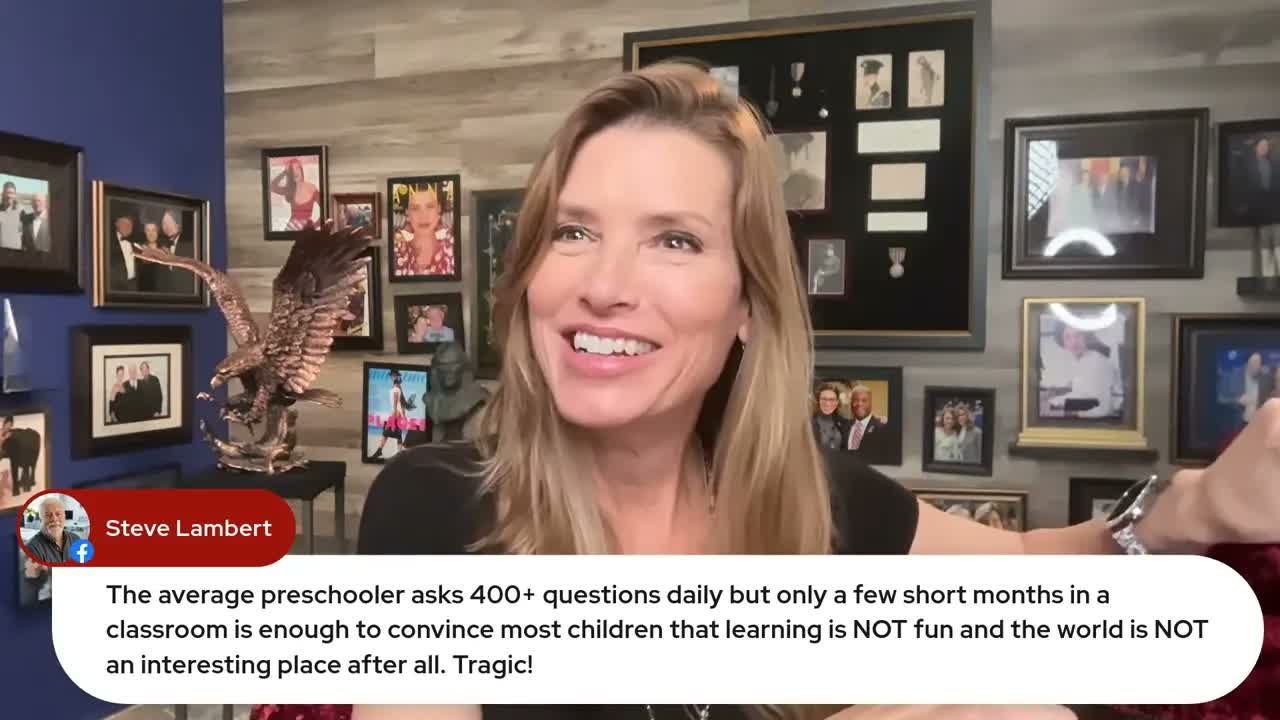
In a recent episode of The Sam Sorbo Show, the host explored the question: Do schools kill curiosity? Sam Sorbo, an advocate for homeschooling, shared her insights on how traditional schooling might hinder a child’s natural inquisitiveness and learning potential.
The Nature of Curiosity in Children
Sam Sorbo posits that children are inherently curious, a trait that should be nurtured rather than stifled. She argues that traditional schooling, with its structured environment and rigid curriculum, often suppresses this natural curiosity. Sorbo notes, “Children are naturally curious, and therefore, they will naturally learn.” This perspective challenges the conventional belief that formal education is necessary for learning, suggesting instead that it may actually deter it.
The Limitations of Traditional Schooling
Sorbo criticizes the traditional education system for its one-size-fits-all approach, which she believes does not accommodate the diverse learning styles of children. She highlights the anxiety-inducing environment of schools, characterized by competition, testing, and grading, which can be detrimental to many students. Sorbo states, “School impedes learning. School inhibits learning. School is a deterrent to learning, actually.” She suggests that only a small percentage of students thrive in such environments, while the majority may struggle.
Homeschooling as an Alternative
In advocating for homeschooling, Sorbo emphasizes its potential to foster a child’s natural curiosity and learning. She argues that homeschooling allows for a more personalized education, tailored to the child’s interests and pace. Sorbo shares personal anecdotes and success stories, illustrating how homeschooling can lead to significant academic improvement and a more engaged learning experience.
Challenges and Misconceptions
Addressing common misconceptions about homeschooling, Sorbo acknowledges the societal pressure to conform to traditional schooling norms. She points out that many parents have been conditioned to believe that formal education is essential for their child’s success. However, Sorbo argues that parents have the opportunity to reverse this mindset and embrace a more flexible approach to education.
The Broader Implications
Sorbo’s discussion raises important questions about the role of traditional schooling in society and its impact on children’s development. By advocating for homeschooling, she challenges the status quo and encourages parents to reconsider their educational choices. The conversation highlights the need for a more individualized approach to education, one that prioritizes a child’s natural curiosity and fosters a lifelong love of learning.
The full episode of The Sam Sorbo Show is available on OBBM Network TV.
