
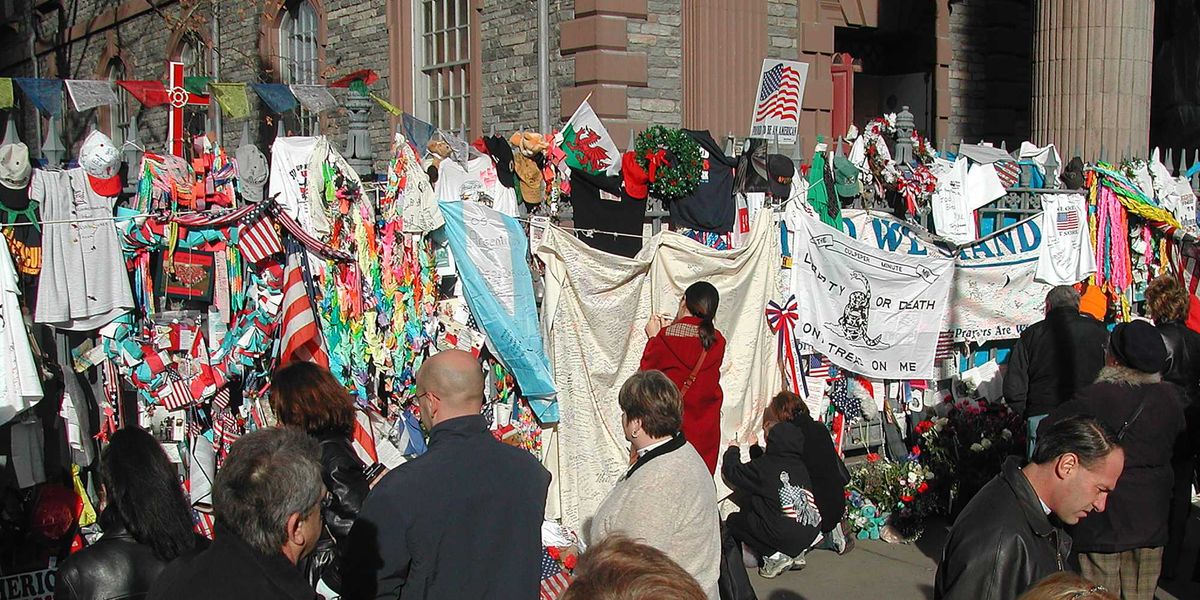
On a day known for shock and heartbreak, one small chapel in lower Manhattan seemed to stand apart from the chaos around it. While the World Trade Center site was torn apart on September 11, 2001, this modest building remained eerily intact, with its windows still standing when so much else was shattered. That contrast made it more than just another structure in the neighborhood; it became a symbol of survival, memory, and quiet endurance.
The chapel sits close enough to Ground Zero that its survival still feels hard to process. In the middle of a disaster that crushed steel, blasted debris across blocks, and changed New York City forever, the little church was left with a remarkable sign of resilience. For many, that detail has carried a powerful emotional charge, because it offers a rare image of something unbroken in a moment defined by destruction.
Stories like this stick because they give shape to grief. September 11 is remembered through towers, smoke, sirens, and the deep ache that followed, but the chapel adds another layer to the memory, one that is quieter and more human. It reminds people that places can become witnesses, holding on long after the noise fades and the crowds go home.
That kind of survival also explains why the chapel has drawn attention for years. Visitors often see it not just as a building, but as a living piece of the city’s emotional landscape. Its endurance speaks to the stubborn spirit that New Yorkers are known for, a spirit that kept going even after one of the darkest mornings in modern American history.
There is something especially striking about the contrast between the chapel and the massive towers that once dominated the skyline. The World Trade Center represented power, commerce, and scale, while the chapel stood small, almost easy to miss. Yet after the attacks, the smaller structure took on a meaning far larger than its footprint, becoming a visual reminder that fragility and strength can exist side by side.
The memory of 9/11 has never been only about loss. It has also been about the places and people that endured, the ones that carried on when everything around them was thrown into confusion. A chapel with every window still standing may seem like a minor detail at first glance, but details like that often become the ones people cannot forget.
Religious spaces often hold a special place in public memory because they represent comfort, refuge, and continuity. In this case, the chapel’s survival added an almost sacred feeling to the surrounding wreckage, as if the city had been given one small, stubborn sign that not everything had been erased. That feeling has helped keep the story alive across the years.
Even now, the chapel stands as more than a curiosity from a tragic day. It has become part of the larger story of lower Manhattan, where remembrance and rebuilding remain tightly linked. In a place where every block can carry echoes of what happened, the little chapel still speaks loudly without ever raising its voice.
