
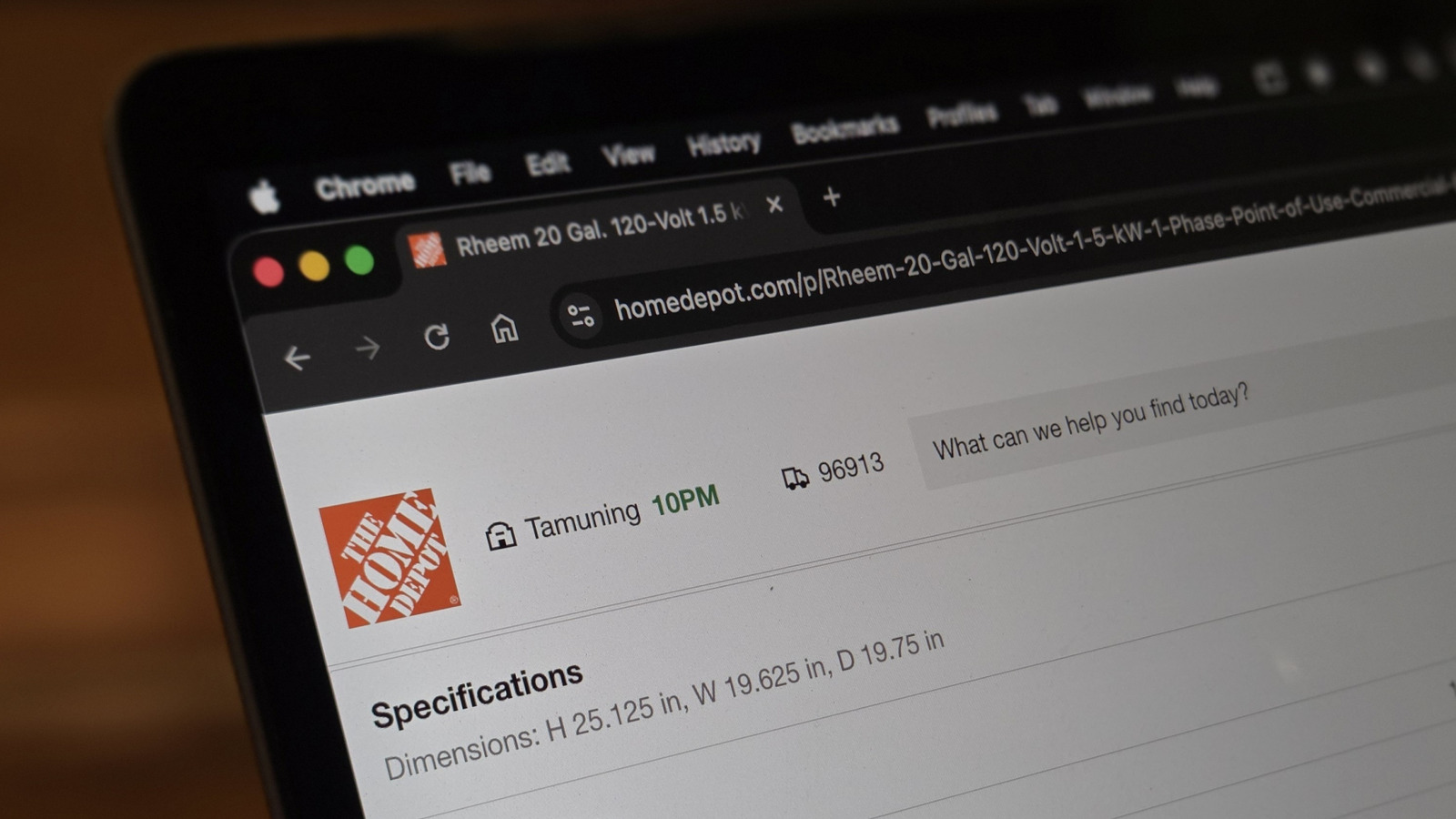
Shopping at Home Depot can feel simple enough until a tiny spec error turns into a big headache. The safest move is to double-check the manufacturer’s page, especially when the item depends on electrical ratings, power details, or tool performance numbers. A quick glance can save a return, a delay, or the kind of mismatch that only shows up after the box is already on the driveway.
Product pages on big retail sites often pull data from brand feeds, and that is where things can get messy. Most of the time the information is fine, but sometimes a number from one model lands on another, or a field gets copied in a way that makes the listing look more certain than it really is. That is how a dryer, appliance, or power tool can end up with specs that sound official but do not actually line up with the maker’s own documentation.
Electrical ratings are the biggest place where this matters. Amperage, voltage, and plug type are not little details, they decide whether a product works in a home at all. A dryer listed with the wrong circuit requirement can leave a buyer staring at a delivery that cannot be installed without extra work, and that is the sort of mistake that is far more expensive than a bad color choice.
The dryer examples make the problem easy to see. One electric model may show one rating on the store page, while the manufacturer’s paperwork lists something different, and a gas version can even borrow the wrong figure by accident. Since gas and electric dryers share a lot of the same product structure, a single copied line can slip through and make the listing look cleaner than the truth.
That same caution applies beyond appliances. Several other brands have had similar mix-ups, with gas models shown as the wrong voltage and tool listings carrying numbers that do not match the manufacturer’s own breakdown. The lesson is simple: if the spec affects installation, compatibility, or safety, it deserves a second look from the source that built the product in the first place.
Home Depot also makes it clear that it does not guarantee every detail on the site. That is not unusual for a retailer handling huge volumes of product data, but it does shift some responsibility onto the shopper to verify what matters most. When the page is wrong, the brand’s official spec sheet usually gives the cleaner answer, and that is the one worth trusting before checkout.
Reviews can help too, especially when a listing mistake has already tripped up other buyers. If a product is showing the wrong power needs, a wrong fit, or a misleading torque figure, somebody in the review section will often mention it. That small bit of crowd-sourced warning can be the difference between a smooth purchase and a return that nobody wants to deal with.
Tools deserve the same skepticism, even when they look straightforward. Impact wrenches are a good example because they often list more than one torque value, and those numbers do not mean the same thing. Tightening torque and breakaway torque serve different jobs, but a store filter may collapse them into a single label that makes the tool sound stronger or weaker than it really is.
That is where the confusion starts. A model can appear under a torque filter with the loosening figure front and center while the tightening figure is hidden elsewhere, which makes comparison shopping trickier than it should be. The manufacturer usually lays both numbers out clearly, so checking that page first keeps the shopper from choosing the wrong tool for a job that depends on the right amount of force.
Even when a listing is not technically “wrong,” it can still be misleading in the way it presents the data. A number on a retailer page may be accurate for some version of the product, but not the exact one in the cart. That is why the smartest habit is to treat the store page as a starting point and the manufacturer page as the final word when the specs actually matter.
