
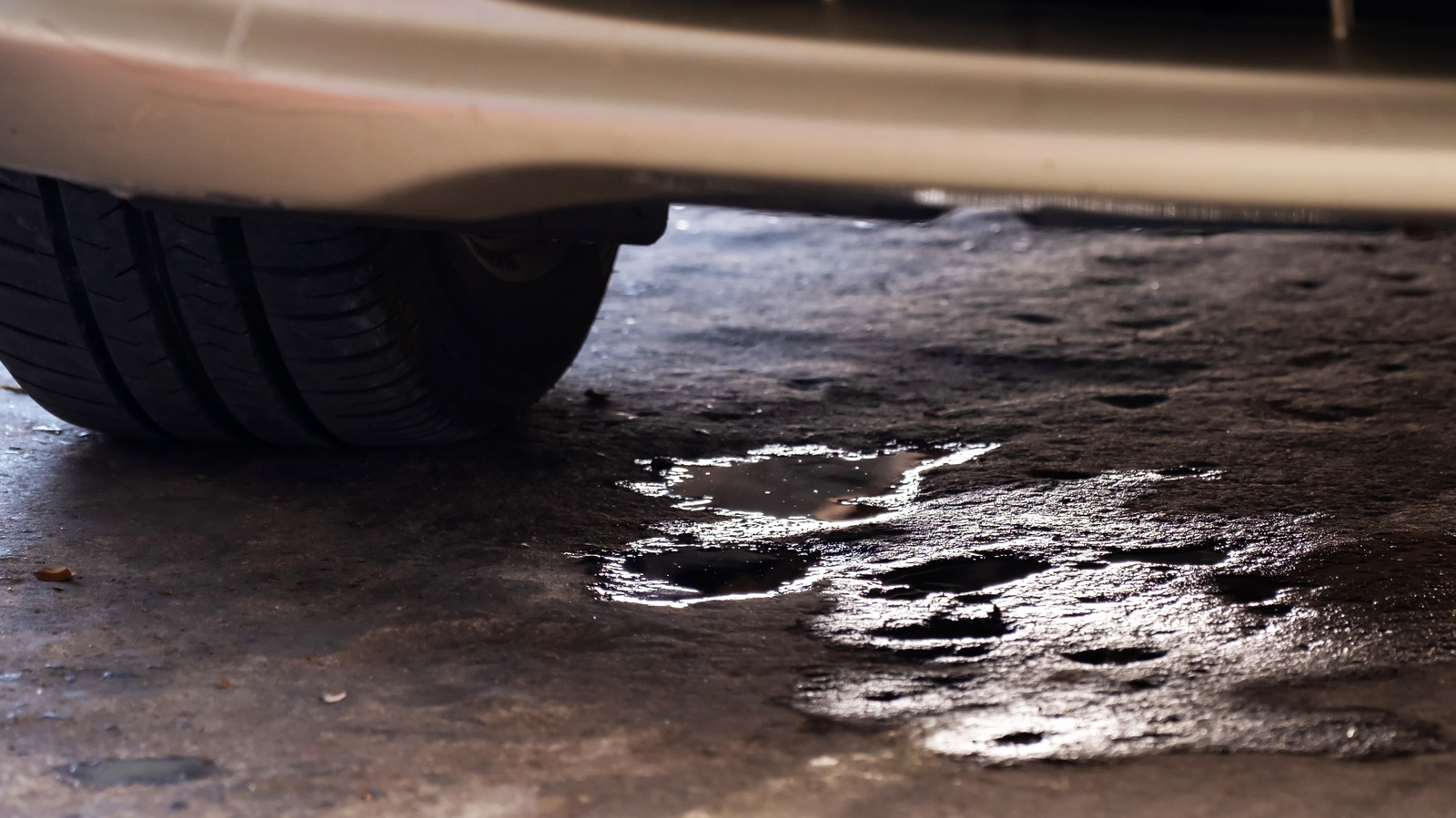
Your car’s fluids belong where they were put: under the hood and inside the lines, not on your driveway. Ignoring puddles and stains lets small problems turn into expensive failures, so noticing the signs early saves money and hassle. This piece walks through how to spot, identify, and respond to common leaks so you can act before parts quit on you. Read on for clear, practical guidance without any fuss.
Different fluids leave different signatures, and knowing them makes diagnosis faster. Engine oil is usually brown to black and slick, while coolant tends to be green, orange, pink, or blue and has a sweet smell. Transmission fluid is often red or brown and feels slippery, whereas brake fluid is clear to yellow and very slippery; power steering fluid can look like transmission fluid but typically sits near the front wheel area. If a puddle shows up overnight, noting its color, location, and smell gives you a big head start.
Where the fluid appears on or under the car gives another important clue you can’t ignore. A drip near the center or front often points to the engine oil pan, valve cover, or oil filter, while spots under the passenger side or near the firewall can mean coolant or heater core issues. Leaks toward the rear of the vehicle could be transmission or differential fluid. Mapping the spot to the likely component lets you prioritize what to inspect first and whether you need a tow.
Leaks don’t just waste fluid; they degrade performance and safety over time. Low coolant leads to overheating and warped heads, while oil starvation can ruin bearings and lead to catastrophic engine failure. A loss of brake fluid compromises stopping power and is an immediate safety hazard, so even a small drip in the braking system demands quick attention. Address small leaks promptly and you avoid the cascade of parts that fail after a primary seal gives out.
Quick checks you can do at home make a big difference in how fast a problem gets fixed. Park on a clean surface and place cardboard under the car overnight to clearly see fresh spots, then compare color and texture to reference descriptions. Inspect fluid reservoirs for sudden drops in level and look under the hood for wet hoses, loose clamps, or soaked components. If the leak is slow and stable, it might be manageable until a shop visit, but active spraying or a rapidly declining level means immediate service is needed.
Fixes range from simple to complex, and cost varies accordingly. Tightening a hose clamp or replacing a worn rubber hose is relatively cheap and often doable at home with basic tools, while replacing a head gasket, gearbox seal, or heater core is labor intensive and expensive. For brake and power steering leaks, professional service is strongly recommended because those systems affect safety and need proper bleeding and testing after repairs. Keep records of any repairs and parts replaced so you can spot recurring failures that suggest a deeper problem.
Preventive maintenance is the most effective defense against leaks turning into disasters. Replace old hoses and belts on a schedule, change oil and coolant as recommended, and use the correct fluids for your vehicle specification. Periodic visual checks under the car and in the engine bay will catch leaks early, and prompt attention to odd smells, warning lights, or new puddles stops small issues from escalating. A little vigilance and routine care keep your car running clean and keep repair bills from climbing into the thousands.
