
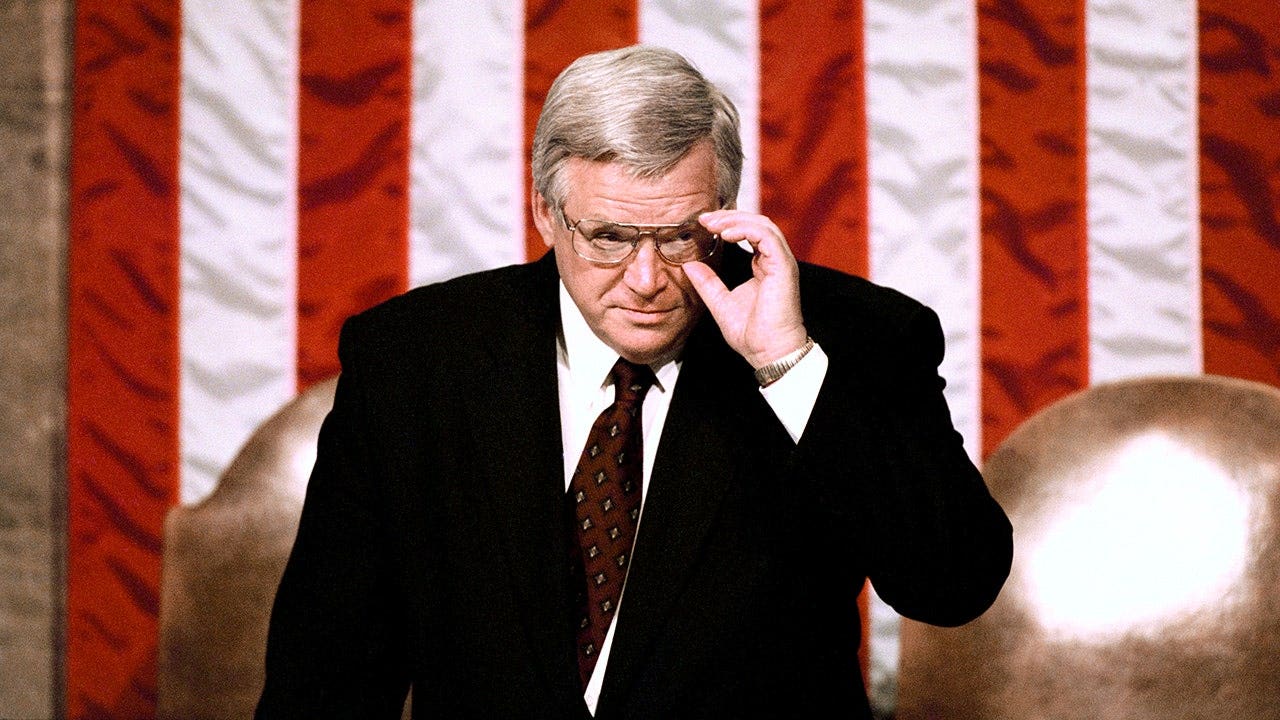
Dennis Hastert’s death at 84 brings back one of the strangest and ugliest chapters in modern GOP history, mixing power, scandal, and a long-buried personal secret that surfaced only after he left the spotlight. His path to becoming House speaker was shaky from the start, but the bigger shock came years later, when investigators uncovered the criminal behavior he had hidden for decades. What looked like a forgettable political career turned into a grim case study in how long misconduct can stay buried inside Washington.
Hastert was the longest-serving Republican speaker in House history, and he ended up becoming the highest-ranking U.S. official ever to serve jail time. He rose to the job in 1999 after Republican turmoil knocked other contenders off course, and for years he kept a low profile in Washington. That quiet style helped him avoid the kind of close scrutiny that often follows public figures around every day.
The House pages scandal in 2006 dragged Hastert back into the frame, even though he was not accused in it. Republicans were already on defense, with the Foley mess blowing up just as the party was trying to hang on to its majority. Hastert’s weak response to the situation looked bad then, and in hindsight it added another layer to an already messy political moment.
What nobody outside a tiny circle knew was that Hastert had a long history of abusing teenage boys when he was a coach and teacher in Illinois. That hidden past came crashing out in 2015 when bank records and unusual cash withdrawals raised red flags. Federal investigators eventually concluded he was paying hush money to keep old abuse allegations from surfacing.
He was indicted on banking-related charges and later pleaded guilty to those offenses. Prosecutors dropped the false statements count, but the damage was already done, and a federal judge called him “a serial child molester.” In court, Hastert admitted he had “mistreated athletes” and “took advantage” of people he was supposed to guide.
He never faced criminal sex abuse charges, but he still spent 13 months in federal prison in Minnesota. That sentence sealed his place in history for all the wrong reasons. For someone who had spent years occupying one of the top jobs in Congress, the fall could not have been more brutal or more disgraceful.
Back in 1998, Hastert’s rise to power had also been shaped by chaos. House Republicans were reeling from the fallout around Newt Gingrich and then Bob Livingston, who was supposed to take over the speakership before his own scandal blew up. With the chamber in disarray, Hastert was suddenly the man tapped to steady the ship, even though few people outside Capitol Hill really knew him.
That kind of rise is pure Washington. One minute a backbencher is just another name in the leadership roster, and the next he is holding the speaker’s gavel while the whole party is scrambling to survive. Hastert benefited from the moment, and for years the job gave him a level of protection that seemed almost built for someone who preferred to stay quiet.
Even after leaving Congress, he kept his profile low and rarely sought attention. That silence made the later revelations even more jarring, because the image of the reserved, almost invisible speaker clashed hard with the reality investigators eventually uncovered. The man who spent years avoiding the spotlight had been carrying some of the darkest baggage imaginable.
His death closes the book on a career that was never as plain as it looked from the outside. Hastert stood at the center of major political fights, watched one House majority collapse, and then became a symbol of how rotten secrets can survive behind polished public images. Even now, the details around his rise, his silence, and the scandal that finally caught up with him still hit with a cold kind of force.
