
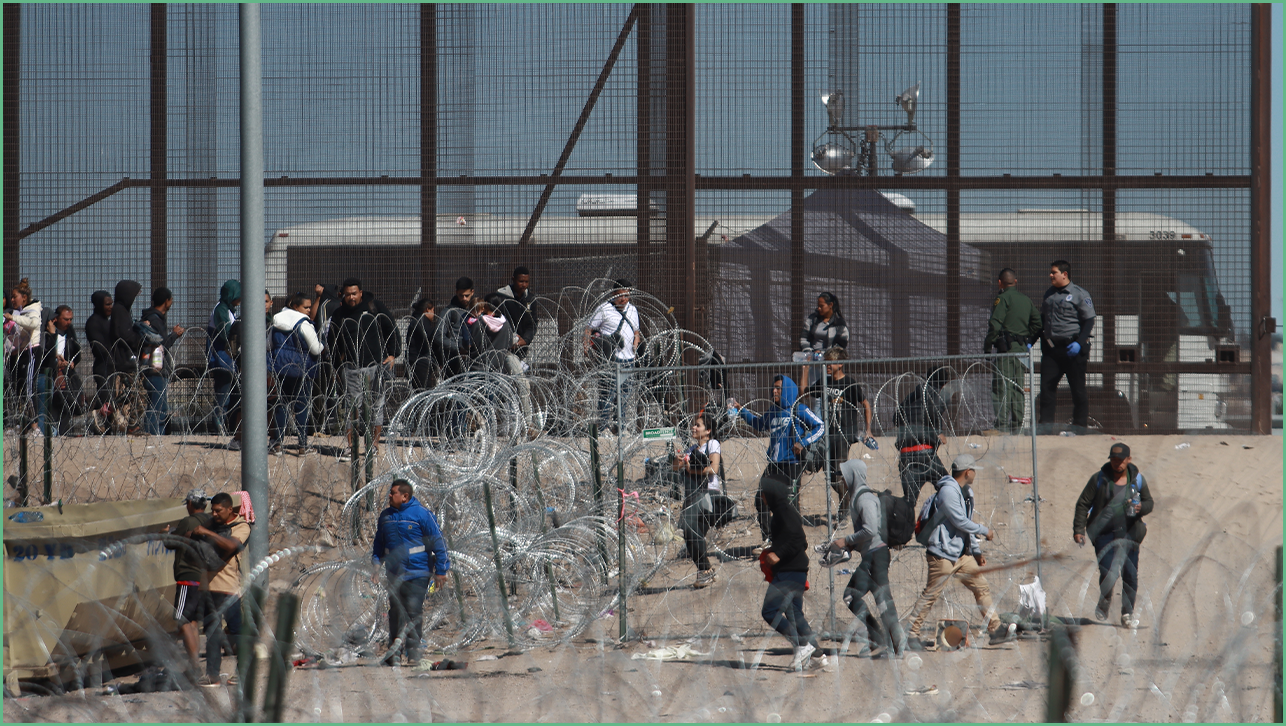
This piece traces how Democratic hesitation to enforce immigration laws produced predictable chaos, using a stark 2016 raid and later policy shifts as a cautionary tale. It argues from a Republican perspective that credible, consistent enforcement is essential to a functioning immigration system and that moral posturing has weakened practical governance. The article contrasts Obama-era enforcement mechanics with Trump-era brutality and Biden-era retrenchment, and it insists the party must choose responsibility over symbolic purity.
The morning raid that woke Johana Gutierrez and Salvador Alfaro reads like a nightmare: officers at the door, flashlights cutting through windows, children terrified in their pajamas. Armed agents moved through the house without a judicial warrant and, by the end, a mother and her 10-year-old son were taken away in unmarked cars. Scenes like this left deep scars inside the Democratic coalition and created a memory that policy debates still stumble over.
This was not an invention of one presidency; it happened during Barack Obama’s tenure and reflected an administration that took enforcement seriously even when it caused pain. The operation apprehended many with final deportation orders, and civil liberties groups called it a mockery of due process. The political reaction inside the party made enforcement a third rail for future candidates.
Labels stuck. “Deporter-in-Chief” became shorthand and a warning for anyone running for higher office in Democratic primaries. That stigma reshaped political messaging: candidates moved hard toward restraint and empathy to avoid the charge. The result was a party increasingly unwilling to talk plainly about enforcement as a governing responsibility.
President Obama acknowledged the trade-offs. “As long as the current laws are on the books,” he said in a 2011 speech in El Paso, “it’s not just hardened felons who are subject to removal, but sometimes families… or decent people with the best of intentions. We don’t relish the pain that it causes.” He did not pretend enforcement was painless; he simply accepted it as part of enforcing existing law.
Officials like Tom Homan ran interior operations under Obama and received high honors for carrying them out efficiently. The machinery of immigration enforcement was modernized and expanded during that time, proving the state had tools to act when given the political will. That technical capacity later became a raw material for more brutal uses under different leadership.
When the next administration arrived, it did not invent aggressive enforcement but it did weaponize it, adding cruelty and chaos and breaking long-standing norms. That hardened approach produced its own backlash, deepening the party’s internal split and convincing many Democrats that enforcement itself was morally suspect. Such polarization left no easy middle ground for responsible policy-makers.
By the time Joe Biden sought the presidency, the Democratic brand around immigration had shifted decisively away from enforcement as a selling point. The campaign emphasized decency and restraint and vowed to be neither Trump nor Obama in tone. That political posture translated into governing choices that tried to steer a middle course but ended up undermining deterrence.
In practice, the administration narrowed interior enforcement, signaled a softer posture at the border, and prioritized intraparty reassurance over blunt deterrence. Those signals reduced the credibility of the system and made it harder to manage flows and secure cooperation from other countries. The administration’s choices contributed to system-wide strain and the political consequences that followed.
Democrats have framed ICE as a moral battleground rather than an agency with a mission. The question shifted from “How should it be reformed?” to a loyalty test: are you for abolishing it or funding it? That binary made funding cycles into public rituals of political self-flagellation instead of sober debates about mission and oversight.
“Abolish ICE,” like “Defund the Police,” was never a serious governing proposal. It functioned as identity signaling and produced confusion and backlash instead of practical policy proposals. The predictable result is a party that struggles to answer whether it supports enforcement of its own laws.
America needs enforcement that is visible, consistent, and legitimate, not theatrical or indiscriminate spectacle. A functioning nation requires the credibility to apply its laws fairly and predictably, or else the law becomes meaningless. Borders without enforceable rules are not compassionate; they are fantasy dressed up as principle.
Obama understood that the nation could be both welcoming and lawful, that immigration and lawfulness are complementary. Democrats must relearn that lesson and stop treating enforcement itself as a moral failure. Until the party admits enforcement is a governing responsibility, voters will keep punishing mixed messaging at the ballot box.
