
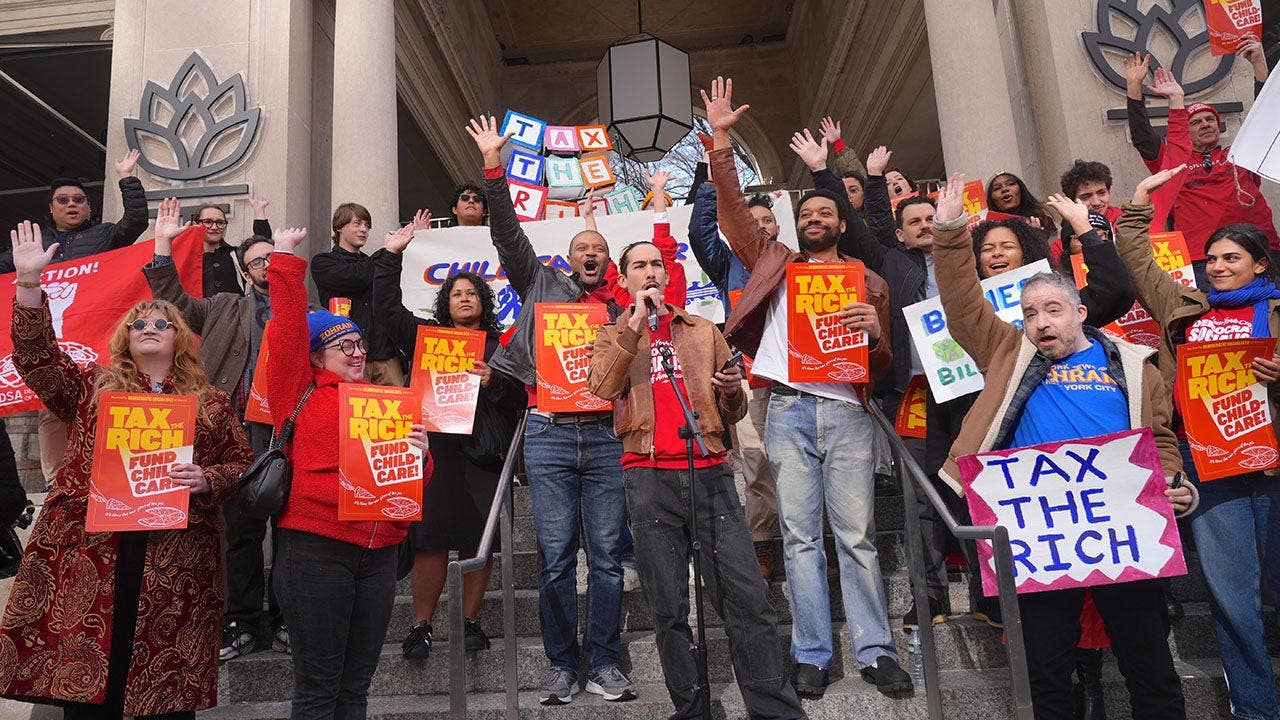
• Democrat politics increasingly revolve around bigger government and bigger spending
• Union money and super PACs are reshaping campaign power
• The party’s most energized voters are pushing it further left
• Handout politics makes moderation harder, not easier
• Socialist ideas keep gaining ground inside the party
The Democrat Party is drifting left because its incentives are drifting left. Bigger government, stronger union influence, and activist energy are all pulling in the same direction, and that combination leaves little room for a real reset.
That tension is easy to miss if the focus stays on one candidate at a time. The bigger story is the movement of the party itself, which keeps rewarding the people and ideas that push hardest for more spending, more control, and more ideological purity.
The roots of that shift go back a long way. A century ago, Democrats often spoke the language of limited government, but over time the party embraced the idea that Washington should play a much larger role in everyday life.
That change did not happen all at once. It grew through New Deal economics, then expanded again with Great Society programs, and now it shows up in modern promises about childcare, healthcare, climate, housing, and a long list of public benefits.
Once a party makes government help the central message, it gets locked into a cycle. Every new election has to offer more than the last one, because voters who have been trained to expect aid are rarely inspired by a promise to scale things back.
That is one reason the Democrats keep moving left. The safest political move inside the party is not moderation, it is escalation, since candidates who talk restraint can sound like they are taking something away.
Money also pushes in the same direction. Union-backed political spending gives the party a powerful incentive to protect and expand government payrolls, while super PACs and other outside groups weaken the old party hierarchy that used to control candidates more tightly.
That matters because the party establishment no longer has the same grip on the field. Candidates with a sharper left-wing brand can now find enough outside support to survive, even when party insiders would rather see someone more cautious and less radical.
The result is a party where the loudest voices often have the loudest megaphones. The activists who show up early, donate often, and dominate primary politics tend to be farther left than the average voter, which drags the whole machine in that direction.
That kind of pressure shows up in polling too. Liberal Democrats are far more likely than the overall Democratic coalition to want the party to become even more liberal, which gives the left wing confidence that it is not just loud, but also organized and patient.
When that happens, the center of gravity shifts. Primary candidates learn quickly that energizing the activist base matters more than appealing to voters who mostly want stability, lower costs, and a less chaotic political brand.
Handout politics creates its own trap. Once a party sells itself as the source of benefits, every election becomes a competition over who can promise the most, not who can govern the best.
That is where the left rarely turns around. Socialist politics does not usually end with a call for less government and more freedom, because its whole logic depends on expanding state power, not trimming it back.
The modern Democrat coalition keeps absorbing that lesson in real time. As class warfare rhetoric grows louder and more activists define the terms of debate, the party keeps moving toward a model where the state is expected to do more, spend more, and manage more.
That is why the hard left turn keeps feeling less like a detour and more like the road itself. The incentives, the money, the activists, and the party’s own history all point in the same direction, and none of them are quietly backing away.
