
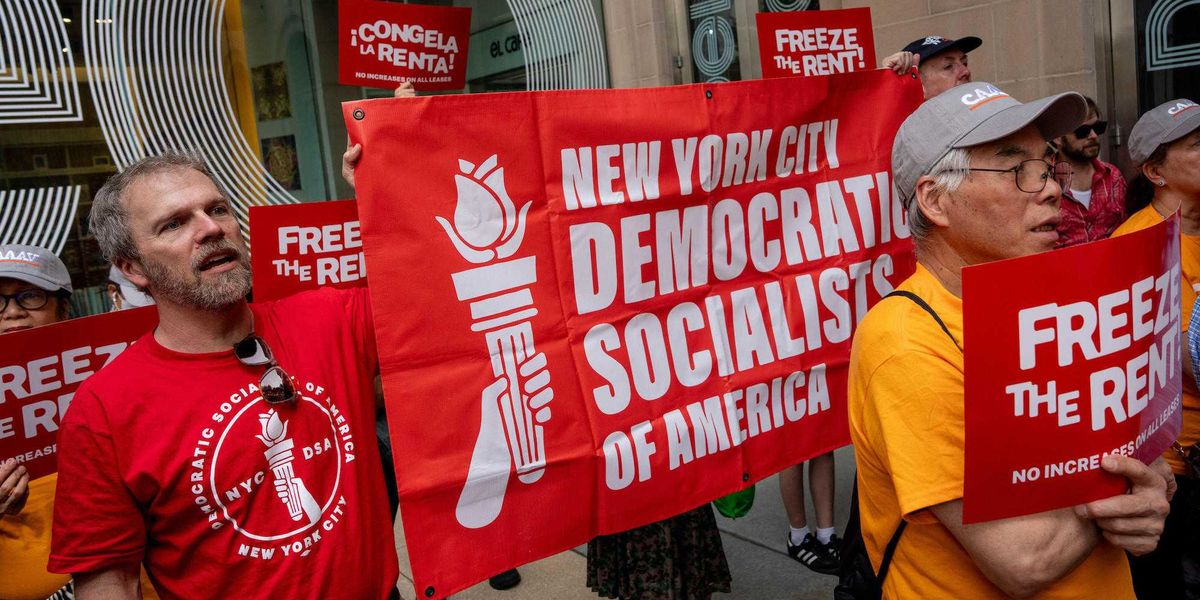
A recent exchange put a spotlight on the Democratic Socialists of America and the awkward gap between ideological branding and simple explanations. When asked to spell out one policy in plain language, the response wandered instead of landing the point, and that left viewers with more questions than answers. The moment fit a familiar pattern: big slogans, soft details, and a lot of noise when specifics are supposed to matter.
The Democratic Socialists of America has long tried to position itself as a serious force inside the broader left, but these kinds of moments make that job harder. It is one thing to rally people around a vision of fairness or equality, and another to explain what that looks like in actual policy terms. When the answer comes out tangled, the public notices fast.
Supporters often argue that the group speaks for people frustrated with high costs, stagnant wages, and a political class that seems out of touch. That message has real emotional pull, especially among younger voters who feel squeezed by housing prices and everyday expenses. Still, passion is not the same as clarity, and a movement that wants influence has to do more than repeat broad promises.
That is where the tone of the exchange hit a nerve. The question was simple enough, but the answer drifted, folded back on itself, and never really locked onto a concrete proposal. For critics, that kind of performance is less a glitch and more a warning sign that the ideology sounds better in chants than in practice.
There is also a deeper problem baked into this corner of politics: the word “socialist” carries heavy baggage, and not just for older voters. Many Americans hear it and immediately think of bureaucracy, control, and systems that reward slogans over results. Even when activists try to soften the edges with the word “democratic,” the core concerns do not just disappear.
The Democratic Socialists of America has tried to build credibility by attaching itself to popular issues like health care, rent relief, and labor organizing. Those topics are easy to sell in the abstract because they tap into real pain. But once the conversation turns to funding, tradeoffs, and who gets to decide what comes next, the conversation gets much tougher.
That is why the rambling answer mattered beyond one awkward clip. It exposed how quickly a movement can lose momentum when asked to move from theory to reality. Voters may forgive a messy sentence here and there, but they are far less forgiving when the entire pitch sounds slippery.
The broader Democratic Party also gets pulled into these moments, whether it wants the association or not. Even when establishment Democrats keep some distance from the hard left, the public often sees the overlap and draws its own conclusions. That can create real political headaches, especially in races where moderation and message discipline matter more than activist applause.
For Republicans, the takeaway is straightforward: this is the kind of confusion that comes from leaning too hard on ideology and not hard enough on common sense. People want leaders who can say what they mean without a fog machine around every answer. When a policy question turns into a verbal maze, it is a reminder that style may be easy, but substance still has to show up.
And that is where the conversation keeps heading, because the audience is not getting any less skeptical. The more these groups reach for power, the more they have to explain themselves in plain English, without leaning on buzzwords or emotional shortcuts. If that basic test keeps producing shaky answers, the gap between ambition and credibility only gets wider.
