
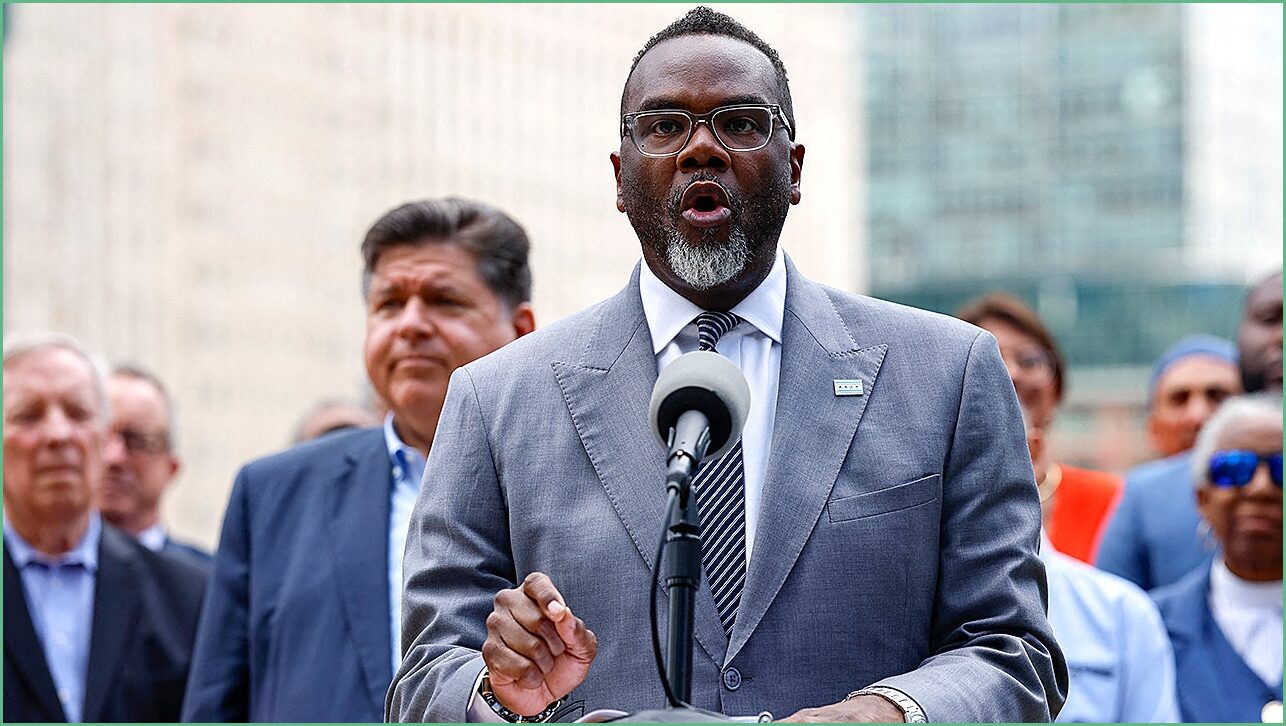
I’m walking across America because too many kids are paying the price for broken schools and failed leadership, and this piece calls out a mayor who spends energy on political theater while neighborhoods fall apart. It looks at leadership priorities, the real damage in our classrooms and on our streets, the eyewatering human cost, and why citizens must demand accountability now.
The central reason for my walk is simple: children are trapped in the fallout from bad decisions and ideology that ignores basics like safety and literacy. Chicago is a city crying out for practical fixes, not political stunts, and the people who should be focused on kids are busy elsewhere. That failure deserves attention and honest criticism.
Mayor Brandon Johnson has made headlines by taking dramatic public stances instead of fixing day-to-day crises at home. In a recent video he declared, “If we don’t push back against Trump and ICE with everything that Black people used to get ‘us free,’ we’re going to find ourselves subjugated to tyranny. One thing is for sure: Not in Chicago.” Those words sound like political theater when kids are getting shot in the streets and classrooms are failing.
It is bewildering to watch a leader claim liberation while simultaneously insisting the system still subjugates citizens. You can’t toggle between “we’re free” and “we’re oppressed” depending on convenience. Using our ancestors’ struggle as cover for shielding policy choices from scrutiny dishonors their sacrifice and distracts from real accountability.
Look around the city and you’ll see those in power are often the very people the mayor blames; city offices and many top roles are held by Black leaders. If White supremacy is the explanation for failing schools and rising violence, the evidence is thin when leadership is comprised of the people supposedly harmed. That mismatch exposes a political narrative that avoids taking responsibility.
When policy fails, kids pay the price, and the numbers are devastating. As Paul Vallas wrote, since Mayor Johnson took office, “504 school-age children, 17 years and younger, have been shot, and 107 have been killed. Twenty-three of those deaths were children under the age of 12.” Those are more than statistics; they are lives lost and futures erased while pundits argue about ideology.
Meanwhile, the institutions that should be fighting for students have sometimes shown shocking priorities of their own. Reports of union leadership spending lavishly on trips while classrooms struggle is not just tone deaf, it’s a moral failure. When money is channeled into perks instead of literacy programs and interventions, the kids lose out every time.
In too many schools, the basic skills kids need to thrive are missing, and the fallout is predictable. Far too many students can’t read or do grade-level math, and in some buildings the failure rate approaches near-total breakdown. Those are the conditions that require immediate, practical reforms, not rhetoric or symbolic gestures.
Shelby Steele captured this dynamic bluntly in his 2020 film “What Killed Michael Brown?” when he argued that post-60s liberalism can become its own form of restriction for Black youth. That critique lands because policies that promise help but deliver dependency or lowered expectations are still a form of harm. Honest reform starts with admitting what doesn’t work.
The mayor spends energy grandstanding against Donald Trump and defending sanctuary policies while criticizing federal enforcement as “misleading and unjust.” He denounces military interventions abroad and makes solidarity gestures, but those national arguments don’t replace local leadership on crime, education, and family support. When local problems demand local solutions, grandstanding comes up short.
Most of all, we have to admit our part: we elect leaders and then fail to hold them to account, and that negligence costs children their safety and their schooling. If we want different results, we must demand practical plans, clear metrics, and real consequences for failure. That’s why I’m on the road—bringing focus back to kids who deserve better than slogans.
I’m traveling town to town to point out these failures and press for common-sense fixes that actually help families and students. Elected officials should be judged on whether children can read, are safe getting to school, and have real opportunities for the future. It’s not complicated; it’s urgent, and it’s time for leaders who prioritize results over messaging.
