
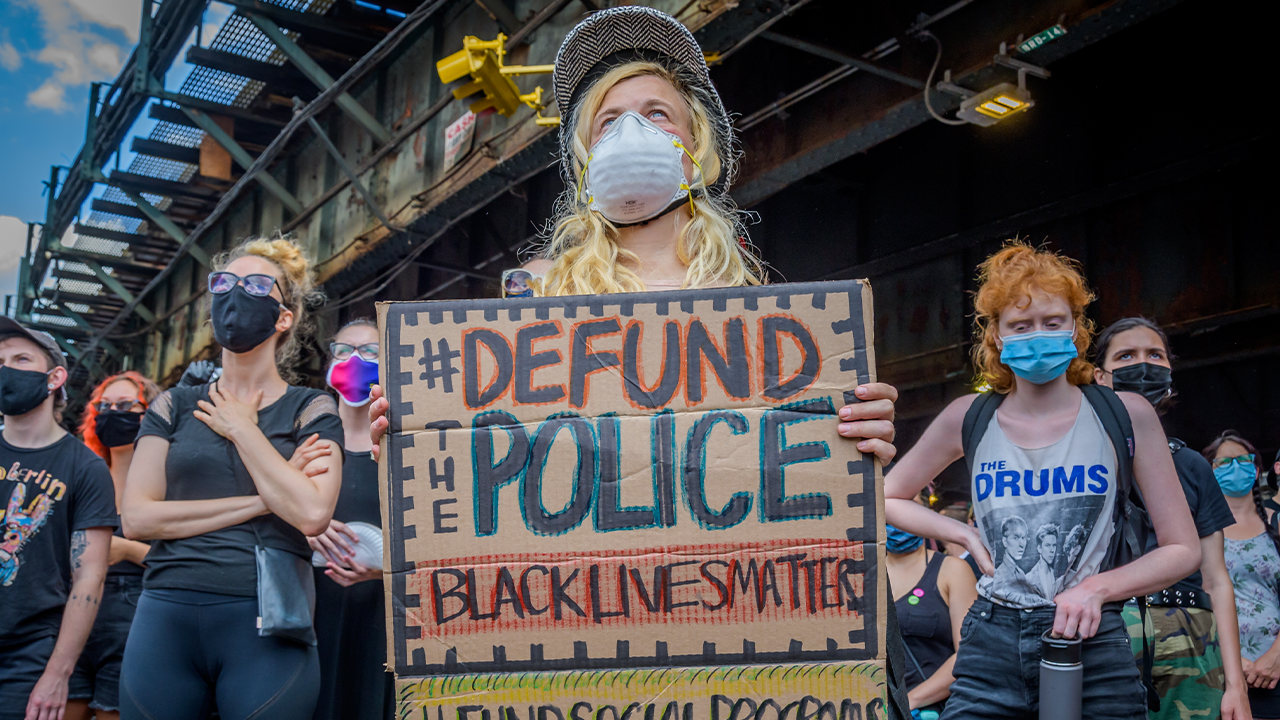
• Fear of police has taken root in some Black communities
• The defund the police message helped deepen that fear
• Chicago violence made the consequences painfully real
• Police presence and trust matter for safety
• Community spaces can help repair damaged relationships
On Chicago’s South Side, the biggest danger is not always what people can see coming. For too many families, especially children, the sight of a police uniform has been twisted into something threatening, and that mindset can do real damage when help is needed fast.
That is why bringing officers into Project H.O.O.D. matters so much. When several Chicago police officers walked into the community center in full uniform, the room tightened up immediately, and the tension was obvious. Some kids pulled back, some adults bristled, and the whole scene showed just how deep the divide has become.
The idea that police are the enemy did not appear overnight. For years, activists and loud public voices pushed a message that treated law enforcement as the source of every problem, and that message landed hardest where violence was already eating away at daily life.
That shift gained force after high-profile flashpoints pushed fear into overdrive. Trayvon Martin’s death became a rallying cry, and later Michael Brown’s death in Ferguson was turned into a simple story line that painted police as hunting Black boys, even when the facts were more complicated than the slogans suggested.
Then came 2020, when George Floyd’s death set off a fresh wave of outrage and a new round of calls to gut police departments. Some public officials and activists did not stop at reform. They pushed for fewer officers, less contact, and in some cases outright dismantling of the police.
That push had consequences that were easy to measure and hard to ignore. In Chicago, homicides climbed sharply, and neighborhoods on the South and West Sides bore the brunt of the bloodshed. Across the country, murders surged, staffing dropped, morale sank, and officers became more cautious about taking action in a climate where every move could be dragged online.
The result was not safer streets. It was more funerals, more grief, and more kids growing up with the wrong lessons about who is there to help them. When police are cast as villains, people stop calling them, stop trusting them, and stop seeing a badge as a promise of protection.
That is the part the activists never seem to carry. The people giving speeches and posting slogans were rarely the ones living with the fallout, while regular families were left to deal with the fear, the sirens, and the empty chairs at the dinner table.
At Project H.O.O.D., the goal is to push back with something simple and stubborn: real contact. Officers sit with kids, teenagers, and adults. They answer questions, listen to concerns, and show up as people instead of stereotypes.
That kind of work does not make headlines the way a protest march does, but it changes the temperature in a room. A child who once froze at the sight of a squad car may stay and talk. A teenager may ask what it takes to wear the uniform. That is how trust starts to grow again, not through slogans, but through repeated human contact.
None of this erases the pain already caused. The dead are not coming back, and the fear planted in young minds will not disappear in one visit or one conversation. Still, the damage can be challenged, one room, one family, and one honest exchange at a time.
That is the work now, especially in places where public safety was treated like a political toy. The community cannot afford another generation taught to panic at the wrong moment or mistake hostility for protection. The police are not the enemy, and pretending otherwise has already cost too much.
