
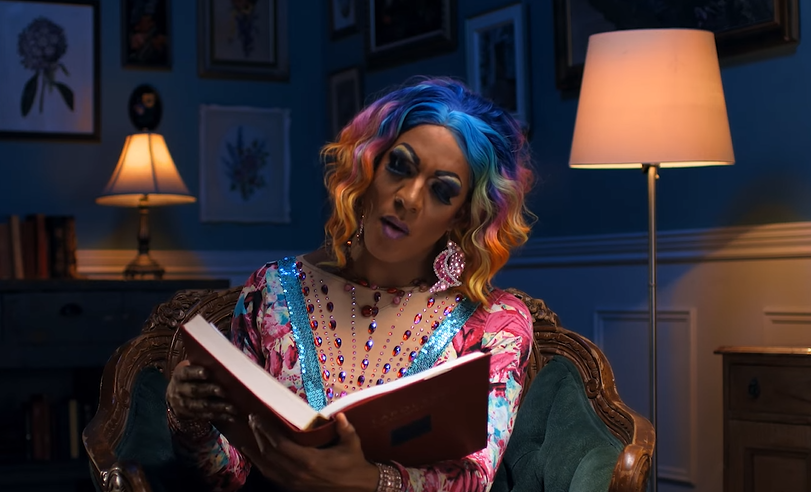
Parents, schools, and communities are in the middle of a culture fight over what belongs in classrooms and libraries, and this piece walks through why bringing drag performers into story time deserves scrutiny, why canceling such events can be the right call, and how ordinary citizens can push back without descending into hostility. I will sketch the practical concerns about age appropriateness, highlight the oddity of the media reaction, look at parental rights and local control, and point out the political stakes for conservatives. The goal is clear-eyed and unapologetic: protect children and restore common sense to public spaces where kids learn.
Let’s start with why the idea is unsettling to many. Kids at story hour expect a gentle, age-appropriate reading and time to explore books, not a performance that intentionally blurs adult themes with childhood settings. When adults bring explicitly sexualized or provocative personas into spaces designed for five year olds, it raises immediate questions about boundaries and intent.
This is not about hating individuals or policing private life. It is about the public square and what we expose children to during school hours and library events. Communities used to have simple rules about separating adult entertainment from children’s activities, and those boundaries helped everyone know what was appropriate.
There is also a fairness issue in how these events are promoted and protected. Often the people pushing for drag story hours are vocal and media-savvy, and that amplifies a fringe preference into institutional policy. When public institutions put their thumb on the scale for a niche cultural program without broad community buy-in, it looks like activism, not service.
Parents rightly want to be the primary decision makers when it comes to their kids’ moral formation and exposure to sensitive topics. That is a core conservative principle. When schools or libraries sidestep parental consent and schedule controversial performances for minors, it breaks trust and plants the seeds for deeper civic unrest.
Another problem is the slippery slope of normalizing adult-themed performances in child-centered venues. What starts as a “fun” reading can evolve into programming that treats children as a captive audience for social experiments. The way to avoid that is to insist on clear policies that differentiate between family entertainment and adult events hosted by community spaces.
The reaction when communities push back is telling. Critics often accuse dissenters of bigotry, yet the real complaint is about venue and audience. Calling people names does not answer the practical concern that parents have about what their children hear and see during school hours. In a free society, differences are worked out at school boards and town halls, not shouted down.
For conservatives this is a political moment as well as a cultural one. Defending parental rights and pushing for local control are natural responses, and they connect to broader issues like curriculum transparency and school governance. When voters mobilize around basic safeguards for children, it sends a message that education should reflect community standards, not ideological experiments imposed from above.
There is a common-sense approach that would stop the theatrics and respect families. Set clear age guidelines for programs, require parental notification and opt-in for events that touch on gender or sexuality themes, and keep explicit adult performances out of spaces aimed at young children. These measures are modest, practical, and they restore the default assumption that unless parents agree, kids should not be exposed to controversial programming.
Canceling specific events when policies and norms are being violated is not censorship, it is enforcement of basic rules. Public libraries and schools have every right to define what they offer to children, and communities have every right to expect those institutions to act responsibly. If an event crosses the line, cancel it and then create a transparent process to prevent future problems.
Finally, there is the media angle. Too often big outlets treat these controversies as culture war entertainment, amplifying the most extreme voices on both sides. That cynical coverage masks the real stakes: children, families, and long-term trust in public institutions. Conservatives who care about good governance should insist on sober, issue-focused debate, not performative outrage.
